Business

No plans to levy windfall tax on rubber glove manufacturers: MoF

Industry already contributes to spillover effect on national economy, says deputy minister

Updated 5 years ago · Published on 23 Dec 2020 5:03PM

No plans to levy windfall tax on rubber glove manufacturers: MoF
Deputy Finance Minister II Mohd Shahar Abdullah says introducing a windfall profit levy could give a negative perception to investors that the government is taking advantage of the exceptional profits generated by companies following the Covid-19 health crisis. – AFP pic, December 23, 2020

KUALA LUMPUR – The government has no plans to impose a windfall profit levy on rubber glove manufacturers that are enjoying supernormal profits from the higher demand and selling price of the products worldwide nor to other businesses that have profited greatly due to the Covid-19 pandemic, according to the Finance Ministry.

Deputy Finance Minister II Mohd Shahar Abdullah said introducing a windfall profit levy could give a negative perception to investors that the government is taking advantage of the exceptional profits generated by companies following the global health crisis.

“The windfall profit tax is presently levied only on the palm oil commodity based on the monthly market price threshold of crude palm oil issued by the Malaysian Palm Oil Board.

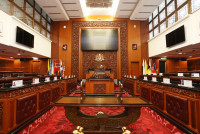
“The tax has never been imposed on consumer finished goods or local manufactured goods, such as rubber gloves, because it is difficult to determine a uniform market price threshold given that rubber glove products have different types, standards, specifications and grades according to the respective countries marketed,” he said at the Dewan Negara today.

Shahar said this in response to a question from Senator Balasubramaniam Nachiappan, who wanted to know whether the government will introduce a windfall profit levy – especially to corporates that have made supernormal profits during the pandemic, such as Top Glove and others – that will benefit the country and society.

Shahar said although the windfall profit tax was not levied, the rubber glove manufacturing industry has contributed to the spillover effect on the national economy in terms of direct and indirect taxes, especially the company’s increasing income tax, as well as continuing to provide jobs during the Covid-19 pandemic.

“Besides that, as announced in Budget 2021, major glove manufacturers will also contribute RM400 million for the purpose of combating Covid-19, including covering part of the cost of the vaccine and health equipment.” – Bernama, December 23, 2020

Related News

Malaysia / 1mth

Budget 2027 expected to dominate Dewan Rakyat proceedings

Malaysia / 4mth

Overall medicine supply under control; 187 items under ‘high risk’

Malaysia / 11mth

Three ministers sworn in for second term as senators

Malaysia / 1y

Former Dewan Negara Deputy Speaker accused of accepting RM235,000 bribes, three luxury cars

Malaysia / 1y

Dewan Negara passes five bills

Malaysia / 2y

Analyst tells Sabah, Sarawak to reject bid for more Senate seats

Spotlight

Malaysia

Durian trader in Raub loses nearly half a million in AI-based investment

Malaysia

GPS banks on fresh faces, retains Abang Johari and key incumbents for Sarawak polls

Malaysia

Anwar yet to accept Anthony Loke's resignation, says DAP chief remains on leave

Business

MAG to add 10 Boeing Dreamliners in long-term fleet expansion drive

Malaysia

Court imposes gag order in case against AKPS chief Mohd Shuhaily

Malaysia

Cyber scam losses hit estimated RM19.7b in a year

Malaysia

Govt approves RM451m for projects in 66 opposition-held constituencies

By Alfian Z.M. Tahir

You may be interested

Business

MAG to add 10 Boeing Dreamliners in long-term fleet expansion drive

Business

Oil prices rebound on Middle East supply fears

Business

Matrix Concepts founder honoured as FIABCI Malaysia Property Man of the Year 2026

Business

South Korean robotic parking company explores opportunities in Malaysia

By Ian McIntyre

Business

Oil prices holds above US$80 as Hormuz attacks heighten supply concerns

Business

SMEs face higher costs as LHDN stamp duty interpretation covers purchase orders, quotations