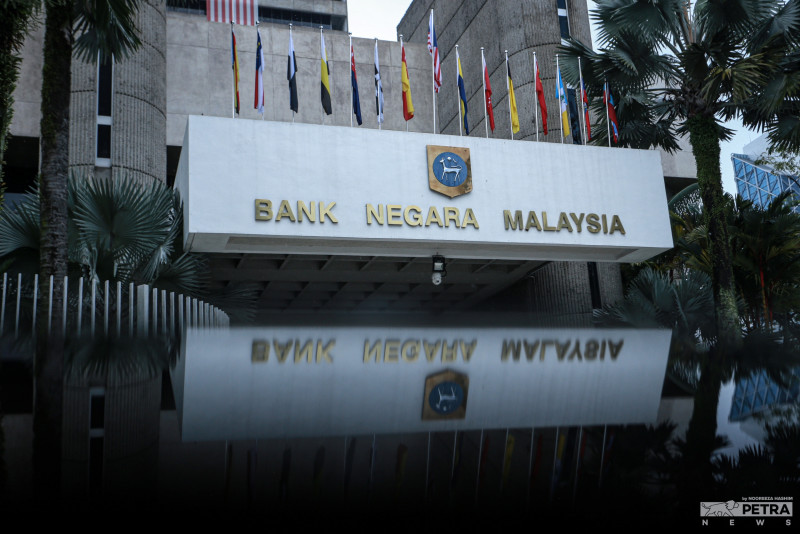
THE government bond market has shown remarkable resilience, with borrowing costs remaining low despite the total outstanding debt more than doubling over the past decade and crossing the RM1 trillion mark
According to Bank Negara Malaysia (BNM), the combined value of Malaysian Government Securities (MGS) and Government Investment Issues (GII) rose 123 per cent — from RM582.46 billion at the end of 2015 to RM1.30 trillion by September 2025.
MGS are Malaysia’s conventional sovereign bonds, while GIIs serve as their Shariah-compliant counterparts, typically issued with maturities ranging from three to 30 years.
This expansion in borrowing was driven largely by pandemic-related stimulus, infrastructure investments, ongoing subsidies and the refinancing of earlier debt.
BNM’s data show that government bond issuance rose steadily over the past decade, peaking after the onset of the Covid-19 crisis. Annual bond sales averaged around RM115 billion prior to the pandemic but climbed by nearly one-third to RM151.9 billion in 2020.
That figure increased again in 2021 by 43 per cent to RM163.9 billion and then by a further 49 per cent in 2022 to RM171.5 billion.
Between February 2020 and June 2021, the government under then Prime Minister Tan Sri Muhyiddin Yassin unveiled eight stimulus packages amounting to RM530 billion — almost double the original 2020 federal budget of RM297 billion. Of this, RM82.9 billion involved direct fiscal spending aimed at supporting households, businesses and economic recovery.
This expansive fiscal policy continued under the subsequent administration, with the 2022 Budget under Datuk Seri Ismail Sabri Yaakob allocating RM332.1 billion, including extended wage subsidies and corporate support.
Although emergency spending has since eased, borrowing remained elevated. Issuance hit a record RM190.9 billion in 2023 — an 11 per cent increase from the previous year — before softening slightly to RM176.7 billion in 2024. As of September 2025, RM124.5 billion worth of bonds and sukuk had been issued, roughly 30 per cent less than the total for 2024, with the final quarter’s figures yet to be reported.
Meanwhile, bond redemptions also increased, from RM56 billion in 2015 to RM94.7 billion in 2024. However, these repayments have not matched the pace of new issuance, resulting in a net increase in outstanding debt.
Despite the heavier issuance pipeline, the government has managed to borrow at relatively modest costs. The 10-year MGS yield stood at 3.41 per cent as of 12 September 2025, down from 3.82 per cent at the end of 2024 and below the four per cent levels seen between 2015 and 2018.
During the pandemic, yields fell to a decade low of 2.65 per cent in 2020 before rebounding to 4.07 per cent in 2022. Since then, they have moderated, reflecting improved fiscal conditions and investor confidence.
BNM’s 2024 annual report attributed the stable market to solid macroeconomic fundamentals, noting that Malaysia’s economy grew by 5.1 per cent, inflation averaged 1.8 per cent, and the ringgit strengthened 2.7 per cent against the US dollar over the year.
The report also cited the implementation of subsidy reforms and the Fiscal Responsibility Act as efforts that reinforced confidence in the government’s long-term financial position.
Dr Mohd Afzanizam Abdul Rashid, chief economist at Bank Muamalat Malaysia Bhd, said the narrowing of the fiscal deficit has improved perceptions of Malaysia’s creditworthiness.
“The deficit was reduced to RM40.5 billion or 4.2 per cent of gross domestic product in the first half of 2025 compared with RM51.5 billion or 5.5 per cent in 2024,” he told *Business Times*.
He added that new tax measures — including the higher services tax, the Low Value Goods Tax, the Capital Gains Tax and diesel subsidy rationalisation — “have really helped the government reduce the fiscal gap”.
“All this essentially improves the government’s creditworthiness and helps explain why MGS and GII yields have come down,” he said.
Afzanizam also pointed to sustained foreign demand as a factor keeping yields low. “Foreign investors are net buyers of MGS and GII, which contributed to the lower yields.”
Looking ahead, attention is now turning to the 2026 federal budget and Malaysia’s medium-term fiscal strategy, particularly as global economic uncertainty persists.
“It’s definitely not a linear world. We can expect some speed bumps along the way,” Afzanizam noted.
He cautioned that if global conditions deteriorate sharply, the government may need to revise its projections and allocate space for new stimulus.
“The main issue now is how the global economy will fare. If the slowdown turns out to be severe, the downside risks will rise,” he said. - September 15, 2025