MALAYSIA’S position as the essential land bridge between Thailand and Singapore places it at the centre of the long-planned Singapore-Kunming Rail Link (SKRL), a 7,000-kilometre corridor linking China with Southeast Asia, experts say.
Transport analyst Dr Rosli Azad Khan highlighted Malaysia’s strategic leverage at Johor, Klang Valley and along the East Coast Rail Link (ECRL) interfaces, noting that the country’s domestic network will underpin regional connectivity by 2030.
“Malaysia’s leverage is highest at Johor due to its integration with Singapore and at the Klang Valley and ECRL interfaces,” he told Bernama.
Rosli cautioned that bottlenecks remain, including cross-border capacity and Customs, Immigration and Quarantine processing in Johor Bahru, readiness of the Gemas–Johor Bahru electrified double-tracking line, and interface planning between Malaysia’s metre-gauge network and standard-gauge systems such as the ECRL.
He added, “For the SKRL, dual systems are still viable if transfer nodes are well-planned, such as at Port Klang for the ECRL interface, Johor Bahru for cross-border connectivity, and Padang Besar for the Thailand link.”
The ongoing ECRL project, connecting Kelantan, Terengganu and Pahang to Selangor, is central to Malaysia’s wider ambitions to integrate east and west logistics corridors and complement cross-border trade initiatives such as the SKRL.
Transport Minister Anthony Loke Siew Fook said the government remains committed to completing the 665-kilometre line between Kota Bharu and Port Klang by December 2027, while studying potential extensions north to the Thai border and south from Port Klang to Seremban and Melaka.
Under the ASEAN-Mekong Basin Development Cooperation, the SKRL will link seven ASEAN nations — Cambodia, Laos, Malaysia, Myanmar, Singapore, Thailand and Vietnam — to Kunming in China.
Three main routes from Kunming converge in Bangkok before continuing south to Singapore, with Thailand targeting double-track and high-speed upgrades by 2030.
A new Kuala Lumpur–Bangkok direct cargo service, approved in 2025, is expected to improve cross-border trade flows.
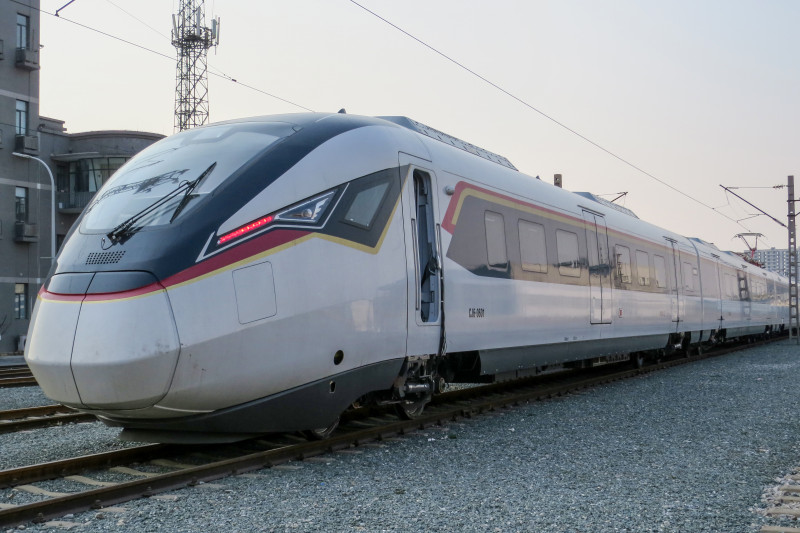
Through KTMB, Malaysia is upgrading tracks and electrifying the Gemas–Johor Bahru line, connecting with the Padang Besar–Gemas line to form a continuous electric spine along the peninsula. KTMB aims to enhance both passenger and cargo operations by 2030.
“Electrification of the Gemas–Johor Bahru line will enable Electric Train Service trains to run directly to Johor and, eventually, into Singapore,” Rosli said.
Transport analyst Abi Sofian Abdul Hamid said the SKRL could significantly boost ASEAN economies by lowering logistics costs, improving market access, and supporting investment in logistics hubs and special economic corridors.
He added that shifting freight from road to rail would reduce congestion and emissions, contributing to Malaysia’s zero-carbon targets.
Rosli emphasised that the project’s success depends on coordinated regional progress.
“Malaysia can steer the southern implementation, especially in setting standards at border and intermodal nodes, so the network serves ASEAN trade patterns — not just northbound flows,” he said, describing potential cargo diversion from ports to rail as “a blessing in disguise” for its environmental benefits.
With the Johor Bahru–Singapore RTS Link under construction and the Kuala Lumpur–Singapore High-Speed Rail discussions ongoing, Malaysia is poised to play a central role in integrating Southeast Asian rail networks with China by 2030. - October 24, 2025