MALAYSIA has never subscribed to reckless capitalism and understands balance, ensuring growth without destruction, said Petra Group chairman and chief executive, Datuk Vinod Sekhar.
He stressed that green investments do not thrive on extremes, but instead, where policy, culture, and society are balanced.
“This is what Malaysia does. Natural capital here is real, not theoretical. We are not inventing sustainability, but stewarding what already exists.
“This is the difference between countries that offset carbon and countries that preserve life systems,” he said on the sidelines of the Annual General Meeting of the World Economic Forum in Davos.
“Nature-backed economies will define the next century. Green returns don’t need moral sacrifice, and there is a dangerous lie being sold globally that sustainability means lower returns.
“ASEAN is the growth story, and Malaysia is its anchor with a predictable legal framework, English-speaking talent, sophisticated financial system and regional connectivity.
“If ASEAN is the future, Malaysia is the front door. The global South will leapfrog, and Malaysia is already doing it,” he said.
He noted that the next wave of sustainability won’t come from retrofitting old systems, but from countries that build green from the ground up.
“Malaysia is fertile ground for social capitalism — where enterprise lifts communities, not replaces them.
“That is the future of capitalism, and Malaysia is already culturally aligned to it. This is not about being “green” — it is about being relevant,” he added.
Petra Seaga to invest in Sabah’s biomass and sustainable energy sector
Meanwhile, Invest Sabah Berhad chairman, Datuk Roger Chin acknowledge the commitment expressed by Petra Seaga, the sustainability arm of the global Malaysian conglomerate Petra Group, to establish a presence in Sabah and make a significant investment in the State’s biomass and the sustainable energy sector.
He said that Petra Seaga is currently evaluating an initial investment of approximately USD 300 million, or about RM 1.4 billion.
"Sabah welcomes the seriousness and scale of the intent involved.
“We view expressions of interest of this nature as a signal of confidence in Sabah’s long-term direction, rather than as any pre-determined outcome.
“Sabah welcomes interest, but all projects must stand on their own commercial, regulatory and sustainability merits,” he said.
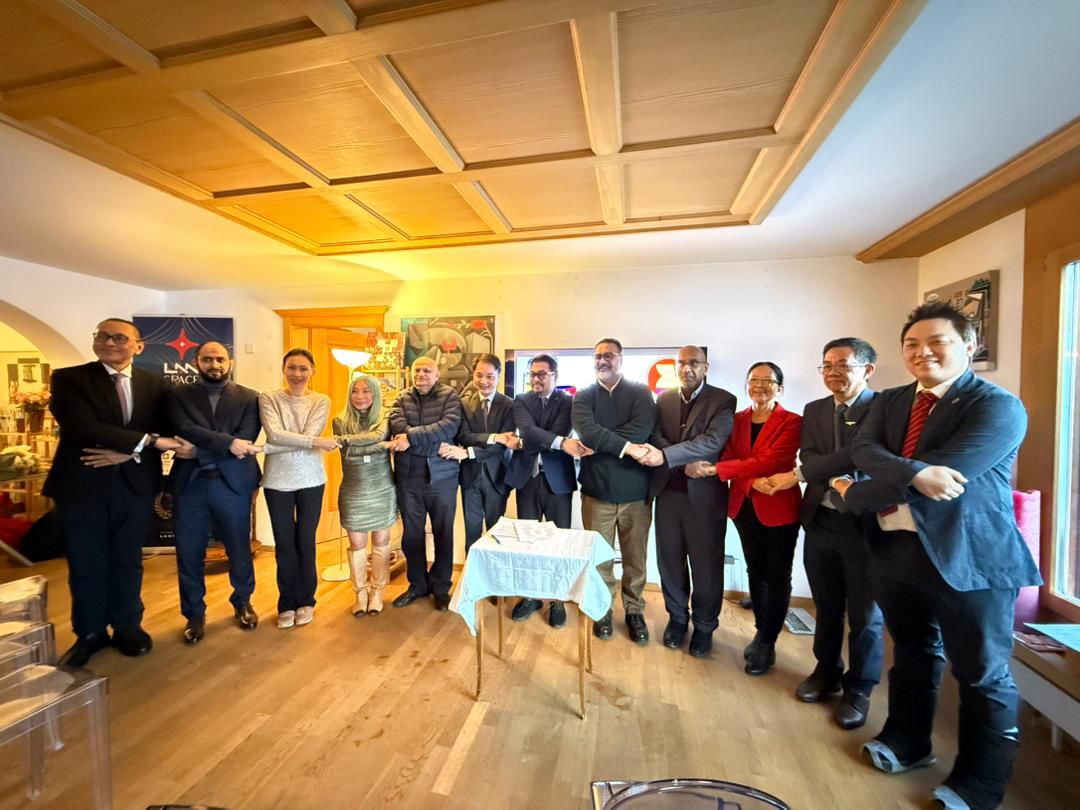
Vinod was accompanied by Petra Seaga, chief executive, Datuk Dr Nasir Latif, and chief operating Officer Datuk Emir Mavani.
Based on current discussions, Chin said Petra Seaga is evaluating the development of an integrated biorefinery complex, potentially on a large-scale site, designed to convert renewable biomass into multiple downstream products within a single, coordinated system.
The concept under consideration involves the use of agricultural and forestry biomass — including palm oil residues and other organic feedstock — to produce sustainable aviation fuel, biofuels, biochemicals, bioplastics, and on-site renewable power.
“Importantly, the model being studied follows circular economy principles, where energy, heat, and by-products are reused within the system to minimise waste and improve overall efficiency.
“Sustainable aviation fuel, in particular, is becoming a strategic priority for the region as aviation demand across ASEAN continues to grow, while governments and airlines are under increasing pressure to decarbonise.
“The regional need for Sustainable Aviation Fuel (SAF) is clear, but supply remains limited,” he said.
Chin said Sabah sees an opportunity to play a constructive role in addressing this gap, leveraging its biomass resources, geographic location, and industrial potential.
While ASEAN demand is the immediate focus, he said Sabah’s longer-term ambition is to serve not only the region, but over time, the wider East Asian market as well.
“From Sabah’s perspective, this is about more than a single investment. It is about
the kind of economy we choose to build over the next generation — one that creates value from what we already have, that treats sustainability as an economic opportunity rather than a constraint, and that allows Sabah to participate meaningfully in regional and global supply chains,” he stressed.
He also said he was particularly encouraged by the decision of the Southeast Asia Sustainable Aviation Fuel Council (SEASAF) to establish its headquarters in Kota Kinabalu.
“This is a significant development. With representation from across ASEAN, the Council has the potential to position Sabah as a convening point for policy dialogue, industry coordination, and regional cooperation on sustainable aviation fuel,” he added. – January 23, 2026