
THE true test of justice is not how it treats the weak.
It is how it confronts the powerful.
History has never been kind to those who believed that law should only apply when it is politically convenient. Every generation has faced the same question: Does power define justice, or does justice restrain power?
That is why institutions such as the International Criminal Court matter.
Not because they are perfect. No institution created by humanity ever will be. They will make mistakes. They will face criticism. They must be accountable, transparent and open to scrutiny.
But if we abandon independent justice the moment it becomes uncomfortable, then we are not defending the rule of law—we are defending the rule of power.
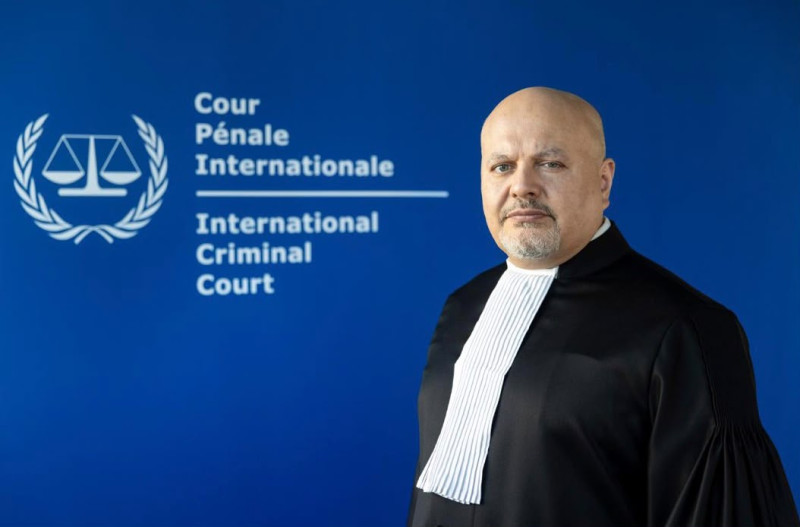
Karim Khan’s tenure has come to symbolise this difficult reality. Let me state that his wife's family I know and have known since I was a young man. And I like Karim Khan, though I don't know him. I believe he has acted in matters of the ICC with a tremendous amount of courage.
His decisions have not pleased everyone. They were never going to.
When prosecutors investigate those with little influence, the world applauds. When they investigate presidents, prime ministers, military leaders or powerful nations, suddenly the prosecutor himself becomes the story.
That should concern every citizen who believes that justice must be blind.
None of this means that allegations made against any individual should be dismissed. They should not. Serious allegations deserve serious, fair and independent investigation. Due process exists for a reason. It protects the innocent, it respects complainants, and it preserves confidence in the law itself.
Justice demands evidence—not assumptions.
It demands process—not politics.
It demands patience—not prejudice.
If Karim Khan is ultimately vindicated, that outcome must be respected.
If wrongdoing is ultimately established through a fair process, that too must be respected.
That is what the rule of law requires.
But what must never happen is for political pressure, geopolitical interests or campaigns of intimidation to become substitutes for legal process.
The moment prosecutors begin asking themselves, “Will this decision make me unpopular?” instead of “Is this decision supported by the evidence?”, international justice has already failed.
The world desperately needs institutions courageous enough to tell the powerful that they, too, are accountable.
Otherwise, international law becomes little more than a collection of speeches delivered to the powerless.
Justice cannot have two standards—one for the strong and another for everyone else.
It cannot wear different robes depending on whose flag is being examined.
The law either belongs to all humanity, or it belongs to no one at all.
The courage we should celebrate is not blind loyalty to individuals.
It is loyalty to principle.
It is the willingness to defend due process even when emotions run high.
It is the conviction that no government, no military, no corporation and no individual should stand beyond legal accountability.
Civilisation advances not because the powerful become more powerful.
It advances because the law becomes more fearless.
That is the standard we must protect.
Because once justice begins to ask permission from power, it is no longer justice. It is politics wearing a judge's robe. – July 3, 2026
Datuk Dr Vinod Sekhar is the publisher of The Vibes and Chairman of the Petra Group