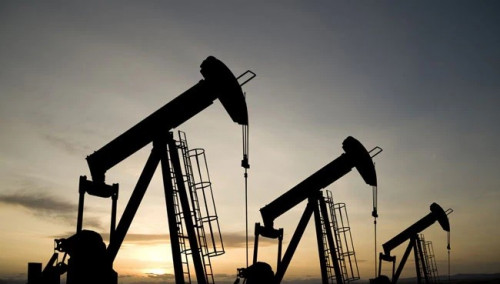
BRENT crude surged towards US$96 a barrel on Friday and was on track for a weekly gain of about 9% as renewed US-Iran hostilities heightened fears of disruption to oil shipments through the Strait of Hormuz.
US crude was approaching US$92 a barrel and was poised for a gain of about 10% this week, as traders assessed the risk of a prolonged disruption to the strategic waterway through which a significant share of global oil supplies passes.
The United States launched fresh strikes against Iran this week after about a month of relative calm, prompting Tehran to retaliate by targeting US bases in the region and vessels transiting the Strait of Hormuz.
Only six commodity vessels passed through the strait on Wednesday, down from 11 on Tuesday and well below the 10-day average of nearly 13, highlighting growing concerns over the security of the key shipping route.
The supply outlook is being further clouded by damage to refineries in the Middle East and Russia, while limited spare capacity elsewhere could restrict the ability of producers to compensate for disruptions.
The combination is expected to keep global fuel prices elevated into next year.
US diesel prices reached their highest level since mid-2022 this week, while European inventories remain well below seasonal norms.
The oil surge has also complicated the outlook for inflation and monetary policy, although the US dollar weakened as Federal Reserve officials signalled less urgency over raising interest rates.
Meanwhile, the US Dollar Index fell below 99 on Thursday, its lowest level in more than a week, after Fed Governor Christopher Waller indicated he could support keeping interest rates unchanged if inflation continues to improve.
“If this continues in the data due over the next two weeks, I would be inclined to support holding the target for the federal funds rate at its current setting,” Waller said.
Waller said he was “finally seeing some signs of disinflation”, adding: “Give disinflation a chance; we can wait one meeting.”
He nevertheless warned that if the trend reversed in August, he would be “willing to pull the trigger on a rate hike.”
Markets have since cut the probability of a September rate hike to about 50%, from 63% a day earlier and roughly 70% earlier in the week, when the oil-price surge intensified inflation concerns.
The Japanese yen’s sharp appreciation also weighed on the dollar. USD/JPY fell about 2% for a second consecutive day to around 155.45, its lowest level in a month and close to the post-July coordinated intervention low of 155.24.
The rapid yen rally has revived speculation of possible Japanese intervention, including a potential rate check, although authorities have not confirmed any such move.
US Treasury yields also eased from recent highs, with the benchmark 10-year yield trading around 4.75% after reaching 4.81% on Wednesday, its highest level since October 2023.
Markets are now awaiting the US non-farm payrolls report for further clues on the Federal Reserve’s next interest-rate decision.
The US economy is expected to have added 58,000 jobs in August after shedding 23,000 in July, while unemployment is forecast to remain at 4.1%.
Investors will also scrutinise wage growth and revisions to previous payroll figures after employment gains for May and June were revised down by a combined 103,000 in the July report.
A stronger-than-expected jobs report could revive expectations of a September rate hike and support the dollar, while another weak reading or substantial downward revisions could strengthen the case for the Fed to leave rates unchanged.
However, the oil shock presents a fresh challenge for policymakers, with higher energy costs threatening to slow the disinflation process while inflation remains above the Fed’s 2% target. - September 4, 2026