Business

IMF ups Colombia’s credit line to US$17.2 bil

US$6.5 bil boost aims to help nation cope with economic effects of pandemic

Updated 5 years ago · Published on 26 Sep 2020 3:15PM

IMF ups Colombia’s credit line to US$17.2 bil
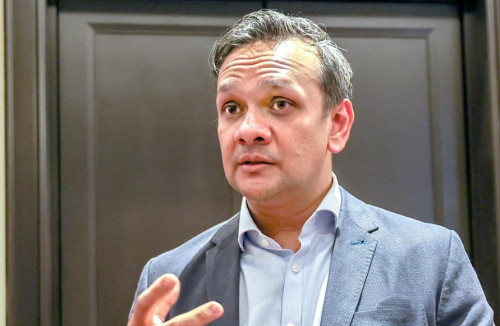
The IMF mission chief for Colombia says the country’s economy is expected to shrink 8.2% this year, worse than the 2.5% drop originally forecast. – Wikipedia pic, September 26, 2020

WASHINGTON – The International Monetary Fund (IMF) yesterday announced that it has raised by US$6.5 billion (RM27.1 billion) a credit line offered to Colombia to about US$17.2 billion, aiming to help the country cope with the economic effects of Covid-19.

“The augmentation was approved in light of Colombia’s continued qualification with very strong institutional policy frameworks, track record of economic performance and policy implementation, and against a backdrop of higher external risks and a larger-than-expected adverse impact from the Covid-19 pandemic,” said the Washington-based crisis lender in a statement.

Colombia has had a flexible credit line (FCL) since May 2009, and the IMF board has renewed it every two years, providing the country with money that can be deployed to head off a crisis.

The latest renewal in May was for US$10.8 billion, but deputy IMF managing director Antoinette Sayeh, in a statement, said Colombia’s downturn is deeper than expected and the nation is set for its worst recession on record.

“The augmentation of access under the current FCL arrangement will help Colombia manage heightened external risks, protect ongoing efforts to effectively respond to the pandemic, continue to integrate migrants from Venezuela, foster inclusive growth and reduce external vulnerabilities.”

IMF mission chief for Colombia Hamid Faruqee said the country’s economy is expected to shrink 8.2% this year, worse than the 2.5% drop originally forecast.

“We do expect growth to rebound,” he said, predicting the gross domestic product increasing 4% next year.

Colombia is one of five countries that have received an FCL, along with Chile, Mexico, Peru and Poland, which exited the arrangement in late 2017.

None of the countries has drawn on the funds, said the IMF. – AFP, September 26, 2020

Related News

Sports & Fitness / 2y

Liverpool supports striker Luis Diaz after parents kidnapped in Colombia

Business / 3y

More weaknesses, vulnerabilities in US banking possible: IMF chief

Business / 3y

IMF warns of ‘more salient’ risks to further trade fragmentation in Asia Pacific

Business / 3y

IMF urges European central banks ‘not to stop’ raising interest rates

Business / 3y

‘Weigh pros, cons of Asian Monetary Fund carefully amid rising geopolitics’

Business / 3y

World economy yet to overcome weak growth, high inflation: IMF chief

Spotlight

Malaysia

Bersatu-PH tie-up a possibility as coalition seeks Malay support, analyst says

By Alfian Z.M. Tahir

Malaysia

Woman molested on her way home from work (video)

Malaysia

Court allows Daim's daughter to permanently keep passport

Malaysia

Santiago pokes holes in data centre hype, asks: Who really benefits?

By Alfian Z.M. Tahir

Malaysia

Jeweller vows to pursue Rosmah until ‘every penny’ is recovered as RM67.5m battle enters enforcement phase

Malaysia

Ambulance carrying two injured men crashes en route to hospital after MPV collision in Besut

Malaysia

Man blames 'lack of love' for sexual assault on teens

Business

BNM's OPR to stay at 2.75 pcent in 2026 amid strong domestic demand - Kenanga IB

Malaysia

Missing jewellery: Rosmah ordered to pay RM67.5 million

You may be interested

Business

BNM's OPR to stay at 2.75 pcent in 2026 amid strong domestic demand - Kenanga IB

Business

Ringgit holds firm against major currencies as markets await key US inflation data

Business

Ringgit holds firm despite US inflation shock as markets brace for Federal Reserve decision

Business

Open fibre sues Bank Pembangunan, six others in RM2b claim over Aries telecoms liquidation

Business

Unemployment rate rises to 3.0 per cent in April 2026 - DOSM

Business

AI should support human thinking, not replace it - MDEC CEO