KUALA LUMPUR – The Malaysian economy is projected to expand between 6% and 7.5% this year compared to a contraction of 5.6% in 2020, supported by domestic factors including consumption and a brighter external environment fuelled by the Covid-19 vaccine roll-out.
Besides inoculation, less-stringent containment measures, a gradual improvement in labour market conditions, continued policy support for households and businesses, and improving external demand amid the technology upcycle, will drive economic recovery.
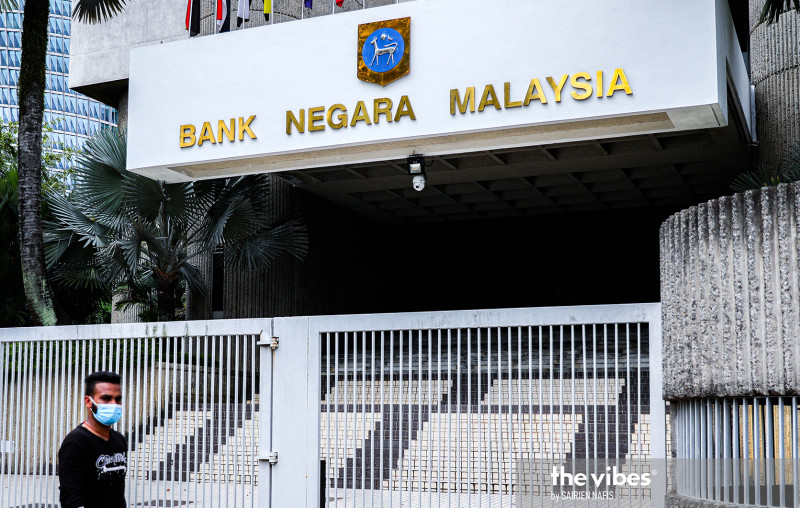
“The Malaysian economy will rebound in 2021, with the gross domestic product achieving pre-Covid-19 levels by mid-2021,” Bank Negara Malaysia (BNM) Governor Datuk Nor Shamsiah Mohd Yunus told an editorial briefing session yesterday.
“In our forecast, we assumed herd immunity will be achieved only in the first quarter of 2022.
“We assumed that international borders will remain closed this year, and the movement control order will be highly targeted.”
The International Monetary Fund recently revised upwards its 2021 global growth forecast by 0.3 percentage point to 5.5%.
Malaysia’s economy shrank 3.4% in the fourth quarter of 2020 with the resurgence in Covid-19, bringing its full-year contraction to 5.6%.
Nor Shamsiah said the potential upsides to the GDP projection include possible pent-up demand amid the historical high savings seen in the country.
“We also didn’t take into account that the government has accelerated the inoculation target, where it is now aiming for herd immunity to be achieved by the end of this year.”
On the flipside, the downside risks are a broad-based lockdown to curb infections and slower-than-anticipated immunisation progress, she said, stressing that overall, “vaccination is key”.
“The vaccine roll-out is critical to this economic recovery, as the current crisis is a health crisis.”
She said the roll-out that started at end-February will provide some lift to growth, as it supports recovery in employment and income by improving consumer sentiment and facilitating a gradual normalisation in economic activity.
Correspondingly, the global economy is set to rebound this year and grow by 5.5% after a large contraction in economic and trade activity in 2020.
“Global economic activity will be driven by vaccine roll-outs and continued significant policy support comprising large fiscal and monetary stimulus to cushion the pandemic impact on growth,” said Nor Shamsiah.
“The global health crisis triggered a large economic downturn in 2020, which caused weaker demand and production disruptions amid widespread containment measures.”
She added that domestic private consumption will anchor growth in 2021 due to less-stringent movement curbs and a gradual improvement in sentiments amid the vaccine roll-out, as well as continued income growth on the back of an improving economy.
Financial systems remain resilient and well-placed to support financial intermediation, she said, while financial institutions continue to maintain strong capital buffers with healthy liquidity to support intermediation activities.
On the labour market, she said BNM expects a recovery in employment after witnessing encouraging signs of continued hiring activity.
Today, she said the country’s headline inflation is anticipated to temporarily spike to above 5% in the second quarter due to a lower base from low fuel prices a year ago, and average to between 2.5% and 4% for the year.
Headline inflation, which measures total inflation within an economy, including commodities like food and energy prices, was -1.2% in the second quarter of 2020, when the country was in lockdown to curb Covid-19.
“In terms of trajectory, headline inflation is anticipated to temporarily spike above 5% in the second quarter of 2021 due to a lower base from low domestic retail fuel prices in the corresponding quarter of 2020, before moderating thereafter.”
In 2020, pump prices in Malaysia stood at RM1.37 to this year’s RM1.95.
The government has set the ceiling price for RON95 petrol at RM2.05, and diesel, RM2.15.
However, said Nor Shamsiah, core inflation – which measures the change in average consumer prices after excluding from the index certain items with volatile price movements, such as fuel – is expected to remain subdued, at between 0.5% and 1.5% this year.
The outlook is subject to global oil and commodity price developments. – Bernama, March 31, 2021