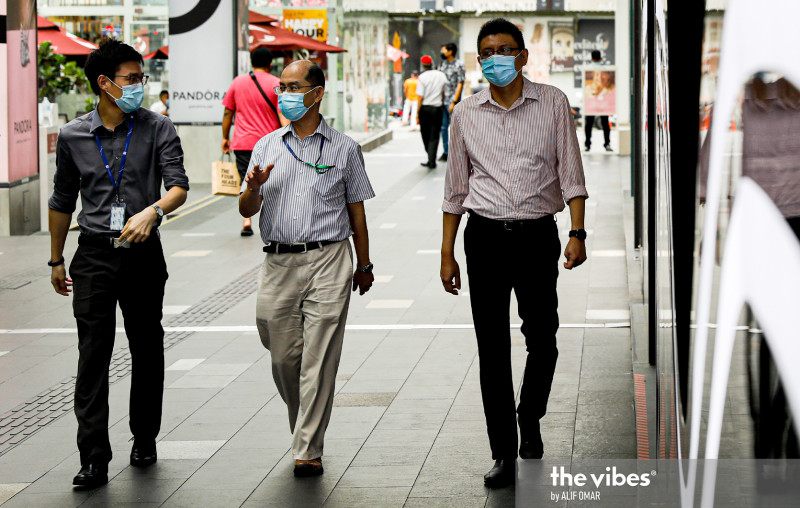

KUALA LUMPUR – The Human Resources Ministry has projected an improved labour market this year, but stressed that intervention is needed to address the unemployment rate – expected to hover between 4.2% and 4.3%.
Minister Datuk Seri M. Saravanan said there are several issues bogging down the country’s labour market.
“These include job mismatches, an increase in informal employment, slower wage growth and challenges faced by prospective workers in getting jobs.
“However, the government will continue to provide interventions to stimulate recovery and drive labour market efficiency.”
He said this in conjunction with the release of the Quarterly Labour Market Perspectives – Modest Labour Market Recovery report for the fourth quarter, which was published by the EIS-UPMCS Centre for Future Labour Market Studies.
Saravanan said according to the quarterly report, the performance of the labour market in the same quarter of 2020 showed a “modest” recovery, amid a slight increase in unemployment.
“Conditional movement control orders implemented in major states contributed to this modest performance,” he said, adding that during this period, the loss of employment rate among private-sector workers decreased.
Meanwhile, the rate of job placement, especially for professional, managerial, executive, and technician (PMET) categories, increased.
“However, job creation in the wage worker category grew at a rate of only 1.1%, compared with 7.5% in the same quarter of 2019.”
Saravanan said the wage worker category made up about 77% of the total national workforce in 2019, and slower job creation for this category is a major contributor to the unemployment rate.
He said for the whole of last year, the report characterised the labour market as a “trapezoidal” shape, reflecting the trend in the imbalance of job seekers and opportunities.
“This situation requires serious attention as it shows that the surplus of job seekers is increasing faster than the creation of jobs.
“The ministry expects the mismatch between employment and qualifications to remain in the labour market due to a high volume of job demands by non-PMET job seekers.” – The Vibes, April 4, 2021