Business

Bursa’s net profit soars 87.5% to RM121.39 mil in Q1

Securities market records 92.5% y-o-y growth in segment profit to RM174.6 mil

Updated 5 years ago · Published on 27 Apr 2021 8:00PM

Bursa’s net profit soars 87.5% to RM121.39 mil in Q1
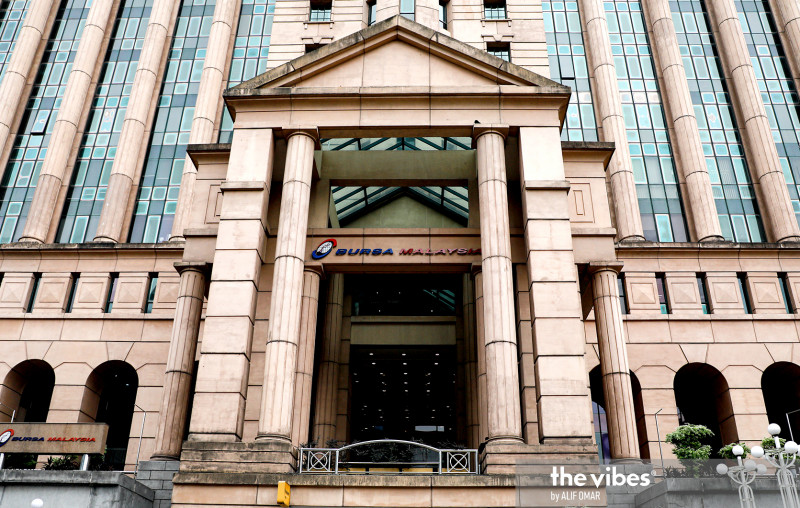
The volatility of CPO prices and FBM KLCI will continue to influence the level of trading activity in both the crude palm oil futures contracts and FKLI, says Bursa Malaysia. – The Vibes file pic, April 27, 2021

KUALA LUMPUR – Bursa Malaysia Bhd’s net profit surged to RM121.39 million in the first quarter (Q1) ended March 31, up 87.5% from RM64.73 million in the same quarter last year.

The exchange operator said the securities market recorded a 92.5% year-on-year growth in segment profit to RM174.6 million while the derivatives market’s segment profit dipped 28.3% to RM11.6 million.

Meanwhile, the group’s revenue jumped to RM232.28 million from RM150.75 million a year earlier, while its basic earnings per share rose to 15 sen from eight sen previously.

“The securities market witnessed active trading amid strong volatility as retail participation continues to play a significant role in trading activities.

“The volatility in the securities market, influenced by local and global events and the ongoing developments surrounding the Covid-19 pandemic, as well as the sustained low interest rate environment in the short to medium term, is expected to continue to attract investments and trading on the stock market,” it announced on its website today.

In the derivatives market, Bursa Malaysia’s global benchmark futures crude palm oil (CPO) price rose above RM4,000 in the quarter under review for the first time since 2009.

External factors, such as the dry weather conditions in South America affecting the production of soybean oil, weak CPO output and low inventory in Malaysia, continues to influence volatility in underlying CPO prices, it said.

For futures contracts (FKLI), the lack of volatility in the FTSE Bursa Malaysia KLCI (FBM KLCI) partly contributed to the lower trading activities in Q1, it said.

The volatility of both CPO prices and FBM KLCI will continue to influence the level of trading activity in both the crude palm oil futures contracts and FKLI, Bursa Malaysia said.

It said it would continue to intensify its ongoing initiatives to attract more new participants to enhance its ecosystem. – Bernama, April 27, 2021

Related News

Malaysia / 6mth

EPF records investment income of RM27.7b, up 51 per cent in Q1

Malaysia / 8mth

Two factors contributed to lower EPF dividends this year – CEO

Business / 2y

SC, Bursa Malaysia pledge speedier IPO approvals in 3 months for main, ACE markets

Business / 3y

Bursa Malaysia opens lower on lack of fresh leads

Business / 3y

Bursa Malaysia retreats after yesterday's gains to open lower

Business / 3y

Bursa Malaysia opens marginally lower as ringgit drops slightly

Spotlight

Malaysia

Disputed Sungei Ujong Undang to face sedition charge tomorrow

Malaysia

Cabinet to weigh US tariff threat as Malaysia defends 19% trade ceiling

Malaysia

Announcement on Negeri MB will come from Istana – Ahmad Zahid

Malaysia

Inspector Sheila challenges police dismissal over alleged denial of fair hearing

Malaysia

Drug syndicate moved 3 tonnes of syabu worth RM156m through RMAF bases in Sabah

Malaysia

Fire destroys 90 per cent of Putrajaya apartment unit

Malaysia

Govt studying age restrictions, verification measures for online gaming platforms

Malaysia

40,214 cyberbullying-related posts removed as MCMC steps up child safety enforcement

You may be interested

Business

Oil prices holds above US$80 as Hormuz attacks heighten supply concerns

Business

MAG to add 10 Boeing Dreamliners in long-term fleet expansion drive

Business

SMEs face higher costs as LHDN stamp duty interpretation covers purchase orders, quotations

Business

Matrix Concepts founder honoured as FIABCI Malaysia Property Man of the Year 2026

Business

South Korean robotic parking company explores opportunities in Malaysia

By Ian McIntyre

Business

Oil prices rebound on Middle East supply fears