Business

China’s Didi Chuxing targets US$4 bil stateside IPO

Move comes despite simmering Beijing-Washington tensions, with tech sector a key point of disagreement

Updated 5 years ago · Published on 25 Jun 2021 11:59PM

China’s Didi Chuxing targets US$4 bil stateside IPO
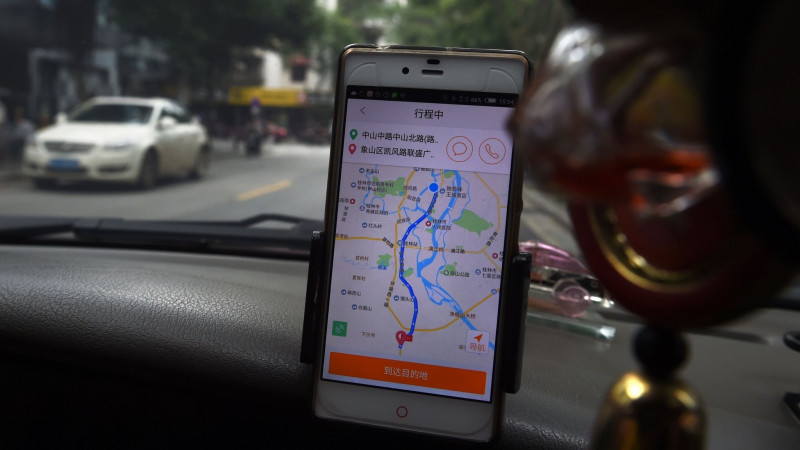
Didi Chuxing, which claims to have more than 15 million drivers and nearly 500 million users, is often the easiest and quickest way to order a ride in crowded Chinese cities. – AFP pic, June 25, 2021

NEW YORK – Chinese ride-hailing giant Didi Chuxing plans to raise up to US$4 billion (RM16.62 billion) in a United States initial public offering, reportedly one of the biggest in the country in the past 10 years.

The move comes despite simmering China-US tensions, with the technology sector a key issue of disagreement.

In a filing with the Securities and Exchange Commission late yesterday, the company – under the name Xiaoju Kuaizhi – said it will put 288 million American depository receipts up for sale, priced at US$13 to US$14. A sale at the top end would value the firm at more than US$60 billion.

The IPO would be the sixth-biggest in the US in the past decade, according to Bloomberg News. 

However, when it filed to list earlier this month, the firm warned that tensions between the US and China are an ongoing risk for its business, as is the possibility of action over antitrust regulations as Beijing cracks down on some of its biggest tech giants.

Didi Chuxing, which claims to have more than 15 million drivers and nearly 500 million users, is often the easiest and quickest way to order a ride in crowded Chinese cities.

Its services are now available in 16 countries, including Russia and Australia.

Founded in 2012 by Cheng Wei, a former executive at Chinese e-commerce giant Alibaba, the app has dominated the local ride-hailing market ever since it won a costly turf war with US titan Uber in 2016 and took over the latter’s local unit.

Its largest institutional shareholder is Japanese investment fund Softbank, which holds a 21.5% stake.

Previous filings showed that the firm suffered a loss of US$1.6 billion last year as it was battered by strict Covid-19 measures and travel restrictions to tackle the virus, which first emerged in China in late 2019.

But, it saw a net profit of US$800 million in the first three months of 2021, with the outbreak now largely under control in China, its key market. – AFP, June 25, 2021


Related News

Opinion / 3d

The Jensen Huang case: The racial trope driving US - China relations

Opinion / 1w

Honey Trap: Western media response to Jensen Huang and the latest China spy story

Opinion / 3w

Will the AI bubble burst?

Events / 1mth

Shanghai trade fair returns to KL with 500 exhibitors in November

Malaysia / 2mth

PM Anwar loses beloved elder brother; Idrus Ibrahim passes away

Malaysia / 2mth

Anwar asks Loke to reconsider resignation over Najib pardon

Spotlight

Malaysia

Disputed Sungei Ujong Undang to face sedition charge tomorrow

Malaysia

Cabinet to weigh US tariff threat as Malaysia defends 19% trade ceiling

Malaysia

Announcement on Negeri MB will come from Istana – Ahmad Zahid

Malaysia

Inspector Sheila challenges police dismissal over alleged denial of fair hearing

Malaysia

Drug syndicate moved 3 tonnes of syabu worth RM156m through RMAF bases in Sabah

Malaysia

Fire destroys 90 per cent of Putrajaya apartment unit

Malaysia

Govt studying age restrictions, verification measures for online gaming platforms

Malaysia

40,214 cyberbullying-related posts removed as MCMC steps up child safety enforcement

You may be interested

Business

SMEs face higher costs as LHDN stamp duty interpretation covers purchase orders, quotations

Business

Matrix Concepts founder honoured as FIABCI Malaysia Property Man of the Year 2026

Business

Oil prices holds above US$80 as Hormuz attacks heighten supply concerns

Business

South Korean robotic parking company explores opportunities in Malaysia

By Ian McIntyre

Business

MAG to add 10 Boeing Dreamliners in long-term fleet expansion drive

Business

Oil prices rebound on Middle East supply fears