KUALA LUMPUR – Malaysia has given its commitment to finish ratifying the Regional Comprehensive Economic Partnership (RCEP) agreement by mid-December this year.
Senior Minister and International Trade and Development Minister Datuk Seri Mohamed Azmin Ali said the ratification is pursuant to the agreement signed by 15 countries, comprising 10 Asean member states and five free trade agreement (FTA) partners, at the fourth RCEP summit on November 15, 2020.
He said based on the provisions of the RCEP agreement, it will come into force 60 days after at least six Asean member states and three Asean FTA partners have submitted the instruments of ratification to the Asean secretariat.
“To date, countries that have ratified the agreement include Singapore, China, and Japan. Myanmar has sent the instrument of ratification to the Asean secretariat while Thailand has completed the domestic ratification process and will submit the instrument of ratification to the Asean secretariat at the end of the year,” he said.
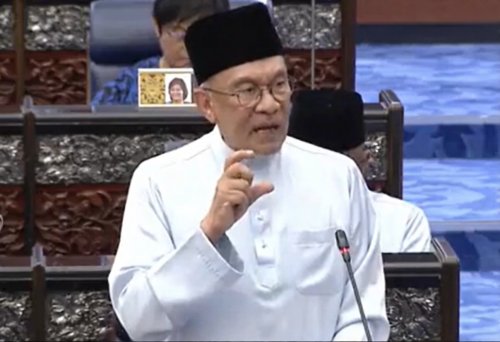
Azmin was replying to a query from Datuk Seri Tiong King Sing (PDP-Bintulu) in the Dewan Rakyat today on the current status of the RCEP and plans to increase cooperation among the signatories.
The senior minister said that at the 53rd Asean economic ministers’ meeting on September 9, Asean member states looked forward to the RCEP agreement coming into force on January 1, 2022, as targeted.
Countries such as Brunei, the Philippines, Indonesia, Cambodia, and Vietnam have announced their intention to complete the domestic ratification process by November.
Azmin said that for Malaysia, the RCEP ratification process requires amendments to three acts under the purview of the Domestic Trade and Consumer Affairs Ministry relating to intellectual property rights, namely the Patents Act, Copyright Act. and Trademarks Act.
This, he said, is to ensure that the acts are in line with the country’s obligations under the RCEP agreement.
Azmin said Malaysia would be left behind in enjoying the benefits and preferential treatment contained in the agreement if it were to delay the ratification.
“This includes tariff reductions on exports of goods, market access for trade in services, movement of skilled professionals, as well as opportunities to increase investment activities among RCEP member countries,” he said.
RCEP is the world’s largest FTA, with a market that covers almost one-third of the world’s population or 2.2 billion people.
On plans to boost cooperation among RCEP members, Azmin said efforts would continue towards enhancing the cooperation in line with the agreement’s main objective to strengthen regional value chain activities and make RCEP more user-friendly.
Regarding the shift in consumer demand patterns towards the digital economy amid the pandemic, Azmin noted that the RCEP agreement includes a special chapter on electronic commerce to assist especially in the participation of small and medium industries in e-commerce. – Bernama, September 21, 2021