Business

Govt may lean on Petronas to help plug fuel subsidy bill: OCBC economist

Putrajaya faces choice between spending more and allowing inflationary spike, he says

Updated 4 years ago · Published on 11 Mar 2022 5:00PM

Govt may lean on Petronas to help plug fuel subsidy bill: OCBC economist
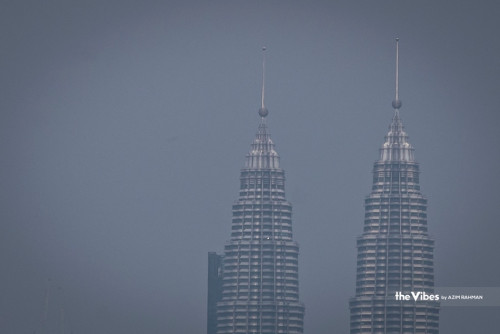
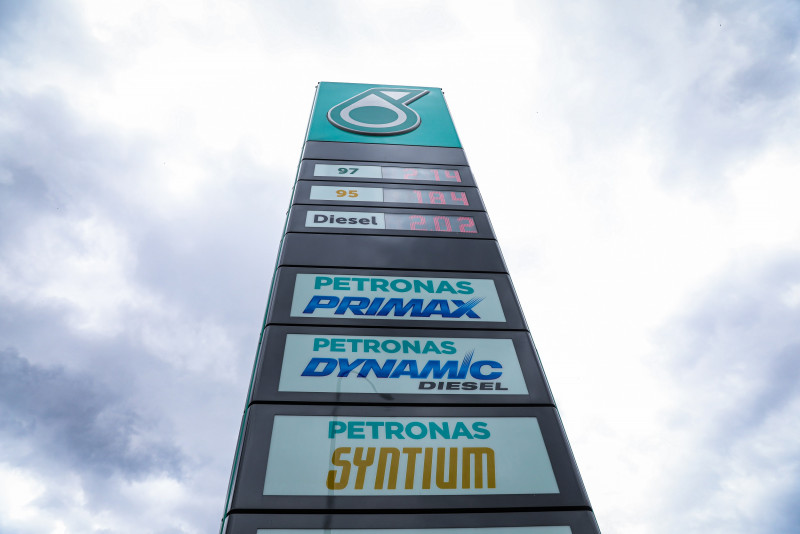
OCBC economist says that Putrajaya’s access to the Petronas pot would be especially important, given that it remains unclear how the targeted subsidy scheme would work in practice. – The Vibes file pic, March 11, 2022

KUALA LUMPUR – As the government expects fuel subsidies to top RM28 billion in 2022 due to the rising world crude oil prices, an OCBC Bank economist reckons that it may end up leaning on state-owned oil and gas company Petroliam Nasional Bhd (Petronas) for special dividends to help plug the subsidy bill.

Wellian Wiranto said the move would also help keep the broader fiscal deficit at around the targeted 6% of gross domestic product (GDP) as first budgeted in Budget 2022.

Yesterday, Finance Minister Tengku Datuk Seri Zafrul Tengku Abdul Aziz told Parliament that if the global crude oil price remains above US$100 per barrel (US$1=RM4.187), total subsidies for the whole of 2022 are expected to reach RM28 billion compared with RM11 billion for 2021.

He also said the government will review the fuel and cooking oil subsidy mechanisms so that they will be more targeted towards aiding and subsidising vulnerable groups and those who really need help.

“Having access to the Petronas pot would be especially important, given that it remains unclear how the targeted subsidy scheme would work in practice,” Wellian said in a note today.

However, he noted that given the large gap between real and subsidised prices, for instance, the RON95 fuel sells at RM2.05 a litre – although it costs 80% higher at RM3.70 a litre – potential leakages from some “creative” transactions cannot be dismissed.

On the surge in crude oil prices, Wellian said although it benefits the trade balance and fiscal revenue for Malaysia, the net oil and gas producer will have to choose between a rise in fiscal expenditure if it keeps the fuel subsidy, and an inflationary wave if it does not.

“By keeping the subsidy scheme broadly in place, the passthrough of dizzyingly high commodity prices to domestic inflation should remain relatively muted for Malaysia,” he continued. “We are tuning our 2022 inflation view upward due to the broader impulse, but rather narrowly, from 2.3% to 2.7% year-on-year now.” – Bernama, March 11, 2022
Related News

Malaysia / 1d

Higher BUDI fuel quotas may help ease inflation, economist says

Malaysia / 2w

Targeted diesel subsidy system improvements expected in ‘1 to 2 months’

Business / 4w

Traders keep watch on inflation data as energy prices fuel fresh concerns

Malaysia / 2mth

Acquisition of two gas blocks to Petronas an extraordinary development - PM

Malaysia / 2mth

PM Anwar dismisses talk of fuel price hikes

Opinion / 3mth

Should petrol subsidies be removed and the savings redistributed to the poor?

Spotlight

Malaysia

Singapore could bar under-18s from social media platforms that fail safety test

Malaysia

College student dies after falling from 22nd-floor condominium in Setapak

Malaysia

PM praised for ‘Medeka Day’ reforms; More needed to cope with rising costs – Guan Eng

By Ian McIntyre

World

Tupac Shakur murder case ends after 30 years as ex-gang leader found guilty

Malaysia

Unidentified man found dead in Sungai Buloh drain as police probe suspected murder

Malaysia

Four killed, four injured in 11-vehicle Pahang highway crash

Malaysia

Sarawak haze crisis deepens as five areas hit hazardous air quality

Opinion

Would the United States use nuclear weapons against Iran?

Malaysia

Tajikistan eyes bigger role for Malaysia in Central Asian market

By Alfian Z.M. Tahir

You may be interested

Business

Oil prices top US$91 as renewed US-Iran fighting raises global energy shock fears

Business

Pengerang investment must deliver results, not mere assurances – industry expert

Business

MT4 or MT5? For traders, the choice often comes down to how they trade

By Alfian Z.M. Tahir