![[UPDATED] M’sia can’t afford to withdraw from CPTPP: business group](https://media.thevibes.com/images/uploads/covers/_large/20210130-shipping_containers-international_export-external_trade-logistics-pixabay.jpg)
KUALA LUMPUR – Malaysia cannot afford to withdraw from the Comprehensive and Progressive Agreement for Trans-Pacific Partnership (CPTPP) as the agreement is crucial for the country’s trade moving forward.
According to Bernama, the Malaysian Consortium of Mid-Tier Companies (MCMTC) said unlike other trade agreements, the CPTTP does not only open up trade but also brings about technical assistance and technology/know-how transfers, which are critical for capacity building for local businesses.
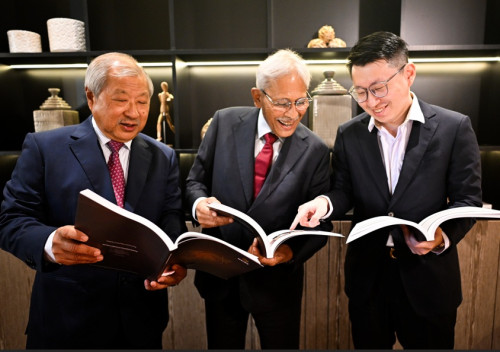
“The MCMTC stands with the Federation of Malaysian Manufacturers against the call from certain parties urging the government to withdraw from the long-awaited CPTPP, which took effect from November 29, 2022,” president Callum Chen said in a statement today.
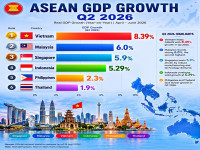
He said the delay in ratification has already caused Malaysia to lose ground in terms of foreign direct investment, where Vietnam, which implemented the pact earlier in January 2019, has become the springboard for Canada into the Asean market via the CPTPP.
“Much has already been said about the costs versus benefits of the CPTPP. Malaysia is a small country in terms of population and land area but in terms of trade, we are ranked 25th in the world. We have become an integral part of the global supply chain,” he was quoted as saying by Bernama.
Malaysia ratified the CPTPP following the government’s submission of the instrument of ratification to New Zealand, the depositary of the trade pact, on September 30, 2022.
The then international trade and industry (Miti) minister Datuk Seri Mohamed Azmin Ali had said that it would come into force for Malaysia on November 29.
He claimed that the analysis conducted showed that the benefits Malaysia would enjoy through the enforcement of this agreement clearly outweighed any costs that may arise.
However, Azmin lost his Gombak parliamentary seat and his place in the federal cabinet after the 15th general election (GE15) on November 19, as his party Bersatu and Perikatan Nasional coalition failed to assume power in Putrajaya.
He had also expressed confidence that the agreement would be upheld by the government formed after the election due to the high regard on benefits for the country and the people.
The new minister in charge of Miti is Datuk Seri Tengku Zafrul Tengku Abdul Aziz who was the finance minister in the previous government.
Among the many organisations that have been critical of the CPTPP is the Consumers’ Association of Penang (CAP), which expressed shock at the cabinet’s decision to ratify the pact even as MPs were preparing to debate the issue in the Dewan Rakyat sitting in October.
Its president Mohideen Abdul Kadir warned that the “overarching” agreement impacts every aspect of the economy and society.
He took the cabinet to task for making the move on the brink of GE15.
He said a CAP study of the latest cost-benefit analysis (CBA) commissioned by Miti to PriceWaterhouseCoopers confirmed the NGO’s longstanding concerns that there are far more costs than benefits to ratification.
“Miti had earlier promised Parliament that the CBA report would be open for parliamentary discussion, then backtracked to say the report will be posted on its website,” Mohideen said.
He stressed that Malaysia already has free trade agreements with three top export destination countries – Japan, Singapore and Australia, which together account for 84% of Malaysia’s exports to CPTPP countries.
But with CPTPP, Japan’s car exports to Malaysia will increase, outstripping any increase in Malaysian exports to Japan, he said.
He also lamented that Miti has consistently downplayed a major intrusion into national sovereignty in accepting the right of foreign investors to sue the government directly if their profit interests are affected by government actions, even those that are legitimate. – The Vibes, December 4, 2022