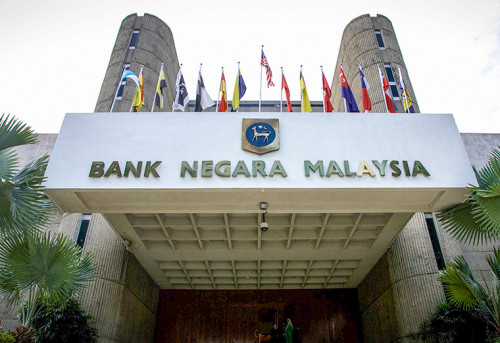
KUALA LUMPUR – “Outstanding achievement” is the most accurate phrase to illustrate Bank Negara Malaysia’s success in ensuring Malaysia stepped towards competitive and resilient economic growth under the outgoing governor Tan Sri Nor Shamsiah Mohd Yunus’ leadership.
Her tenure saw a global outbreak of the infectious Covid-19 disease that saw nations succumb to extreme measures such as lockdowns and border closures, as well as multiple changes in the country’s leadership.
“Despite the multiple changes in administration, it has not negatively impacted the central bank’s plan, such as its roll-out of the second Financial Sector Blueprint and digitalisation.
“These include BNM’s policies and strategies related to green and Sustainable Development Goals financing, tackling climate change, financial inclusion, and issuing digital bank licences,” said Sunway University economics professor Yeah Kim Leng.
Nor Shamsiah replaced Tan Sri Muhammad Ibrahim to become the ninth governor on July 1, 2018, and the second woman to be appointed as BNM governor after Tan Sri Zeti Akhtar Aziz.
Having been with the central bank since 1987, she rose from the rank of officer-in-charge of supervising the banking sector to assistant governor between 2010 and 2016. She then joined the International Monetary Fund as assistant director of the financial and capital markets division.
She returned as governor during Tun Dr Mahathir Mohamad’s second innings as the country’s 7th prime minister. Dr Mahathir resigned after 22 months in power. Following this, Tan Sri Muhyiddin Yassin was sworn in as the 8th prime minister on March 1, 2020. Not long after, Datuk Seri Ismail Sabri emerged as the 9th prime minister on August 21, 2021.
Continuous political infighting led to the 15th general election, which saw Datuk Seri Anwar Ibrahim appointed Malaysia’s 10th prime minister.
BNM under Nor Shamsiah’s leadership
Nor Shamsiah, who completes her five-year term on June 30, 2023, has proved that she could ably steer the central bank’s overall financial and monetary environment through one of the nation’s most tumultuous periods.
Yeah said it is a testimony to her strong leadership, the institution’s mandated independence, and her long-standing focus on human capital development.
“Under her stewardship, we have also seen innovative banking and financial policies related to green financing, financial inclusion, and digital banking being introduced,” said Yeah, who is also one of five advisers to the Finance Ministry.
Up close, Yeah said, Nor Shamsiah puts great emphasis on deliberating every aspect of a decision, asking probing questions from different perspectives, and continuously seeking feedback.
OPR and Moratorium
The simultaneous supply and demand shocks caused by the Covid-19 pandemic outbreak in 2020 resulted in BNM slashing the overnight policy rate (OPR) to a record low of 1.75% in July 2020 to boost the country’s economy.
To ease the burdens of individuals and small and medium enterprises in the country, the government introduced a blanket six-month moratorium on April 1, 2020. The measure was estimated to cost RM100 billion. It was later changed to targeted assistance.
Nor Shamsiah had said that such initiatives were possible due to the buffers that Malaysia’s banking and financial system built over the years since the Asian Financial Crisis in 1997.
“We entered the pandemic crisis economically stable and well-buffered,” she had said.
As green shoots of recovery were starting, the Russia-Ukraine war in 2022 caused global inflation to skyrocket and end the decade-long deflation in advanced countries.
The central bank had to increase the OPR to reduce credit growth and inflation, as inflation rates and interest rates are intrinsically linked.
It was in May last year when the central bank started to increase the OPR continuously five times (May 2022, July 2022, September 2022, November 2022, and May 2023), each time by 25 basis points.
BNM’s latest hike brought OPR rates back to pre-Covid-19 levels of 3.00%.
“The central bank's main monetary tool for maintaining low inflation and sustainable growth is domestic interest rates rather than exchange rates,” Yeah said.
Malaysia’s inflation eased to 3.3% in May.
“With the economy gaining strength, macro policies such as the OPR must be adjusted. This is necessary to ensure that our broad macro policies match our economic realities,” Nor Shamsiah said recently.
Keeping rates too low for too long can have damaging effects on the economy, she said.
“The devastation of the global financial crisis more than a decade ago, which was rooted in the US housing market and caused a synchronised global recession, should continue to serve as a sober reminder of this,” she said.
Ringgit as global economic shock absorber
The ringgit acts as a shock absorber to changes in global economic and financial conditions, said Yeah.
He explained that currencies are prone to over-shooting and the current excessive misalignment to the ringgit’s underlying fundamentals will self-correct as long as the country’s economic fundamentals remain strong and market confidence is convinced of the sound economic management and policies of the government.
“The ability of the central bank to convey its independence in setting interest rates and responding objectively to permanent rather than transitory changes in the economic and financial environment is one of the contributing factors to market confidence.
“While the ringgit direction is shaped more by the US dollar strengthening against most currencies, the central bank’s response is rightly focused on mitigating potential individual and corporate financial distress that may arise from sharp currency swings,” he said.
He added that the resilience of the well-regulated and sound banking sector and its contribution to economic stability are evidenced by the country’s short and relatively shallow recession of 1.5% contraction during the 2009 global financial crisis and 5.5% decline during the 2020 global pandemic crisis.
At the height of the lockdown, Malaysia’s economy dipped by 17.1% in the second quarter of 2020. It was Malaysia’s worst performance on record and its first quarterly decline since the third period of 2009, amid the global financial crisis.
“Importantly, credit flows were uninterrupted during the recent economic crisis, and loan defaults were kept at a low and manageable level. The banks remained well capitalised, liquid, and profitable despite various episodes of massive capital inflows and outflows,” he said.
BNM’s policies, strategies
Nor Shamsiah had a key role in the formulation and implementation of the Financial Sector Masterplan 2001-2010, Financial Sector Blueprint 2011-2020 and the Financial Sector Blueprint 2022-2026, which chart the development of the Malaysian financial system.
The Financial Sector Blueprint 2022-2026 sets out the bank’s development priorities for the financial sector over the next five years, anchored on efforts to foster market dynamism and support sustainable development objectives, with a continued focus on its monetary and financial stability mandates.
“Broadly, our regulatory focus will be to foster market dynamism, support sustainable development objectives, and remain anchored on our mandate to promote monetary and financial stability conducive to sustainable economic growth,” said the blueprint.
Importantly, it proposes five strategic thrusts for 2022-2026, which include funding Malaysia’s economic transformation, elevating the financial well-being of households and businesses, advancing digitalisation of the financial sector, positioning the financial system to facilitate the transition to a greener economy, and advancing value-based finance through Islamic finance leadership.
On digital banks, BNM announced five successful applicants for digital banking licences, which saw three applications licenced under the Financial Services Act 2013 (FSA) and another two applications licenced under the Islamic Financial Services Act 2013 (IFSA).
Under FSA, they are Boost Holdings Sdn Bhd and RHB Bank Bhd, a consortium led by GXS Bank Pte Ltd and Kuok Brothers Sdn Bhd, and a consortium led by Sea Ltd and YTL Digital Capital Sdn Bhd, while a consortium of Aeon Financial Service Co Ltd, Aeon Credit Service (M) Bhd, and MoneyLion Inc and a consortium led by KAF Investment Bank Sdn Bhd are licenced under IFSA. – Bernama, June 25, 2023