
(Read Part One here.)
SHADES of Chinese nationalism resonated even in Malaysia, because there is a residual animosity (from events that provoke ethnic tension between groups) feeding the ideology. However, poking too much into this may take away the fundamental message of the matter at hand.
Ultimately, the expansion of Mandarin as uniformity carries detrimental effects that directly overwrites the diverse cultural heritage of what makes our communities authentic.
Not when said language allows for scenarios that empowers the colloquial tongue(s) to be written-off simply by labelling it as ‘Fangyan’ (dialect) and getting penalised in civil academic institutions.
Creation of the Chinese people
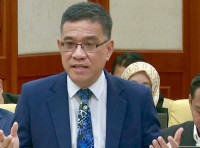
Linguist Sim Tze Wei, who is the president for the Penang Hokkien Language Association, highlights that in the past, families very much identified with a distinct ancestry where surnames such as ‘Yeoh’, ‘Lim’, ’Cheah’, ‘Khoo’, ‘Tan’, etc are linked with different ancestors.
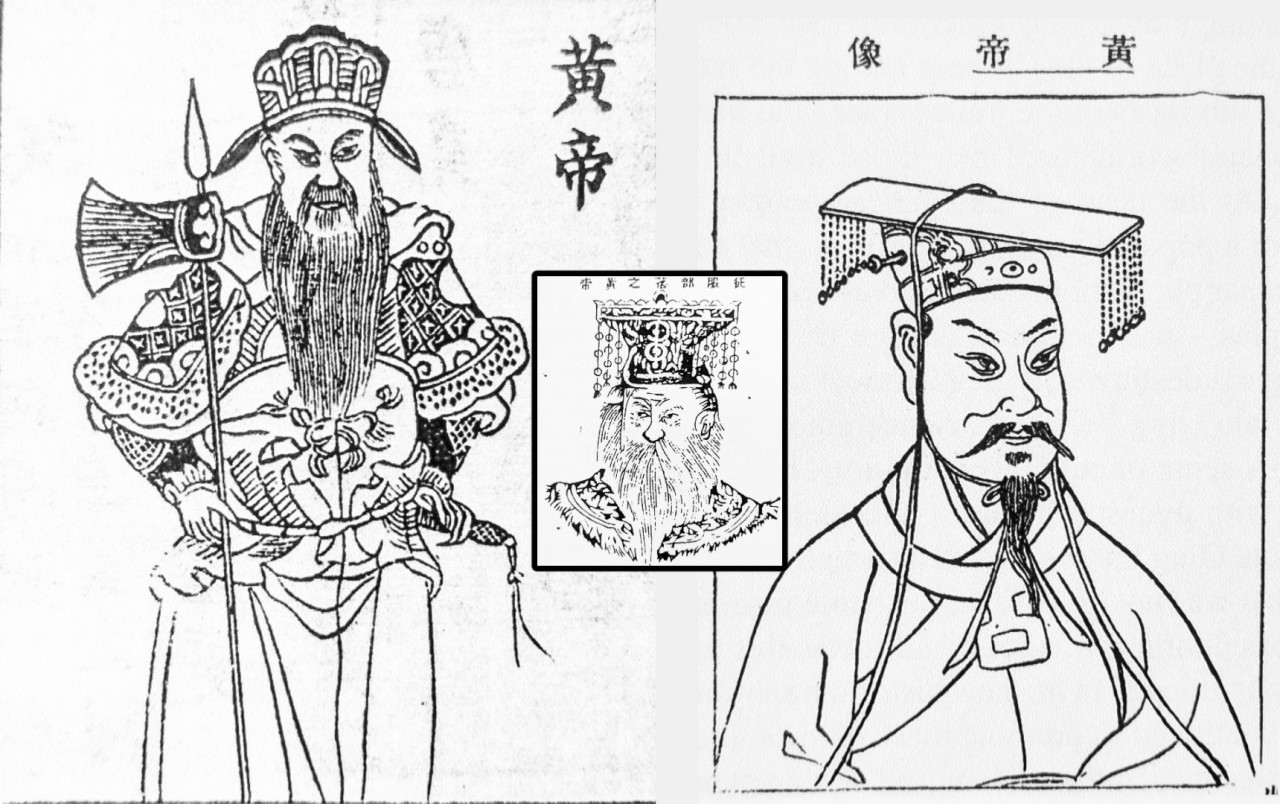
“It is only by the end of the 19th century after the first Sino-Japanese war (1894-1895) between the Qing dynasty of China and the Empire of Japan, the birth of a new ethnic identity (or at least the political spin to it) took place. It was created by the elite to overthrow Manchurian rulers, based on the mythology of the ‘Yellow Emperor’ (or known widely as ‘Huangdi’).
“They [educated elites] spread the theory to the whole Chinese civilisation where everyone is related through a common sovereign (one single ancestor), gradually ridding the attachments the population had towards their respective traditions,” he shared.
“There are a lot of academic debates and arguments talking about this 1895 turning point – where the decline of languages other than Mandarin is very well attributed. Prior to it, these ‘dialect’ groups do not see themselves as one people or nation,” added the linguist.
The association in which Sim is a patron of is unequivocally open to whoever speaks Hokkien or wants to advocate on its behalf. The linguist himself confessed that he does not have Hokkien blood, but is of Teochew heritage instead.
“We [Penang Hokkien Language Association] simply hope to raise the awareness of breaking free from a force driven by the ideology of Han Chinese ethnic nationalism, so that Penang can return to its root language spoken by many. The arguments I shared in the video links will depict this new bloodline identity that ensued due to the movement”.
“The [Chinese] community carries a great importance in blood lineage. This idea [bloodline identity] is very strong, complex and admittedly part of the problem of how Mandarinisation destroys cultural identity. Understanding the convolutions that go behind this – lineage – ideology that contribute to the issue at large over the centuries is key,” he said.
“How can it be your ancestral language if the generations above you do not speak it? Very simply, your ancestral tongue is not Mandarin. This concept at the end of the day is being forced, as a result you identify with the wrong ancestor,” Sim added.
Addressing the complexities of pushing a particular language as a medium of instruction in a nation that is already culturally diverse, he noted: “For Chinese vernacular schools, if we want to talk about having a common lingua franca, we already have our very own bahasa kebangsaan (Bahasa Malaysia) to do just that – everyone has to learn Malay including their own mother tongue, which the community defines for themselves”.
“In Penang (in particular), the idyllic goal is to have Hokkien implemented as a medium of instruction. There used to be Hokkien, Cantonese, Teochew and Hakka schools, but over the years it shifted to becoming full Mandarin reflecting the ideology of the Han identity,” said Sim, whilst also noting that reverting back to old forms is not the main point.
Clarifying things further, the linguist shared that in the efforts to preserve the languages, it is not about supporting the individual languages based on ancestry, as that would introduce competition between languages in the same territory.
“It is more of promoting the use of language that is predominantly spoken in the area in question so the individual languages are able to thrive in the territory that it is recognised.
“For example, Hokkien in Penang’s SRJK (C), Cantonese in Ipoh, Hakka in Sabah. It is not hard at all to implement, it just takes willpower – if a century ago people were able to do so, why is it difficult today?”
Many southern Chinese languages such as Hokkien, Hakka, Cantonese and Teochew, are popular languages with many speakers around the world. Hokkien alone has 25 million speakers, so why is it at risk of facing extinction?
Protecting language diversity
Modern geopolitical trends suggest that there is an importance on Mandarin since it is due to take over the world as China becomes an economic powerhouse that will one day overshadow the United States, but the linguist argues, “the rise of Mandarin preceded the rise of the Chinese economy”.
“The language hardlined itself in the early 20th century, way before Mandarin became ‘important’. If there are doubts on major versus minor language to guarantee success in this modern age, just look at countries such as Japan and South Korea.
“They did not conform to the conventional view that in order for a civilisation to rise, it needs to forego their language entirely because there is no ‘commercial’ value,” he shared.
Pointing towards the Romansh language, Sim highlighted: “It is spoken only by an estimated number of 50,000 people worldwide, but schools in the area where the language resides implement Romansh as their medium of instruction”.
“Switzerland is a very good example as a counter-argument against the idea that Hokkien is too ‘small’ or ‘useless’ to be used as a medium of instruction. Policy makers must be able to create a condition (i.e. giving recognition to these languages in the community and schools) for languages to survive”.
Malaysia, unlike our neighbouring countries, does not fully adopt cultural assimilation in which a minority comes to resemble the society’s majority by way of one race and one nation.
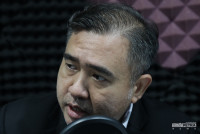
Malaysian Chinese Association (MCA) vice-president Datuk Seri Ti Lian Ker highlighted: “The country was founded based on accommodation whereby Malaysians accept multiculturalism and multilingualism. There was a lot of emphasis on tolerance and all cultures are being accommodated in a flexible manner”.
“This is because our forefathers (Tunku Abdul Rahman, Tun Sambanthan and Tun Tan Cheng Lock) have set the nation’s foundation that is unique in the Southeast Asia region based on diversity. Chinese and Indian immigrants did not have to change their names, foregoing their roots such as in the Philippines, Thailand and Indonesia,” he noted.
“As much as Tunku tries to preserve the multi-cultural conscience of the people, the rise of nationalistic ideals (from the left and right-wing) came after the May 13th, 1969 (the Sino-Malay racial riot)”.
“What the setting was before the incident that took place, was an actual true showcase of our nation’s strength where we were able to maintain sufficient command of the major languages that serve our diverse population and the region,” he added.
According to the politician, there was a stark difference in the communication advantage that Malaysian Chinese had (as compared to other Chinese) when they travelled out to mainland China in the 1990s since “we had a better linguistic grasp of the different dialects (picking up at least two or three). They see our multilingual (and multi dialect) ability as an asset”.
“In the past, many families picked up their respective mother dialects through the generations before them. One family can speak many dialects. It is the beauty of Malaysia, which we fail to realise,” he said.
“Unfortunately, the majority of us today are no longer having this advantage. We became less confident and only able to command one language or dialect which we are ‘comfortable’ with.
“Our strength is watered down because of political rhetoric (implying dominance) and simplistic arguments (that we can only unite with one race and one language like in Thailand, Indonesia or Philippines or with a simplified language minus dialects like in Singapore and mainland China),“ he added, further noting that we have lost our ability to be accommodative.
“The formula to gaining unity is not about language. Values (sincerity, empathy, consideration and purity of a person’s heart) are more important in this context. Even if we still are speaking one language today, it does not guarantee we will be free of conflict,” said Ti, admitting that Mandarinisation does not make the community more ‘united’.
.jpg)
“Our core values, faith and belief system is more important”. – The Vibes, February 14, 2021