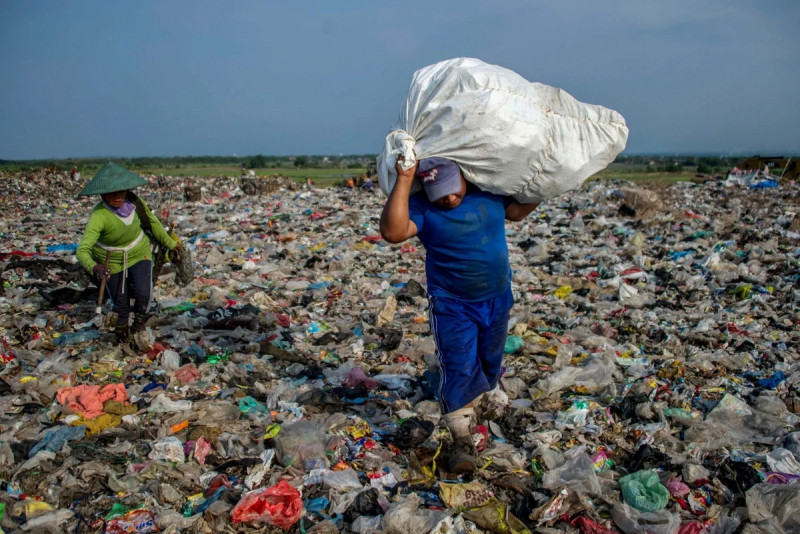
AUTHORITIES and industry leaders have called on the Malaysian government to impose a blacklist on nations found to be exporting plastic waste illegally, in a bid to curb the influx of contaminated material into the country.
Malaysian Plastics Manufacturers Association (MPMA) president Cheah Chee Choon stressed that strong measures are needed to tackle the unauthorised import and processing of plastic waste by unlicensed factories.
“This action can strengthen control over the entry of plastic waste into the country, preventing Malaysia from becoming a dumping ground for foreign waste,” he said.
He also urged the government to review proposals for a moratorium on imported plastic waste, noting that the domestic recycling industry still relies on such materials as raw input.
Cheah made the remarks during the fifth National Stakeholder Engagement Dialogue of 2026 on the management and enforcement of plastic and e-waste imports, held in Bangi recently.
Highlighting the industry’s needs, Cheah said Malaysia’s plastics sector requires approximately 6.9 million metric tonnes of plastic waste annually to supply 178 companies engaged in recycling.
He explained that while local waste is cheaper and more readily available, imported plastic often offers higher quality despite its greater cost.
“The industry is currently transitioning to using more domestic plastic waste through more effective waste management systems.
“One key initiative is the Extended Producer Responsibility policy led by the Ministry of Housing and Local Government, which has also been applied in China to reduce dependence on imported plastic waste,” he said.
Meanwhile, Datuk Mohd Zaki Hassan, director of the Governance Investigation Division at the Malaysian Anti-Corruption Commission (MACC), highlighted the importance of good governance in overseeing the import of plastic waste.
“This measure is essential to enhance control over the entry of imported raw materials and to prevent contaminated or mixed plastic waste from entering the country. Long-term planning is also needed to reduce the industry’s reliance on foreign plastic waste.
“At the same time, initiatives to recycle local plastic waste must be strengthened to ensure a sustainable raw material supply,” he said.
The Ministry of Investment, Trade and Industry (MITI) added that Malaysia’s plastics industry supports high-value manufacturing, particularly in the electrical and electronics sector.
Records from the Companies Commission of Malaysia (SSM) indicate that Approved Permit (AP) sales involving 77 permit holders were valued at RM3.2 billion in 2023.
Plastic products from the recycling sector are commonly exported as value-added goods, including components for the E&E sector, medical devices, aerospace, and food packaging.
As of 31 December 2025, the Malaysian Investment Development Authority (MIDA) recorded 178 companies engaged in plastic waste recycling in the country. Of these, 142 hold manufacturing licences, while 36 have received exemptions under the ICA10 scheme. - March 7, 2026