AS Malaysia celebrates Teacher's Day this month, we cannot help but look back at the year many educators have had.
Many teachers would agree that being an educator in 2020 was not the easiest. We were thrown in the deep end, filled with anxiety and endless questions – how can we conduct lessons virtually? What about the students with no Internet access? What happens if schools decide never to reopen?
We may not know everything, but we are always willing to go the extra mile to adapt and inspire the students in classrooms.
If you were one of the educators who were overwhelmed by the new reality of what did not make sense then, this piece is for you.
Being an educator during the pandemic
Personally, one of the most difficult challenges was dividing time between teaching, engaging with students, other administrative tasks, and self-care. For some other educators, they had to also take on an additional role as a parent to their little ones at home.
Keeping up with the needs of students, family, and friends, while being an educator during a pandemic was undoubtedly overwhelming. Here, I learned that self-care is essential for my well-being.
To be an effective educator, I had to know how to regulate my own emotions and mental health before knowing how to care for my students and fellow teachers.
This has also made me realise the importance of our roles as educators in providing students with the right tools and endless support to navigate through the unprecedented year.
At the height of the pandemic last year, many students faced issues studying online due to poor Internet connections and not having enough electronic devices. More than one third, or 36.7%, of students in Malaysia, had no access to electronic devices at all. Others had to miss classes as they were required to help their families stay afloat during the pandemic.
This has caused them to feel stressed, unmotivated, lonely, and helpless. As the frontliners of the education system, teachers need to build a good relationship with students by caring for them as individuals and human beings instead of learners. Ultimately, this will help inspire and spark students’ interest in the lessons taught, whatever the means may be.
While I struggled to transition into a new education structure, I also learned that education is a two-way communication where teachers are also learners. Learning new ways on how to engage with students and relearning a topic through various teaching materials puts educators in a humble position. At the same time, it brings joy to the experience.
It was also truly fascinating to observe how the senior teachers learned to adopt technology in their lessons. The pandemic has become an opportunity for both educators and students to develop stronger IT skills.
How can we future-proof learning?
Future-proofing education begins with us. As a progressing society, we need to revamp our mindset towards what education is and strengthen our roles in providing greater emphasis on life skills. From the beginning, educators have been seen as the pillar to build a resilient and empowered generation. Students come to school because it is a safe avenue for students to learn, make mistakes, and start again.
In today’s pandemic world, it has become essential for us teachers to encourage one another and collaborate. We do so by pooling resources and expertise to enhance students’ learning experience in project-based learning. That way, students will be more adaptable in the face of a setback and are more empowered to continuously find solutions to any difficulties or crisis faced – be it completing homework or finding ways to reconnect with teachers and classmates.
This also lifts the weight off our shoulders as educators who are constantly anxious and affected by the rapid changes of the pandemic.
When we talk about future-proofing learning, one cannot ignore the increasing need for technological aids in schools. This means access to a physical device, connectivity, and knowledge in using them. When the pandemic hit, students without devices for virtual learning fell behind in their studies, and some missed out on lessons throughout the study period. It not only affects them academically but mentally as well.
With technological aid, educators will be able to teach students how to seek knowledge while leveraging current and accessible technologies. Today, credible information, research studies, and learning materials are widely available with one Google search away.
As an educator, we need to remind ourselves and recognise the opportunities given to continue providing a lesson for the students and nurture self-development growth.
For instance, shifting the focus from an educator whose traditional role provides materials for the students, to take the role of a facilitator instead. Through this, students can increase their confidence in adopting technology, gain digital intelligence and learn how to be resourceful with the information at hand.
Continuing the journey together
My time as a secondary school teacher ended too quickly. But I am extremely privileged to have the support from Fellows in Teach For Malaysia (TFM) and 3M, who helped sponsor my time in teaching science to my 150 students.
As the saying goes, “the world needs more teachers”, and I am determined to walk hand in hand with all educators and teach. There were many other activities and lessons left to be shared. For example, bringing more exposure to the STEM field. As well as exposing them to real-life issues and topics such as the UN's Sustainable Development Goals, peace ideals and global issues.
Today, many youth leaders and inspiring figures are finding new ways to make tomorrow better. And I believe teachers are the gateway to these possibilities. – The Vibes, May 16, 2021
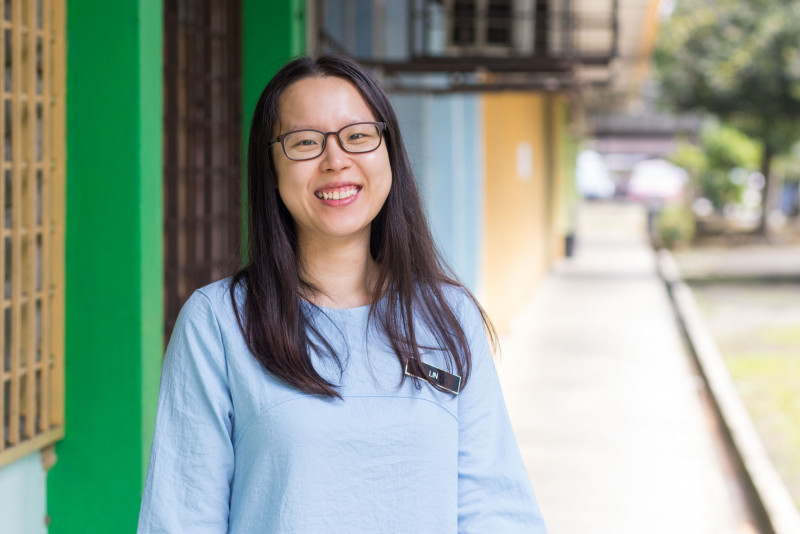
* Lin Tan Yen Tzing was a science teacher sponsored by global science company 3M under Teach For Malaysia’s Fellowship Program in 2019. Before starting her two-year placement at a Selangor school district, Yen Tzing graduated with a Bachelor of Science (Chemistry) from Imperial College London. She is now waiting for her interview to be a permanent government secondary school teacher.