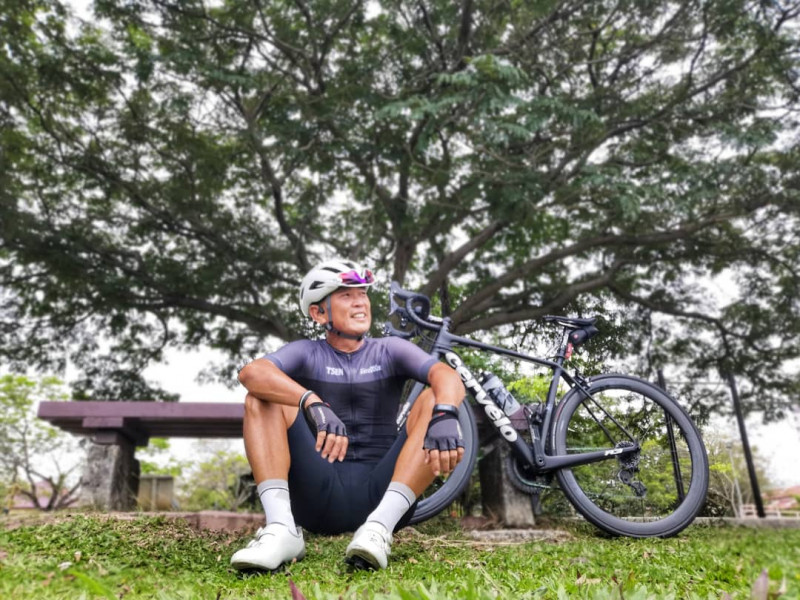

WORLD Bicycle Day, also known as International Bicycle Day, is celebrated across the globe on June 3. This day is sponsored by the United Nations, to promote physical activity, encourage people to use a bicycle to move around as it is a more environmentally friendly option, and highlight the need for better and safer infrastructures to cycle on in bigger cities.
Kuala Lumpur in recent years has implemented bicycling lanes and dedicated car-free weekends for cyclists to enjoy a safer ride through the streets of our city.
Staying active and cycling regularly is a great way to stay healthy and fit. Cycling helps reduce the risk of stroke, heart disease, and certain cancers. World Bicycle Day has been associated with the prevention of diabetes, and the promotion of a healthy lifestyle for those who suffer from it.
One such person who was able to reverse a diagnosis of diabetes is veteran voice-over talent and former radio announcer, Richard Ng, 59.
The Vibes caught up with him over a telephone interview to learn about his inspiring health turnaround; from fat to fit, which began, as is typical of these kinds of wakeup calls, with a diabetes diagnosis from his doctor.
The Vibes: Tell us about your cycling journey
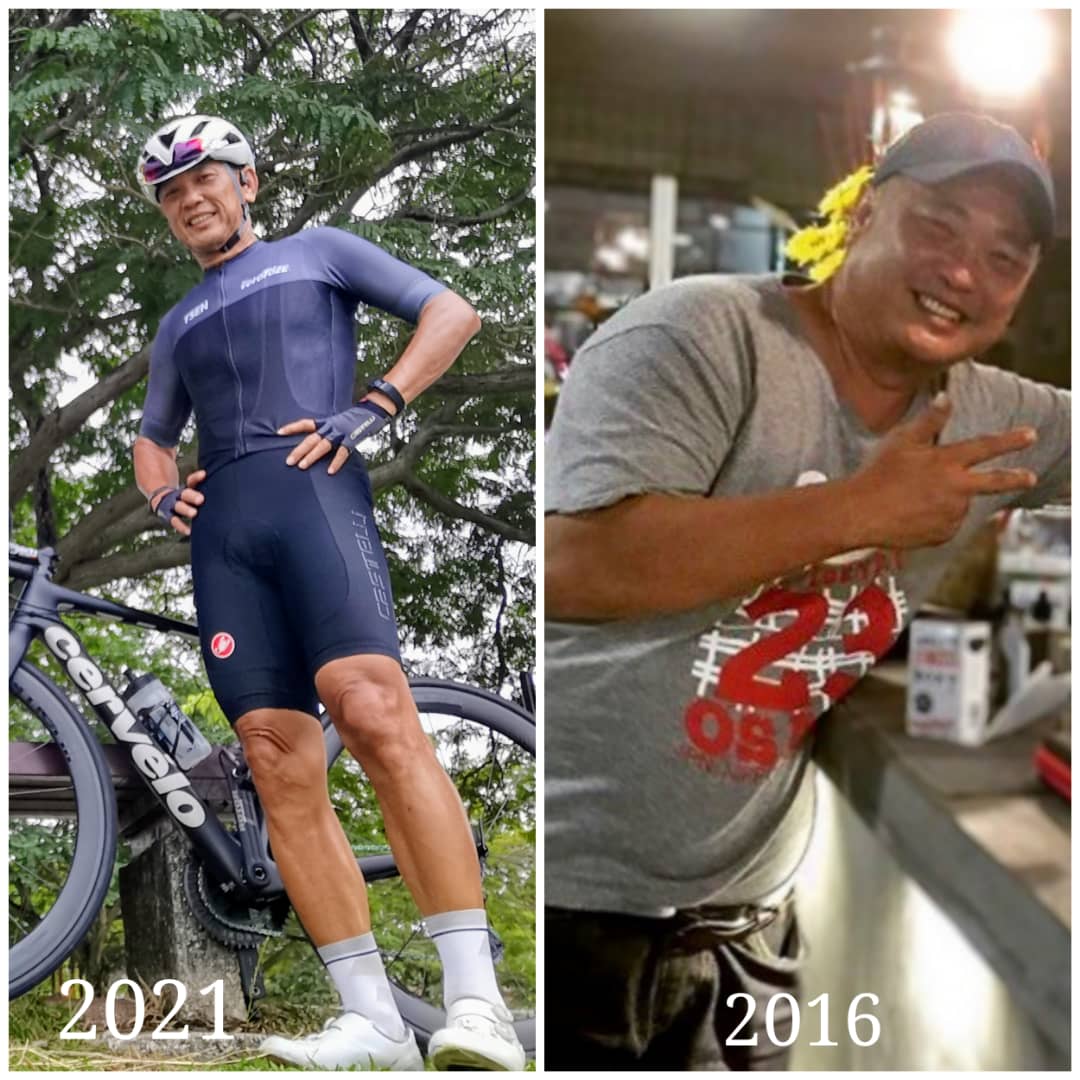
Richard Ng: I started cycling five years ago, in September of 2016 because of obesity and health issues. I started slow – brisk walking, slow jogging and then I moved on to cycling upon the persuasion of a friend who told me it was a fast way to lose weight.
At the time, while already having a high cholesterol reading of 9 and high blood pressure of 155 mmHg, I was also diagnosed with type2 diabetes and my sugar level at the time of testing was 15mmol/L. I was already on all sorts of medications, and my doctor added Metformin to bring my sugar levels down.
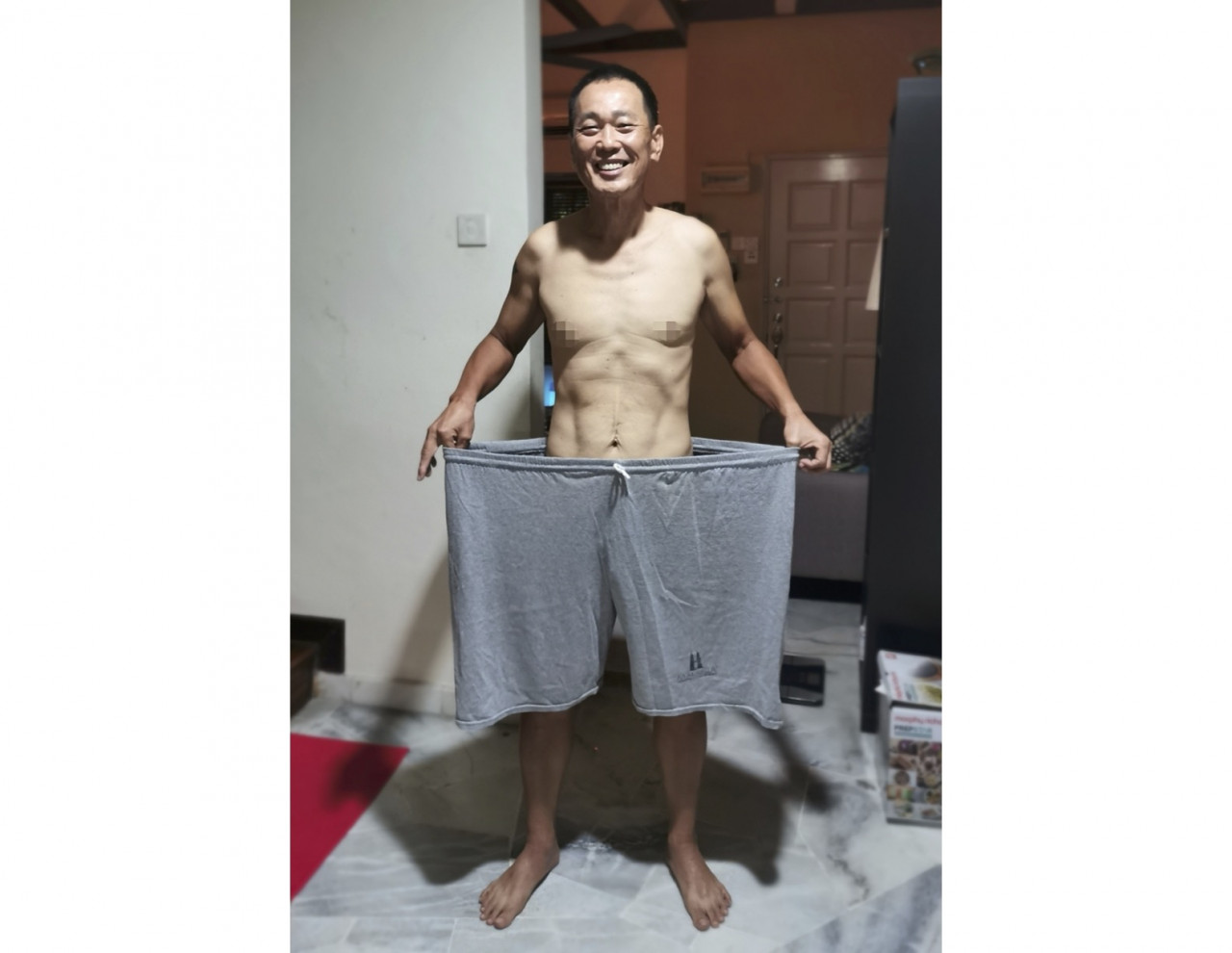
Enough was enough I thought, and I immediately cut sugar and white rice out of my diet and decided on a lifestyle change. I was too overweight to jog without gasping and was hurting my back, so I started brisk walking. I also began clean eating and cutting down drastically my usually extra-large food portions.
I continued to walk 45 to 60 minutes twice a day and made sure my output was more than my input. To lose weight, I made sure I had a 500 calorie deficit at the end of the day.
Because I was so overweight, I had immense joint pain. It was really bad, and some days I literally couldn’t move. Cycling is the only exercise besides swimming that doesn't put weight on the joints. Regular cycling stimulates and improves your heart, lungs and circulation, reducing your risk of cardiovascular diseases. Cycling strengthens your heart muscles, lowers the resting pulse, and reduces blood fat levels. Plus, the movement helps lubricate the joints, which reduces pain and stiffness. And I truly felt that cycling improved my mental well-being and strengthened my immune system.
Also, something else I discovered – cyclists have better lung health. My Vo2 max (the maximum rate of oxygen consumption measured during incremental exercise; that is, exercise of increasing intensity) now is 46, which is equivalent to a 20-year-old!
TV: So how long did it take for you to truly get serious about the cycling aspect of your fitness journey?
RN: I started on one of those cheap bicycles you'd take to the market with a basket in front and that did it for me. I'd go around circling my neighbourhood round and round all over the entire suburb until I hit my set quota. I slowly increased the distance week by week and I'd cycle around anywhere between 10-30km. Once I could accomplish the distance, I'd work on the speed and time to complete the same route. The idea was the faster I complete the route meant I was getting stronger. This went on for a year.
One day a friend who is an experienced cyclist took me to the highway motor lane and taught me how to ride on the highways responsibly and safely. He taught me the rules, hand signals and the ropes of it all, where safety is concerned. Note: if you're new to cycling, do not attempt to cycle on the highway motor lane. It can be dangerous to yourself and others.
The first thing I would highly recommend for cyclists are two of the most important things for safety: 1) a cycling helmet 2) bicycle lights.
I see lots of ‘taman cyclists’ riding around without a helmet or lights. You might think it's OK, it's just around my neighbourhood, but no – it is not OK. A helmet is to protect your head because should you fall (and it's very common to fall at one time or another for whatever reason) your head would be the first contact on the tarmac.
You need bright lights, be it day or night because it gives drivers a better chance to see your lights blinking at a distance. Blinking lights at the front and back will get their attention.
Also, when you're riding, always turn to glance behind from time to time. This allows you to constantly know what is behind you. And by human instinct, if a driver sees you turning to glance, it's natural they will slow down because they notice you turning your head and are not sure of what your next move will be. Hence, they will be more cautious and slow down a little.
TV: Is any bicycle really enough to get started?
RN: To be honest, for exercise purposes around the neighbourhood, any type of bicycle is good. There is no right or wrong. Exercise is exercise.
But as you ride more and get more experienced, just like any other sport, you'd want better performance and upgrading equipment does help to a certain extent. At the end of the day though, it still boils down to training and how strong those legs of yours are.
I started investing in a better bicycle after a year or so of riding because my expectations changed and I wanted to challenge myself to be better and stronger. I trained harder and started upgrading my equipment to help me get faster to be able to motivate myself.
Let's be honest, no matter how fast I'd like to be, there are limitations to how fast a 59-year-old man like me can be. To be at your peak, rest and nutrition are also very important.
To motivate myself, I used to see photos of good cyclists like the pros in their skin-tight jerseys (for aerodynamics) and thought it was impossible to squeeze into it and it didn't help the fact it's made from lycra. Even so, it was an ambition to be able to wear it and look good in one so I pursued that challenge. No more baggy ‘uncle t-shirts’ for me! Talk about cycling vanity!
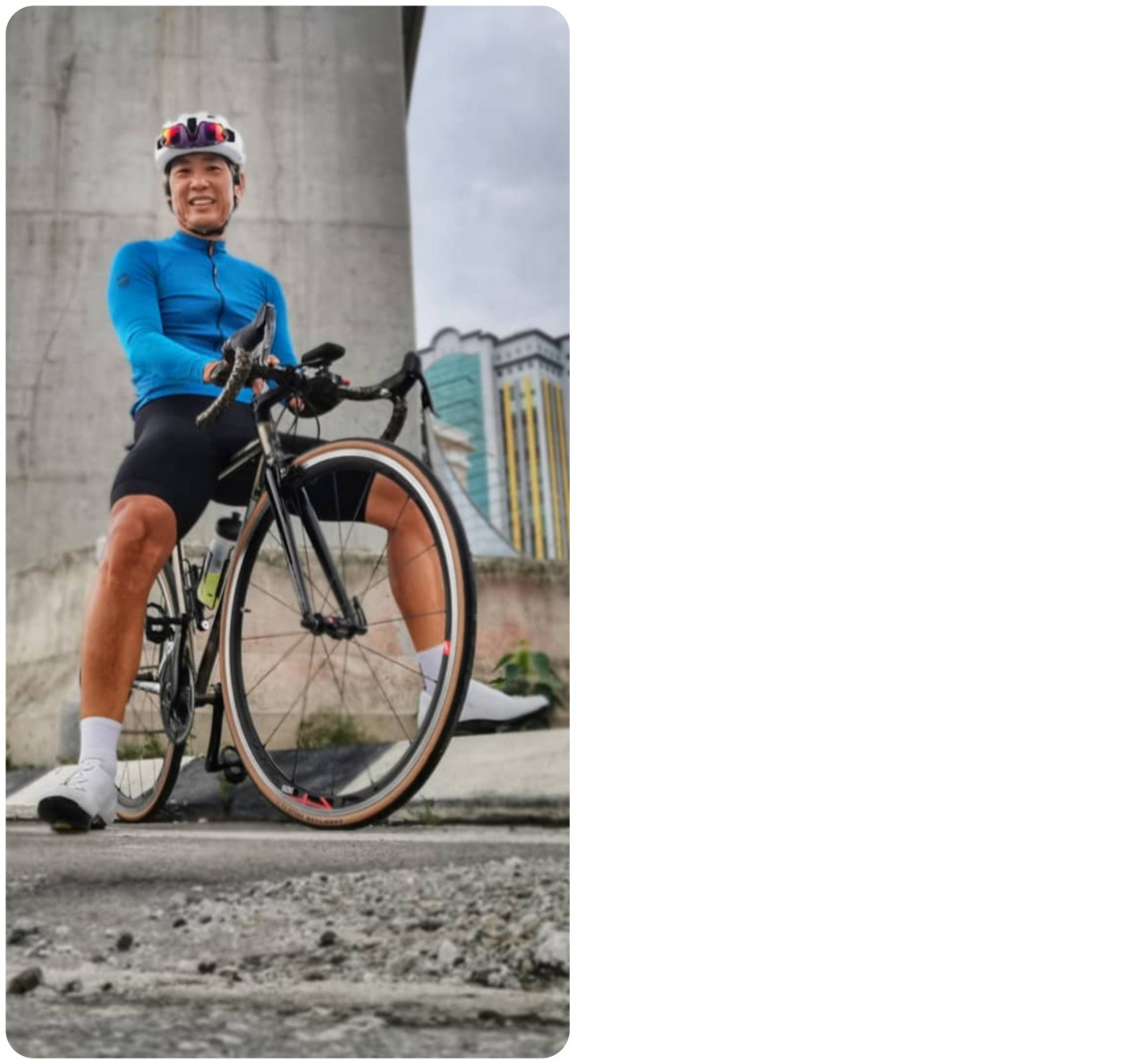
With a lot of cycling and proper eating habits, I finally managed to do the jersey justice!
Bike upgrading or anything to do with cycling nowadays can be serious money, and the sky's the limit. I for one definitely cannot afford the best, so all my cycling gear is mid-range, so for me, my motto is if I can’t afford the upgrade, I'll upgrade myself instead. Instead of buying lighter bike upgrades, I trained harder and dropped any unnecessary body weight. Upgrades are good only if you have the power to drive them.
What's most important is if you're getting into cycling and buying your first bike, make sure you get one that is according to your height and get a basic bike fit, to begin with. Bicycles nowadays come in various sizes according to a person's height. A basic bike fit is to make sure you're seated comfortably on the bike to get the best out of the bicycle.
How much money you need to invest in cycling can range from anywhere between rm2k-rm40k. It really depends on your bank account, but a good start if you're serious about making cycling your routine, I'd recommend something mid-range. You'll enjoy the ride better and chances are you'll be sticking to it if not absolutely hooked to it in no time. It's that contagious!
TV: Cycling can be a solo thing or a group activity. Which is your preference and why?
RN: Cycling solo or in groups both have their own kind of fun. I do both happily. Solo because it's a time I can plan my own pace, distance, speed, power output, etc. and especially when I want to train to improve myself I prefer to go solo. The fun part of solo riding is also when you're not pressured to keep up with the group and just cycle at your own leisurely pace if you so choose to and stop whenever you like to.
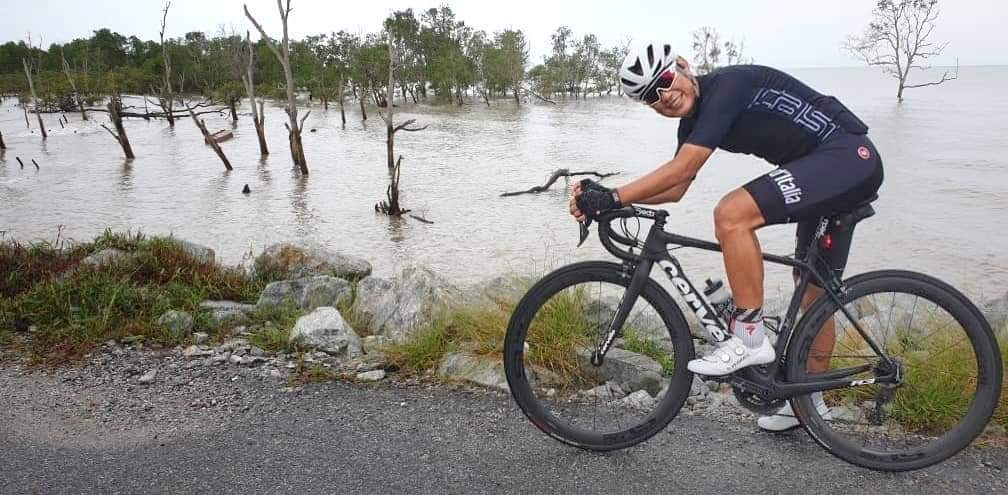
Group cycling has its fun because it's a social thing. It can also be easier when cycling with a group. If you're not the front few as the lead cyclist, your effort is reduced by about 20-30% because the front riders help you block wind resistance.
.jpeg)
But, group rides require the understanding of using basic road safety – hand signals and other safety riding skills and experience because group rides can be a bit of a tight squeeze, so you'd have to know what to do in group rides.
One basic rule is never to let your front wheel cross the back of the back wheel in front of you. It is dangerous because it can cause a group crash if not careful. This is one of the basic rules to remember in group rides.
Apart from riding safely, group rides are a happy social ride with friends, making new friends, and finding new places to eat, because we all love a good melantak session after a gruelling ride!
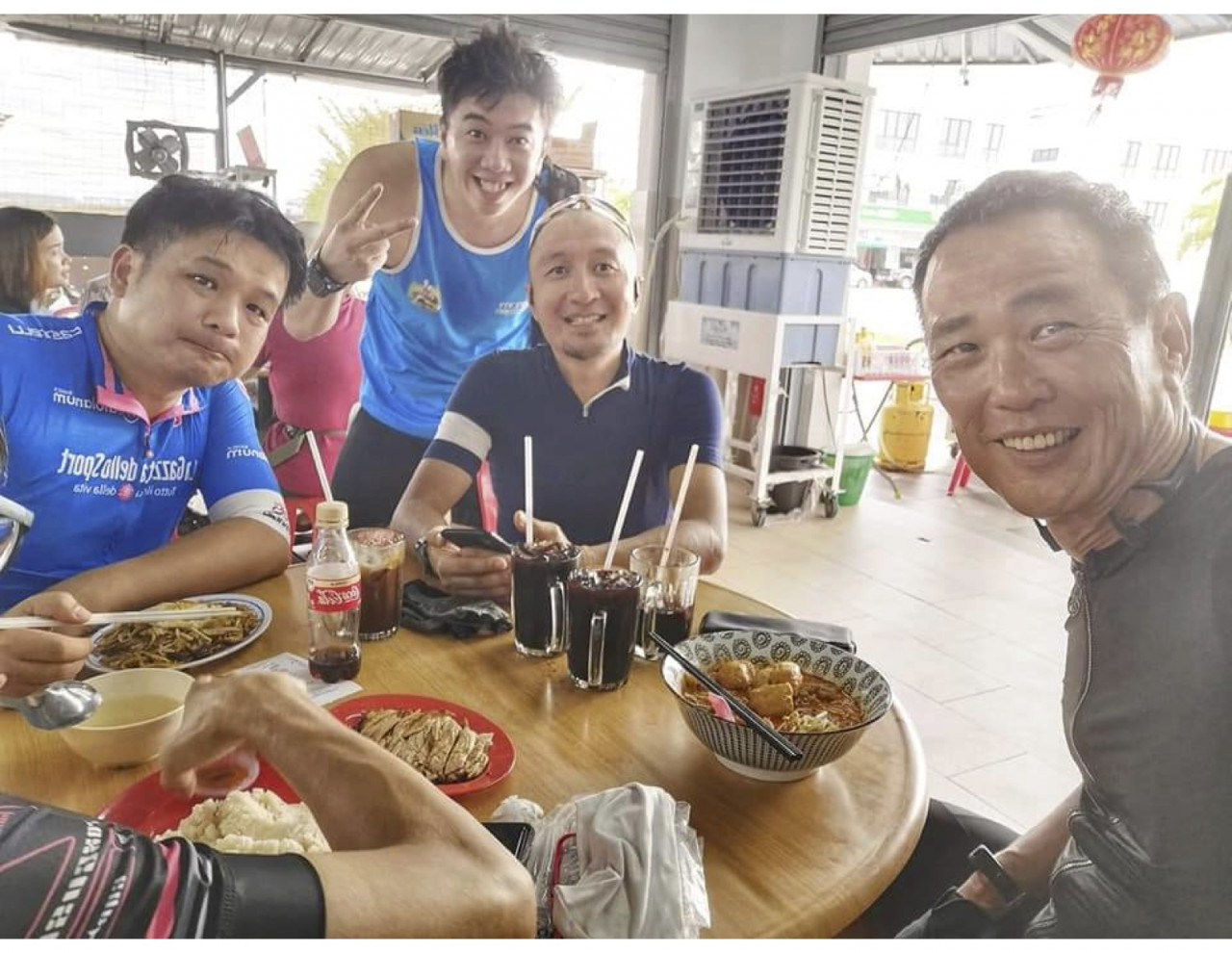
TV: What would be your advice for those, especially the unfit, who want to take up this sport for fitness and fun?
RN: My advice to people is to get any bike that is your size and just start around the neighbourhood. It doesn't matter how far or how fast you ride as long as you ride. Do as much research about cycling safely - there are tons of YouTube videos on this subject.
Get a sports watch with a heart rate monitor and know not to push over your limit. Listen to your body, it will never fail to warn you when you've reached your limit. Make sure you know your max heart rate for your age with a simple calculation (220 - your age = max heart rate)
I can't stress enough about cycling safety again. Please wear a helmet! If you can afford a bike, you can afford a cycling helmet. More expensive helmets don’t mean better protection, it's just more comfort and features. It still does the job – but use one, it will save your noggin.
Use blinker lights at the front and back, and get those that are rechargeable and make sure they are fully charged up every time you ride.
Be street smart when you're riding, ride with the utmost safety in mind. Better still, ride with an experienced rider to learn the ropes of cycling safety. Two or more newbies riding together as a group is definitely not a great idea. It's like the blind leading the blind.
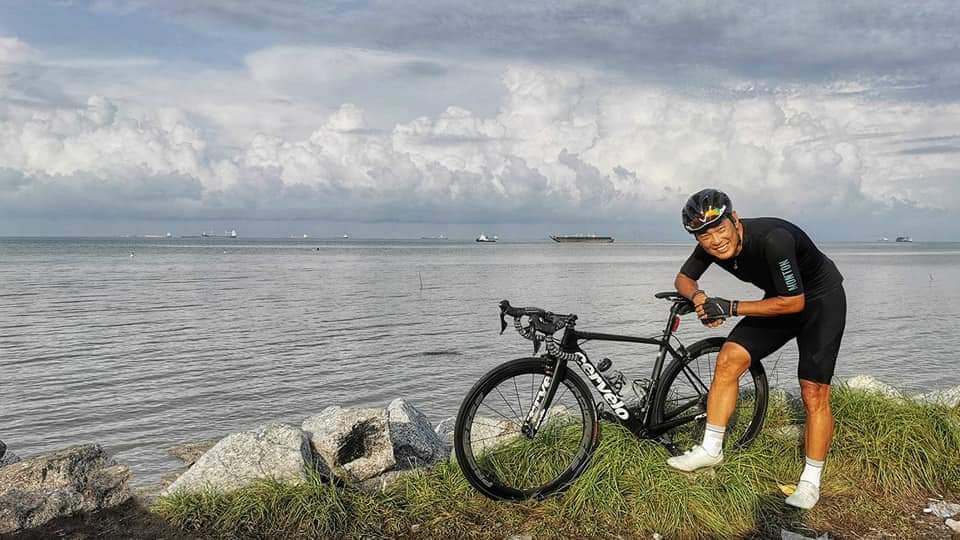
Today at almost 60yrs old, I'm about 73kg, I'm no longer on any form of medication for two years now, and all my health readings are in tip-top shape. I make it a point to cycle at least 200km weekly whether indoors or outdoors. I still do brisk walking and jogging.
Occasionally, I do some simple exercises like sit-ups, knee push-ups, squats as well.
My diet is now not as strict as when I started my health kick simply because I know I will be burning it off nowadays but that said, I do take note of what and how much I eat, and everything in moderation.
I still love Malaysian food – I could never give it up completely, and cycling is one way I can continue to enjoy eating all the wonderful food we have in this beautiful country! – The Vibes, June 3, 2021