
WHEN we talk about a healthy livelihood, it will often consist of not just personal well-being and financial security but also the sustainability of our planet’s ecosystem.
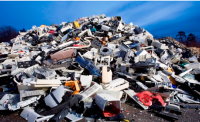
In fact, a biodiverse and thriving environment is the very foundation that helps to support the facilities that make up the modern world.
Becoming urban today is more than just about the history – and mechanics – that supports the industrial revolution.
At least the ideals of what makes a society modern that headlines many ongoing discussions have begun to expand themselves.
Among them, i) reviewing existing practices that have ravaged the natural world, ii) efforts to restore it, and iii) how the marginalised few are at risk of losing their importance in societal development.
Stopping the collapse of biodiversity is not an easy feat. For each ill-informed naysayer that exists to slow down the process, there will be twice the amount of eco-warriors that work towards a better future.
The Vibes take a deeper look into the issues for World Environment Day 2021 to understand how changemakers are putting their best foot forward in bringing positive changes.
How climate action and community development are related
Working towards a response to climate degradation with a focus on empowering the local communities that are impacted is an engagement that we must push now, more than ever.
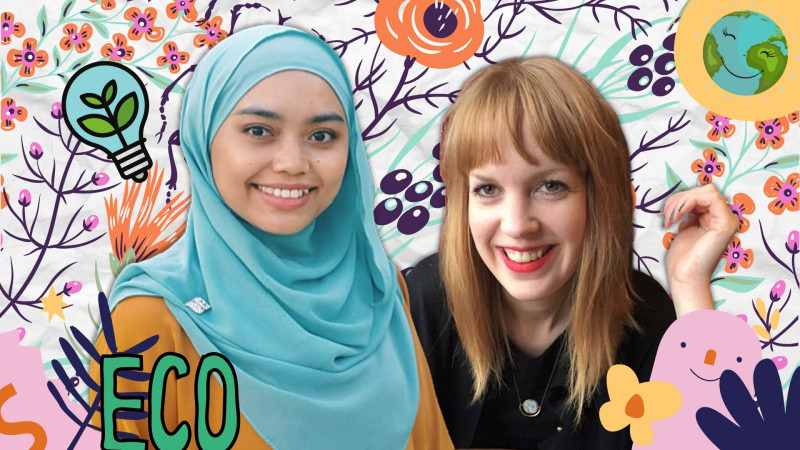
“We need to take action now as climate change is happening as we speak,” said Social Enterprise Academy (SEA) Scotland representative Jess Kemp.
Kemp was responding to the question on the importance of a project such as the Virtual Impact Storytelling in our Network (VISION), which aims to gather climate change activists from Malaysia and Scotland to collaborate on ideas in the fight for environmental action.
“These young climate activists (around 28 participating members in total) are a credit to our planet Earth, as they are fighting to undo the damage done by previous generations,” she shared.
“The effects of environmental decline are already being seen on a global scale. So, we strongly believe the time to address this is now, before it is too late.”
The VISION programme was launched on May 29, where the group will meet every Saturday over the following eight weeks via virtual sessions that support them to plan out their ideas before developing them further.
“The activists will document their stories through this process, before showcasing them through our VISION Virtual Impact Festival, which will take place just before the 26th UN Climate Change Conference of the Parties (COP26),” added the SEA Scotland rep.
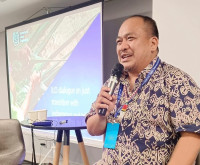
On the Malaysian front, Naadiah Mazlani who is the education and learning coordinator at SEA Malaysia, gives us a detailed understanding on the academy’s objective, goal, example of initiatives, and the community it benefits.
“We are part of an international network, a ‘Hub’ of SEA in the country, focused at providing learning and development (for people and organisations) to enable social change,” she explained.
“We work closely with social entrepreneurs and innovators in Malaysia through capacity building programs such as bootcamp and accelerator program(s). i.e. MaGic, British Council, UNDP, local social enterprises, and our very own public program.
“To date, we have trained more than 400 aspiring and existing social entrepreneurs since we first started in 2017.
“For the VISION project, participants of the programme are mostly youth environmental activists or university students majoring in environmental studies.”
On ways environmental problems have affected marginalised communities locally, Naadiah notes, “... the expansion of mining sites, deforestation for the development of mega-dams, and other infrastructure to be among them.
“This will not only pollute the river but can change the hydrology of the river which will severely impact the communities that are living nearby which rely highly on the forest and river as their source of livelihood.”
“The variety of marginalised communities here in Malaysia include the urban poor, undocumented persons, and also the indigenous people just to name a few,” she detailed.
“Different communities have different environmental problems that are affecting them, but I would like to focus on the environmental problems that have affected the Orang Asli.”
Adding further on the matter, Kemp provides an equal insight on a more global scale.
“Marginalised communities often live in the most vulnerable areas in countries around the world, which means if there is any type of climate change or negative climate event, they will be hardest hit.
“It is often these communities struggle to recover from the aftermath of a climate disaster due to a lack of access to resources and support,” she highlighted.
“According to Mercy Corps, 3/4 people living in poverty rely on agriculture and natural resources to survive. Hence, why it is so important for us to protect marginalised groups by tackling climate change head-on,” added Kemp.
The road for inclusivity and better awareness
Sharing a pain point to overcome concerning community/climate change education among those with a marginalised background, Naadiah notes the challenge could potentially be in terms of communication.
“This is something that I have validated as well, through friends that have worked with the community. I believe we need to have someone who can speak their language to make sure the message can be delivered across.
“Giving a practical, real-life example is the way to go. It is always easier to explain something with representations that they are already familiar with and can connect to.
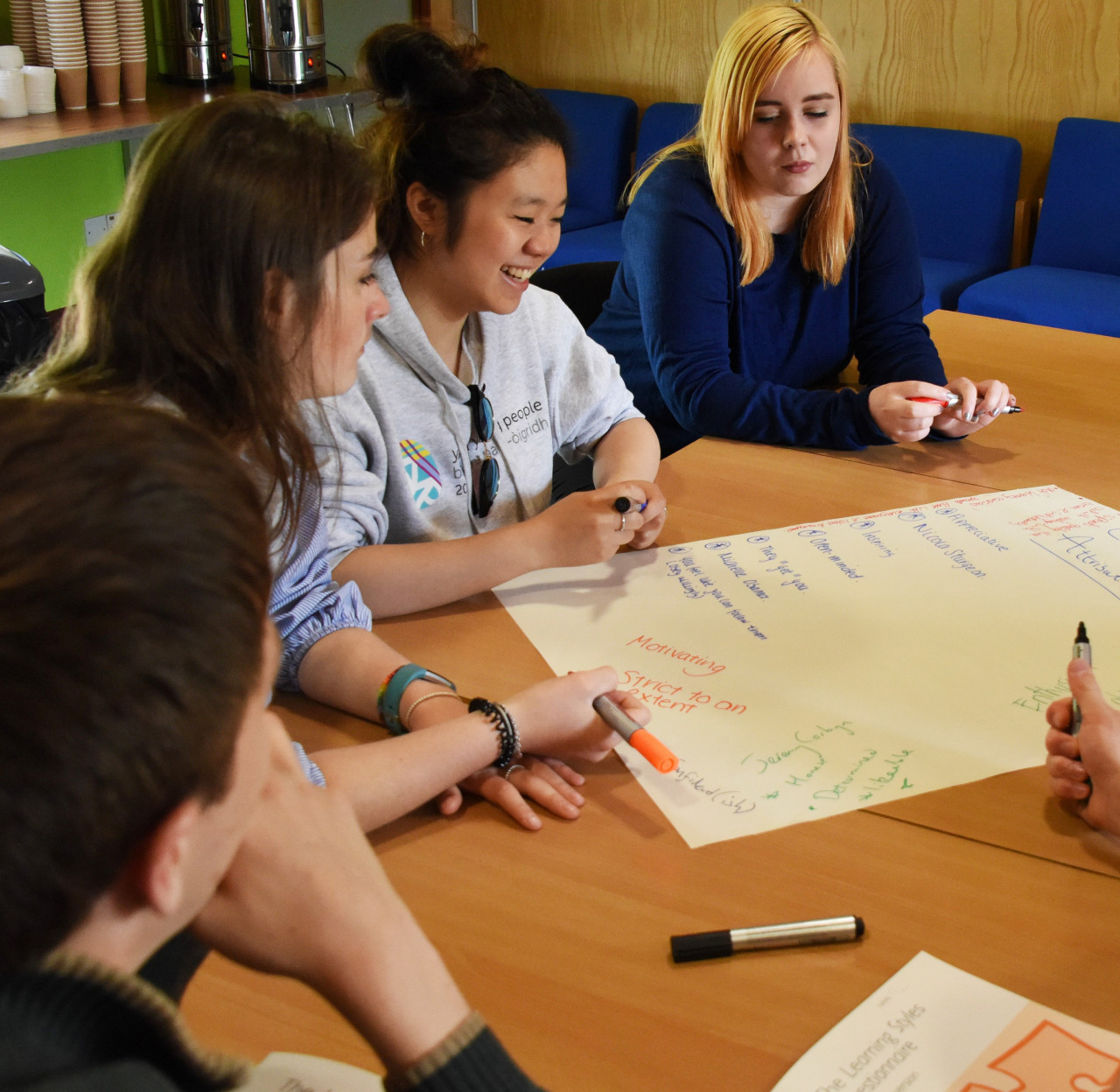
“In fact for the programme that we are currently running, which we have just completed our first session, one of the most profound activities was when both our Malaysian and Scotland participants (although not specifically related to the marginalised groups in question) were asked to list down the assets – either physical, environmental, skills, knowledge, cultural and/or strength.
“It has the potential to spark inspiration for the possibilities that they can achieve together by listing out available assets around them, where connection can be made through something familiar,” explained Naadiah on how communication can be made more universal.
SEA International believes in getting people to appreciate and comprehend a theory or topic that results in collective awareness.
Since it started in Scotland 16 years ago, the set up was to serve the learning and development needs of the social impact sectors.
“Around five years ago, we started to replicate what we were doing around the world, through a social franchise model,” shares Kemp.
“This means we are able to work through SEA ‘Hubs’ across the world (14 Hubs in total), all supporting changemakers in their own localities to develop key leadership and entrepreneurial skills that enable social impact globally.
“Our programmes are delivered by practitioner facilitators, individuals that have lived the experience of having started/led a social enterprise or change organisation.
“They encourage the sharing of experiences, rather than ‘teaching’ in the traditional sense. This methodology creates transformational learning as it allows the space for participants to learn from one another, put ideas into practice, and reflect on the experience,” she added.
The academy plans to grow its reach by continuously building the network of SEA Hubs, where plans to accelerate are “… ambitious to allow us to support social entrepreneurs and changemakers in even more communities around the world.”
More on the VISION project
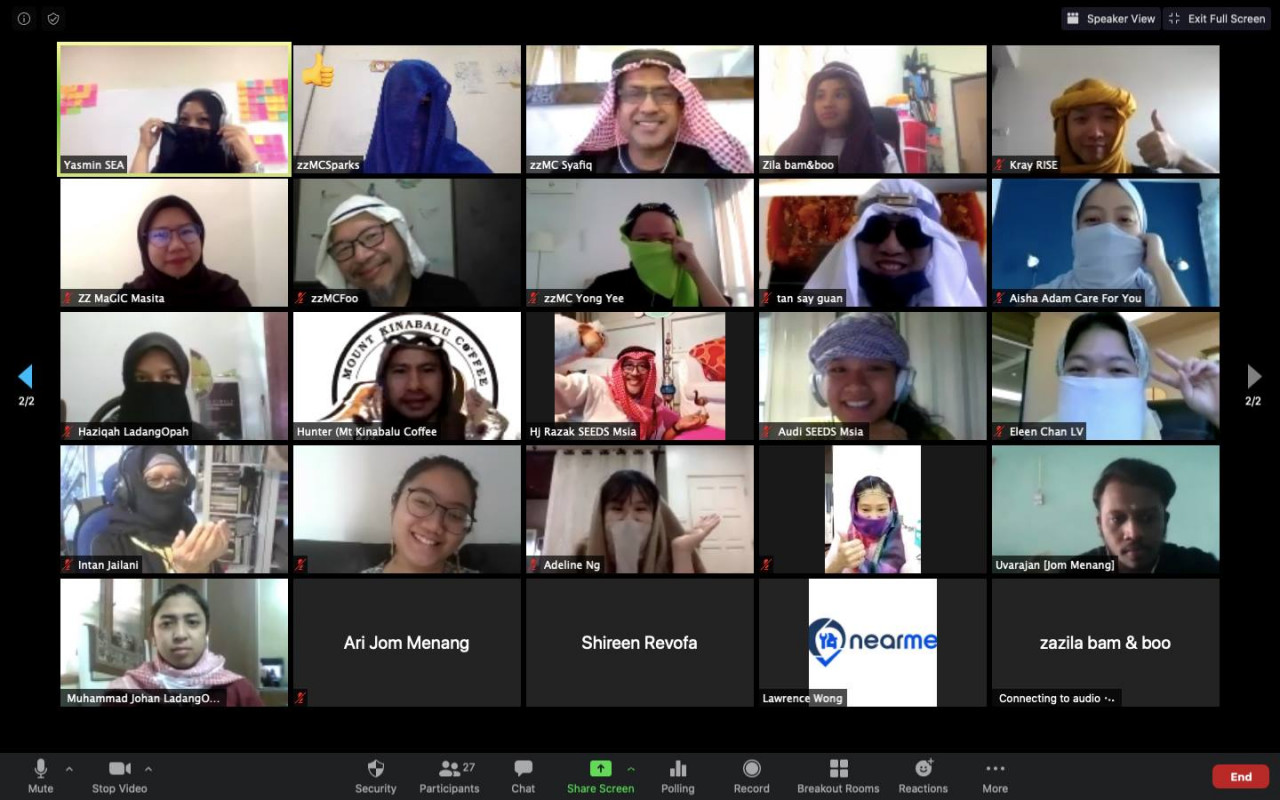
On plans to implement this year’s World Environment Day theme (Reimagine. Recreate. Restore.) in the virtual sessions, Naadiah notes, “Reimagine is definitely something that we have included in our programme.”
“Participants will be envisioning their vision about climate change and environmental sustainability which will then be translated into a short impactful video.
“We are hopeful that they are able to spread the awareness among their network and create ripples of action towards environmental sustainability that could eventually support the World Environment Theme,” she said.
Naadiah explains further on the VISION Virtual Impact Festival a.k.a. VIF that will take place at the end of the VISION programme.
“At the end of the year and in conjunction with COP26, the festival aims at featuring the participant's vision. A digital and online platform to broadcast and amplify their projects will take place and share the narratives of the respective projects in relation to climate change. It is also similar to a graduation ceremony or a demo day for the ideas generated,” she said.
“We hope that the festival can ultimately raise awareness on climate change issues not just between Malaysia and Scotland but also globally as we leverage on the digital technology platforms available.
According to Kemp, global environmental icons such as Greta Thunberg have paved the way for many young people to take action.
Detailing the importance of youth in shaping international environmental action, Kemp expresses young people as leaders to the cause, “… and this is why we are so passionate in supporting them to achieve their visions for the future”.
“It is young people who will inherit this Earth, so it is vital we equip them with the tools to tackle the decline caused by previous generations.” – The Vibes, June 5, 2021

.jpeg)