
KUALA LUMPUR – National Coalition of Mental Wellbeing (NCMW) initiated by Rotary Malaysia called for an urgent repeal to Section 309 of the Penal Code (Act 574) Malaysia yesterday, in a press conference to decriminalise attempted suicide – in response to the rising cases of suicide within the country.
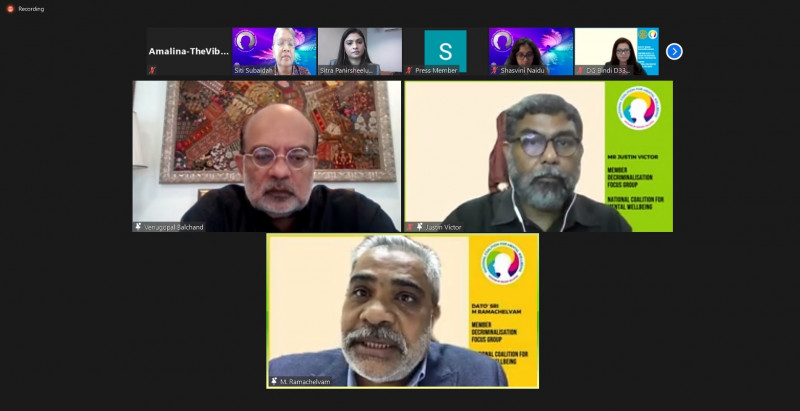
The press conference hosted via Zoom brought together experts addressing proposed steps to ensure the seriousness of the matter.
Among them are Bar Council of Malaysia Lay Reform & Special Ares Committee co-chairman Datuk Sri M. Ramachelvam, Medico Legal Society of Malaysia president Datuk Dr Venugopal Balchand and Befrienders Kuala Lumpur chairman Justin Gerald Victor.
All the mentioned individuals are also part of the decriminalisation focus group initiated under NCMW.
Rotary 3300 district governor Datuk Bindi Rajasegaran, who was also present during the online discussion shared: “The unsettling rise in local suicides is a national concern, and the Covid-19 pandemic has been a huge contributory factor towards mental health of individuals”.
“The sentencing of persons who have attempted suicide to prisons would not lead to a solution, and what is required is a compassionate care based approach.
“With suicide being decriminalised, people suffering suicidal tendencies will be more forthcoming, and likely to seek help without being ridiculed,” said Rajasegaran.
A sentence of imprisonment for attempted suicide may amount to an injustice
“This pandemic has been hard even on the toughest of minds and the time is certainly ripe to push for a repeal of the penal code,” said Balchand.
“Two things are expected to come out once the change is made – people with mental health issues will be more willing to seek treatment, understanding that whatever actions they may be at risk of is not seen as a criminal offence, and the stigma associated with mental illness will be addressed more holistically.
“This pursuit of the change in our existing law will certainly create a domino effect to ensure people who need help will get it,” he added.
In the session, the matter of attempted suicide and how the authorities see the relevance of Section 309 of the Penal Code was explained through an example during a sharing session of how the Act is important to ensure criminal offenders do not easily get away from the serious crimes they committed.
“If somebody is threatening to commit suicide because they are a criminal – it is still seen as a call for help as far as the suicide aspect of it (in the attempt) is concern and the way to go about it is to provide the required psychological assistance needed,” said Ramachelvam.
“The criminal aspect is something that can still be proceeded legally. You simply use an argument that a person who has attempted suicide, and with a criminal case, to justify Section 309.
“I think the example given is an extreme one and does not represent the average suicide risk cases, and is something that we should not fall for in our decriminalisation (of suicide) efforts,” he stressed.
“As everyone may or may not know, the effort and the anchor of this discussion has gone for over 10 years at least and there have been many consultations being done with senior police officers where even the prime minister has agreed in the principal of decriminalising suicide,” shared Victor.
“If there is such an isolated type of argument taking place, it is only done in confusion or simply with a lack of understanding.
“If a person has committed a criminal act, the whole Penal Code is there to deal with the remand, arrest, and/or charges separately and there is no need for Section 309 to be present at all. I’m not a lawyer but I believe Datuk Rama has confirmed it”.
He added: “Our concern right now is purely for individuals who are mentally disturbed, who do harm only to themselves, but are also being arrested”.
Balchand also agreed with the responses of his fellow speakers stating, “... citing extreme small anecdotal excuses is not the right way to go about it”.
“We are seeing the individuals at risk here as those who need the help – they cry once, or twice and by the third time they won’t be able to cry again,” he expressed.
Concrete decision-making processes regarding mental health

In June 2021, an alarming average of four suicide cases every day for the first three months of the year was reported. In the years before, the total number of deaths because of suicide was 631 (2020) and 609 (2019).
NCMW and its members stressed that these numbers are very concerning, and the need to have stronger responses to this crisis is more pressing than ever.
The coalition does applaud the government’s initiative to table the relevant amendments to the Penal Code, and its commitment to decriminalise attempted suicide in Parliament.
While we wait for Parliament to reconvene, NCMW’s proposal to the government is for it to maintain its firm commitment by taking the following steps;
- i) to expeditiously table the relevant legislation in Parliament to decriminalise suicide,
- ii) to withdraw all pending charges under Section 309 of the Penal Code (Act 574),
- iii) to impose a moratorium and not proffer any charges under Section 309 of the Penal Code [Act 574]. During the moratorium period, to instead utilise the provisions under section 10 and 11 of the Mental Health Act 2001 [Act 615] (“MHA”) which empowers the police, social welfare officers and the family to bring a person who attempted suicide to undergo a psychiatric evaluation at a hospital,
- iv) Provide for compassionate care based approach in risk assessment, management and provide compassionate based care and support mechanisms for those facing mental health issues,
- v) to collaborate with mental health professionals and service providers to manage suicide risks.
On Suhakam’s recent call to calls for revival of the National Suicide Registry and whether data and transparency is detrimental to alleviate the state of the nation’s collective emotional wellbeing, Balchand notes, ”… there is an effort to establish a more updated entity called the National Suicide and Fatal Injury Registry of Malaysia (NSFIRM),”
“That is in the pipeline for 2022, and it is meant to capture the relevant data that is not only limited to cases of suicides for an official and complete figure(s) to direct policies and efforts better.
“Data is important no doubt as it is the basis of how we do things more comprehensively these days. However, how much of the data gained and how genuine it is, are also additional considerations to make,” shared Balchand.
“Data on suicides specifically is multifactorial and very difficult to distinguish between the true, untrue, being statistically correct etc.
“It is indeed a huge venture, but I think the people in power or those who are responsible have been gravitating to this importance.
“All these things will – eventually – come together (for the benefit of our community) at the right moment in time for us to move forward to help our brothers and sisters who are vulnerable,” he added.
“What we have (existingly) are some anecdotal cases like last year the case in disabled person being jailed six months for attempted suicides, prior to that in another case, and a fine of RM3,000 was imposed on a suicide survivor.
“So you have these cases that are reported in the press, but we don’t have exact statistics to determine with certainty,” said Ramachelvam.
“A lot of these attempted suicide cases do not get reported because medical health professionals, family members and so on do not report these for reasons that the person may face prosecution, many of it is covered up,” he added, emphasising NCMW’s proposal to the government.
Creating a compassionate and resilient society
Sharing in detail on the importance behind the coalition setup, Rajasegaran shares, “More than a year ago, we [Rotary Malaysia] organised a mental health stakeholders meeting not just with partners from WHO, UNICEF, UNHCR and IOM with engagements from the Ministry of Health, Ministry of Education and Ministry of Women Family and Community Development, but also many other related organisations and individuals included in their personal capacities”.
“All the stakeholders were doing excellent work but it was still not enough as much more effort is needed to be done and as a result the NCMW was established to form a centralised, strategic coordination of work in targeted areas.
“So it is important for the public to understand the areas that we are working on as it is from these areas that victims originates, where the decriminalisation of suicide is one of six areas of our focus that are addressing the mental health agenda at the national level,” shared the district governor.
“Another area is on youth and adolescence, where the focus of approach is more wholesome by training school and college counsellors in mental health first aid where they will be able to identify children who are vulnerable or suffering from stress, anxiety and depression.
“These counsellors will not only be address the situation domestically but also know where to turn to if they need the additional assistance where they are not able to handle a case at a certain level
“We would also like to educate parents and establish a parent support group. Peers in schools and colleges also need to be aware of the support and we aim to introduce so via a fun and relatable way through the mind matters club, whose purpose is to also destigmatize mental health among youth,” shared Rajasegaran.
“There is also a focus on psychosocial support training where we are targeting frontliners (i.e. police, firefighters, primary care, and community health workers) providing non-therapeutic intervention support, targeting public awareness and mental health literacy.
“Mental health in a workplace is also a key focus area,” she shared.
“Recently, we touched base with a few hundreds of employers via Zoom session to talk about workplace conditions and mental health. The response received in the request for assistance was really disturbing and affirms the fact that many do not know what to do and where to go for assistance."
Rajasegaran then added that there are plans to address stigma and discrimination of mental health sufferers on the community level by introducing task shifting (recruitment of volunteers and empowering non-physician healthcare for better community care), as well as forming public campaigns/webinars so that it is seen as an avenue for the public to ask questions and learn about the issues that matter. – The Vibes, July 7, 2021