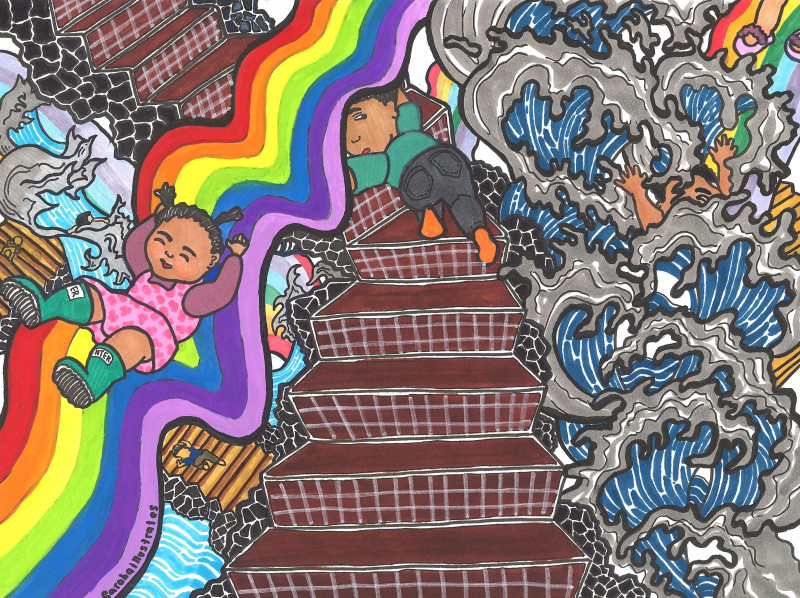

KUALA LUMPUR – The ongoing 'Human Rights In Asean: The Cartoonists Perspective' hosted a forum yesterday inviting the audience to follow a deep discussion on issues concerning civil liberties within the country and region.
The two-hour online session touched on human rights topics ranging from how they transcend borders, challenges to uphold them and how they are viewed from an Islamic perspective.
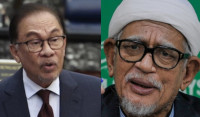
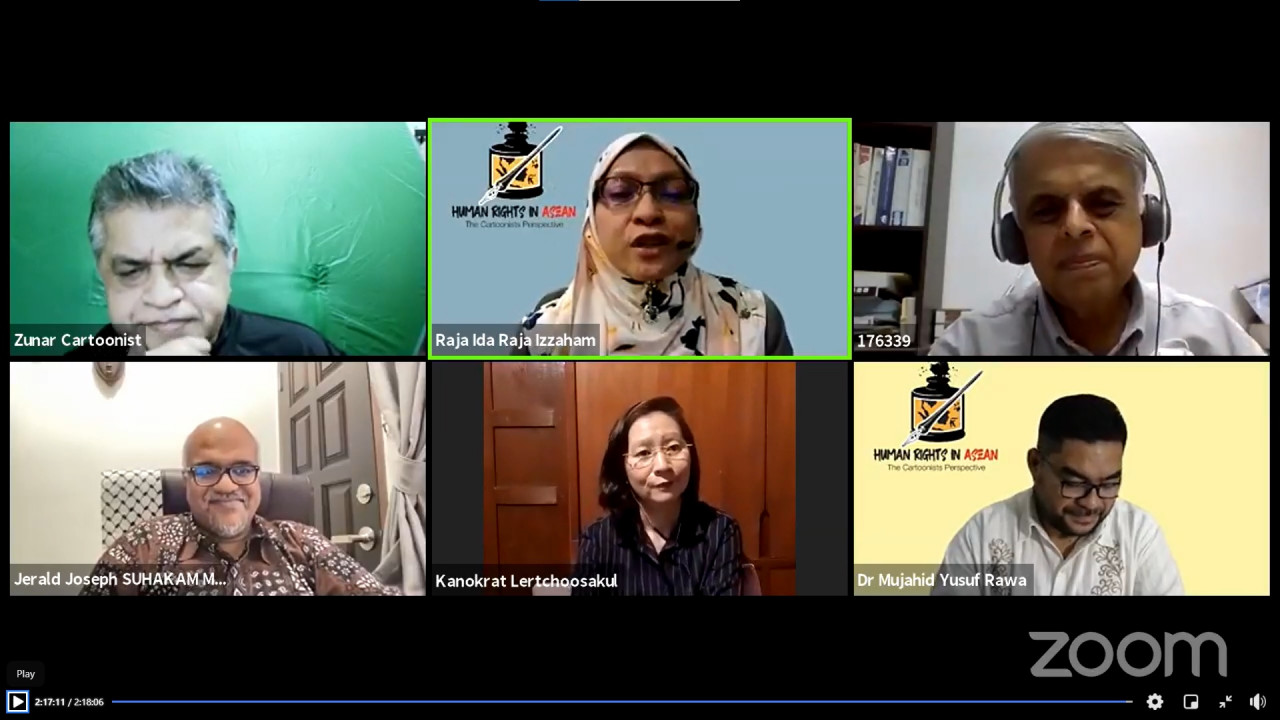
Panel guests include Suhakam Malaysia commissioner Jerald Joseph, Aliran executive committee member K. Haridas and Parit Buntar MP Datuk Dr. Mujahid Yusof Rawa.
Also joining the line-up were Chulalongkorn University Faculty of Political Science assistant professor Dr. Karnokrat Lertchoosakul who shared on using art as a tool to communicate with authoritarianism in Thailand.
Conflicting shifts
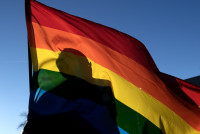
Issues pertaining to LGBT rights were one of the key discussion points highlighted during the session – with dissonant takeaways.
While there seem to be an agreed understanding to ensure a safe environment for the community to live free of public discrimination, especially away from physical and mental harm, the matter of legal persecution is still left open-ended.
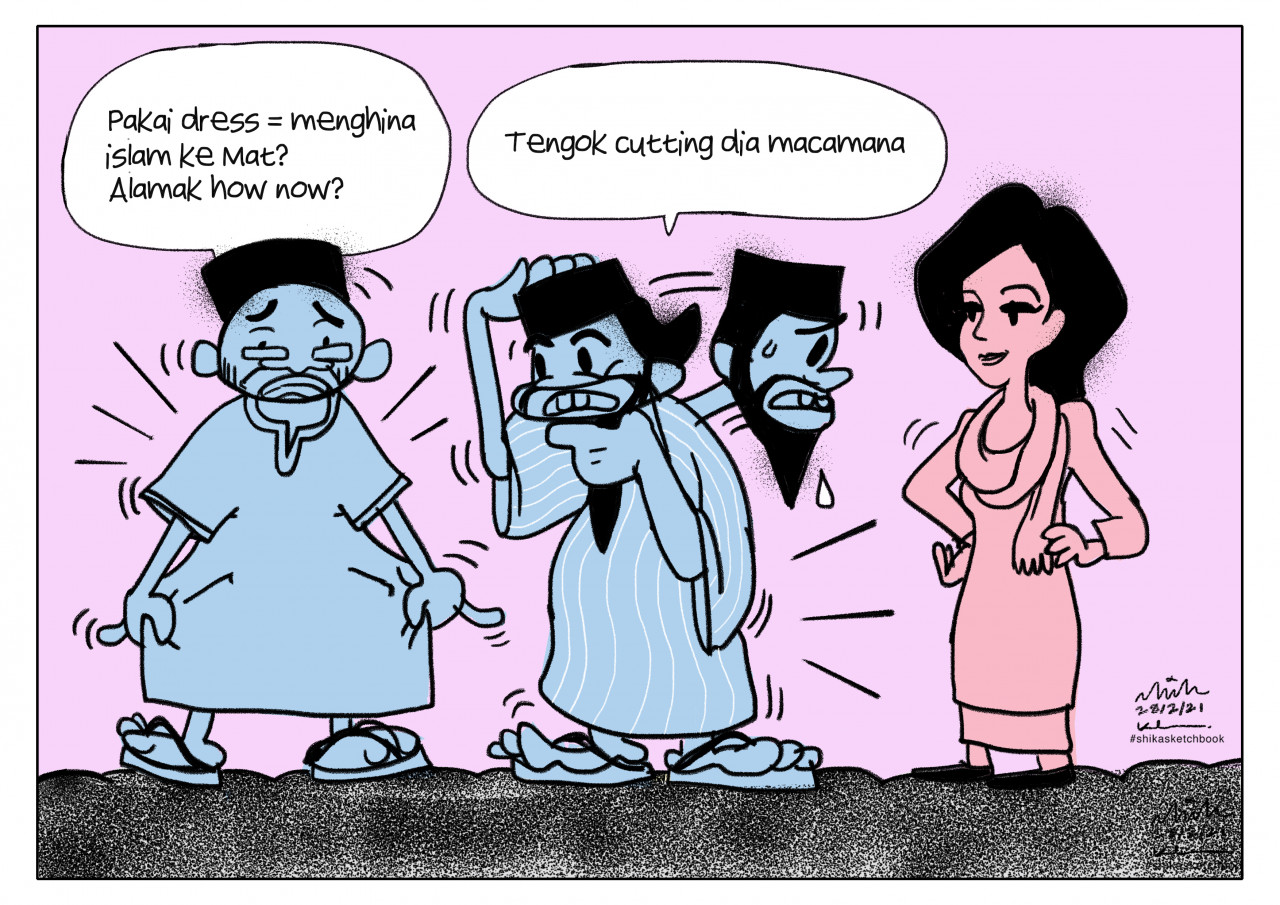
In Malaysia, cross-dressing and same-sex relationships are punishable by law under the Act 547 Penal Code.
“I would not say that it [sexual orientation] is just an Islamic issue. Even within the context of Asean, it does carry a sensitive spot within the various societies that live in it,” said Mujahid.
The former minister of religious affairs highlighted that back when he was sitting for the position, he handled the problem more on the policy level, “... not so much on the technicality”.
“In Malaysia specifically, we face two challenges when it comes to the LGBT, specifically the transgender group; i) the aspect of it being a social phenomenon – whether it is biological or clinical, where we leave the analysis to the experts, and ii) the struggle and advocation of rights where the community openly calls for society to accept them through the enactment of a special law (i.e. same-sex marriage).
“Now, on the latter – it cannot be done, and I am sorry to admit that I am at a stance that does not agree with it (on a policy level). It is in fact an imposition of western ideals on human rights within the local context of the law,” he noted, adding that his argument is also due to the beliefs he holds.
This came as a reply on how religious institution(s) can come together in the middle layer/space and address issues that the LGBTQ group have raised.
Interestingly, when the group’s discourse focused on civil liberty both globally and at least within an academic space, where even cultural discourse seems to be facing censorship under perceived fanaticism, that may not be in favour of a council with a higher autonomy, Mujahid said: “Human rights is not exclusive to a western – or Asean – value but a universal one that we should protect”.
As a viewer tuning in, one can only hope to gain so much when partaking in an in-depth dialogue that could have been even-handed.
It is with such confusion that the predicament is tough to sit through and observe, and as a result, the discussion pertaining to the question of what constitutes a sophisticated civil society falls short.
However, Mujahid does stress on the importance of approaching LGBT issues with greater empathy through a social understanding as there is no reason to forgo it regardless of one’s tenets. He noted that no religion at large, including Islam, wants its followers to subscribe to violence.
“The transgender society has – unfortunately – been side-lined and discriminated and it certainly should not happen.
“We should be in total agreement that no one should be insulted for whatever orientation/view they are or may have,” he said, further noting that the public would need to engage through the best approaches that do not subject the community to be harmed.
My right over yours?
Responding to the same question, Joseph highlights, “The notion that religion and belief is rightfully a human right for a person to choose and decide is a given”.
“But that does not give you an extra right to cancel out the respect and identity of other people who are different from you because the world is a plural world. I cannot find anywhere in it where the thinking is one kind – at least it does not exist anymore.
“Religion, if it’s going to be a marker to a person’s life, dig deep into it by finding the commonness of justice, compassion and human rights that reside in the various corners of the set of beliefs we know of,” he said.
According to the Suhakam representative, the LGBT community is often the common target for all kinds of hate.
“The ‘we do not know what to do with them, so we need to stop, reform, rehabilitate, arrest, jail or mock them’ example.
“This cannot be the value of Malaysia or the respect and dignity that we are striving for when we talk about human rights for all”.
According to Joseph, Suhakam has been attacked unendingly on this topic because they have taken complaints of discrimination and violence, and have done research to explore the issues faced by the LGBT community.
“More recently, we were called to do a research on the viability of a third gender and got attacked by so many Islamic-based groups, which almost says that the research itself is a no-no”.
Joseph then posed the question: “How should a society with such a majority and conservative view deal with a community that is different?”
“This goes across all religions for that matter if we are looking at it from a viewpoint of history. I always joke with my Muslim friends that you cannot claim to be a champion of anti-LGBT because every religion has that ‘component’,” expressed Joseph.
“Do we lash out the power of our authority, through organised/state religion with majority power?
“Or do we (instead) resist and desist by opening up the very area called respect and compassion via establishing a dialogue with the community in question?”
“I can understand the feelings of people saying that it is wrong and having it understood as a sin but who are we to decide for a different community of people?
“We do not have to agree that everybody should be allowed to be LGBT – I mean you and I are not, but if there are people that identify themselves to be part of the group then we should start to look at ways on how to co-exist side-by-side,” he noted.
“No one is asking you to be LGBT even if you think you can. You can’t decide to be (on a whim) because it’s innate,” expressed Joseph.
Establishing the middle ground
“I think all of us have a role to play and I think we should use our strengths to express ourselves and communicate things right,” said Haridas on how we can start to build a setting that helps to sustain a population that helps to construct the middle layer.
“The recent initiative to enlighten people on ‘Bangsa Malaysia’ for example is a positive initiative that should be a mainstay.
“We also need more role models who can show us that there are people in this country that express this notion, even better if they come from royalties.
“The more ways we can see how we can engage on issues of the day with one another are great steps to take,” he added.
“Everyone should take the lead in it, and it shouldn’t just be exclusive to politicians or NGOs for that matter – that is why the need for this middle layer is important,” shared Mujahid.
“I know that there is already little faith in politicians and in the system today because of what has happened and is happening.
“I do apologise to those who have such a perception towards political figures such as myself, but nevertheless I believe it is my duty to share with the public that not all politicians are bad,” he expressed.
Mujahid stated that the public need to understand the three layers that exist to make sense of the realities at play.
“The first is the ideal form that you aspire to uphold, whether through religion or your principles in life."
Speaking more on the context of human rights in general based on the Islamic perspective: “Islam do not recognise identity politics and I must clearly say this”.
“The fact of the matter is that when you go into the third layer – you see the horror of it.
“Navigating diversity and its differences should be seen through the eye of mankind and not based on creed or colour,” said Mujahid.
“Compassion and mercy are fundamental in overcoming issues deemed sensitive to a community. It is the way forward,” he added. – The Vibes, July 11, 2021
***
Follow other important topic of discussions in the video below:
*Visit the extended gallery featuring 81 unsparing cartoons by 38 Asean cartoonists in support of human rights in Asean at http://www.craftora.com