FOR a long time, parliamentary performance in Malaysia has been measured in familiar ways — attendance, interruptions, and how long someone can hold the floor in the Dewan Rakyat.
But the Hansard Digital system has quietly shifted that lens.
Instead of only recording what is said in Parliament, it now allows language itself to be mapped, counted, and visualised. Through word cloud analysis, debate transcripts become something more than records — they become patterns.
Repetition turns into a signal. Vocabulary turns into behaviour. And from there, each MP begins to take shape not just through speeches, but through the words they return to most often.
What emerges is not a summary of debates, but something closer to a linguistic fingerprint of Malaysian politics.
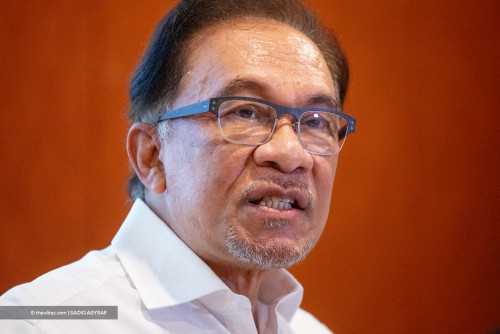
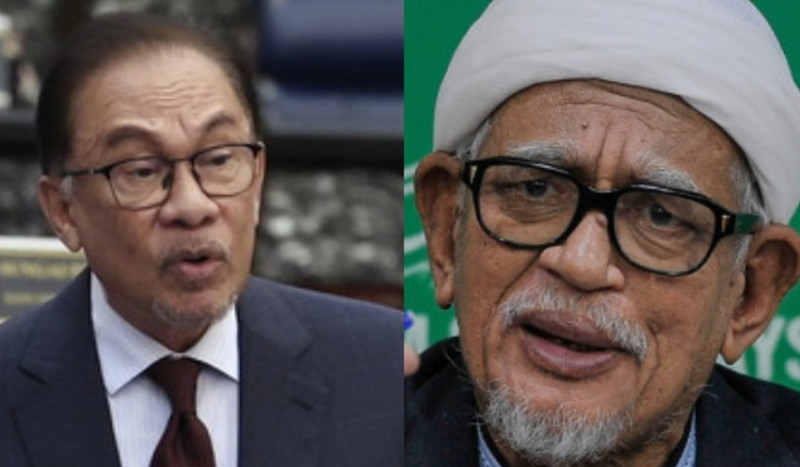
At the centre of government, Prime Minister Datuk Seri Anwar Ibrahim’s language sits firmly in the register of scale and statecraft.
“Billion” appears 1,477 times in his parliamentary record, followed by “people” (1,378) and “economy” (833). Around those anchor terms are familiar policy words — companies, finance, allocations, and states.
The pattern is consistent: macroeconomics, fiscal management, and national development form the backbone of his parliamentary vocabulary.
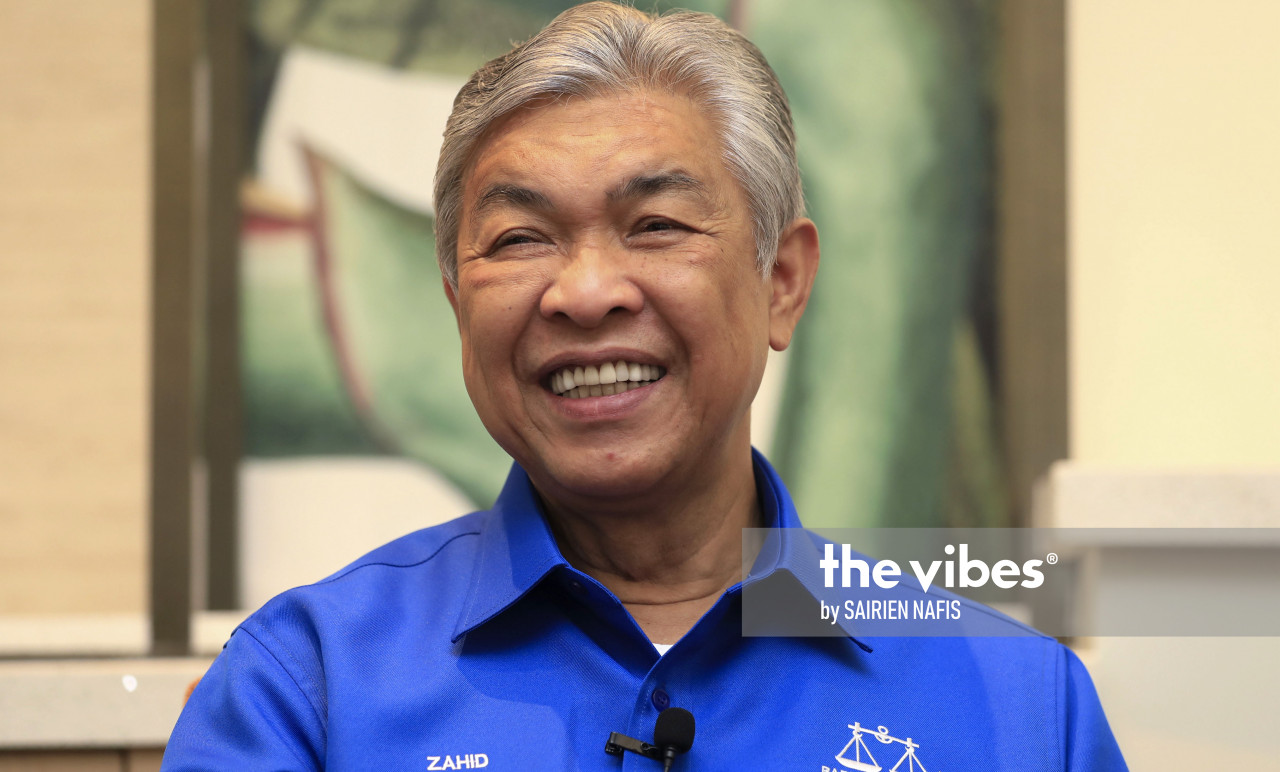
A different cadence defines Deputy Prime Minister Datuk Seri Dr Ahmad Zahid Hamidi.
Here, institutional and enforcement language comes through more strongly. “Police” (513), “crime” (462), “state” (503), and “people” (427) are among the most repeated terms, alongside references to defence, military affairs, TVET, and religion.
The result is a vocabulary that sits between governance and order — where security, institutions, and human capital repeatedly intersect.
If those two sit within the machinery of the state, Opposition Leader Datuk Seri Hamzah Zainudin speaks more directly to its pressure points.
“Price” dominates his record with 1,147 mentions, followed by “people”, “company”, “palm oil”, and “oil”. The language is anchored in cost, commodities, and household strain — a consistent focus on how economic shifts translate into everyday burden.
Datuk Seri Rafizi Ramli occupies a similar economic space, but the framing is noticeably different.
While “economy” (1,103), “people” (1,045), “salary” (753), and “price” (671) remain central, his vocabulary leans more heavily into structure and measurement — subsidy, tax, income, data. Where others speak in terms of pressure, his language tends to map systems and mechanisms behind those pressures.
Anthony Loke Siew Fook’s parliamentary footprint, by contrast, is almost entirely shaped by portfolio gravity.
“Transport” appears 1,437 times — far ahead of any other term in his dataset — followed by “project” (993), “company” (962), “service” (888), “aviation” (886), “road” (630), and “bus” (578). It is a tightly contained vocabulary, one that rarely drifts outside infrastructure, mobility, and service delivery.
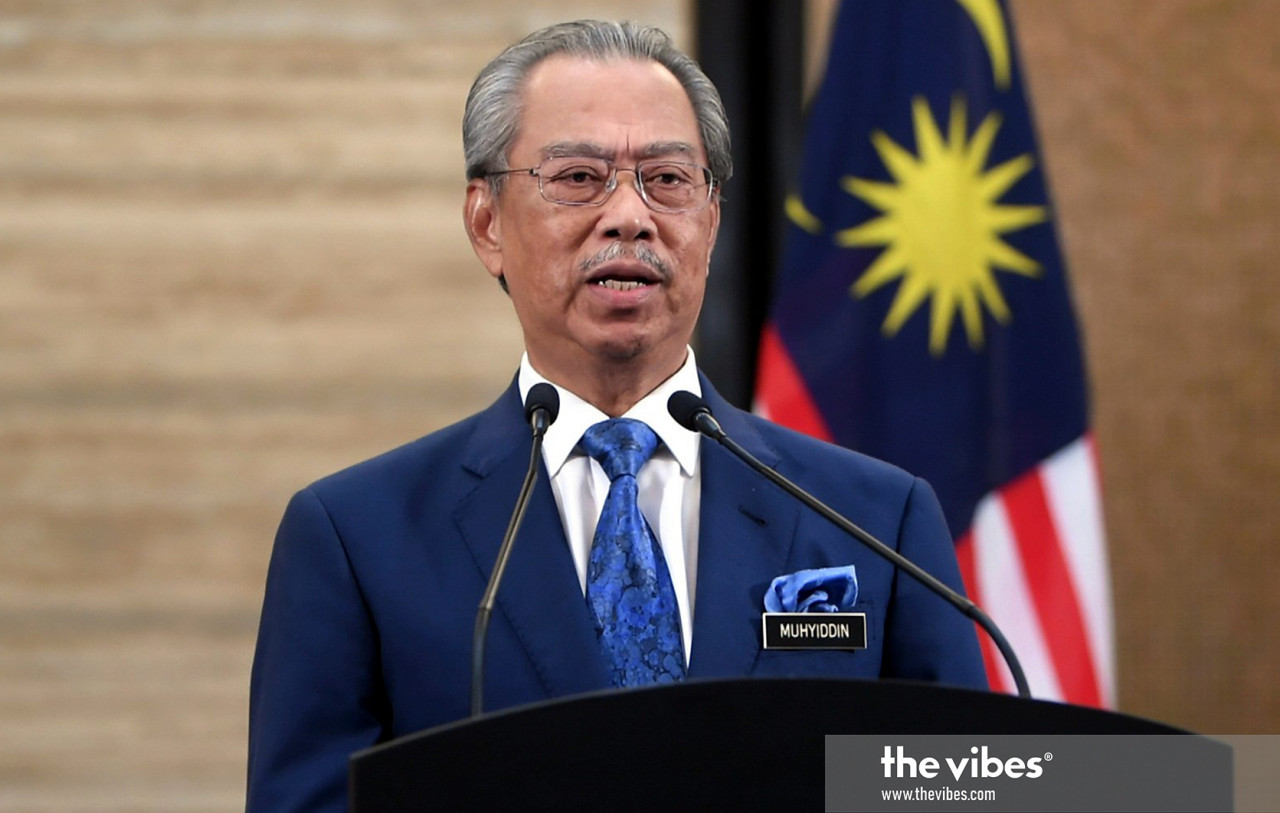
Former Prime Minister Tan Sri Muhyiddin Yassin’s pattern is just as distinct, but anchored in an entirely different space.
“School” leads his usage with 836 mentions, followed by “education”, “language”, and “teacher”. The repetition reflects a consistent focus on schooling systems, learning environments, and human capital development — a policy area that defines much of his parliamentary engagement.
Then there is Tan Sri Abdul Hadi Awang, whose linguistic profile stands apart in both intensity and direction.
“Islam” appears 635 times — the single most dominant term in his dataset by a wide margin. Other recurring words, such as “people”, “religion”, “human”, and “state” appear in comparison far less frequently, reinforcing a discourse where religious framing remains the central organising lens.
Across these patterns, two opposition figures often circle the same terrain but approach it differently.
Hamzah Zainudin frames the economy through prices, commodities, and cost pressures.
Rafizi Ramli approaches it through systems, data, and fiscal architecture. The subject overlaps — but the language does not.
What the Hansard Digital system ultimately surfaces is not just parliamentary output, but behavioural repetition.
Ministers tend to speak within the boundaries of their portfolios. Opposition figures gravitate towards pressure points in the economy.
Party leaders and ideological voices lean toward broader frameworks — whether structural, systemic, or doctrinal.
And beneath the thousands of repeated words is a quieter pattern: not just what Malaysian politicians say in Parliament, but what they cannot stop returning to once they stand up to speak. – July 3, 2026



.jpeg)