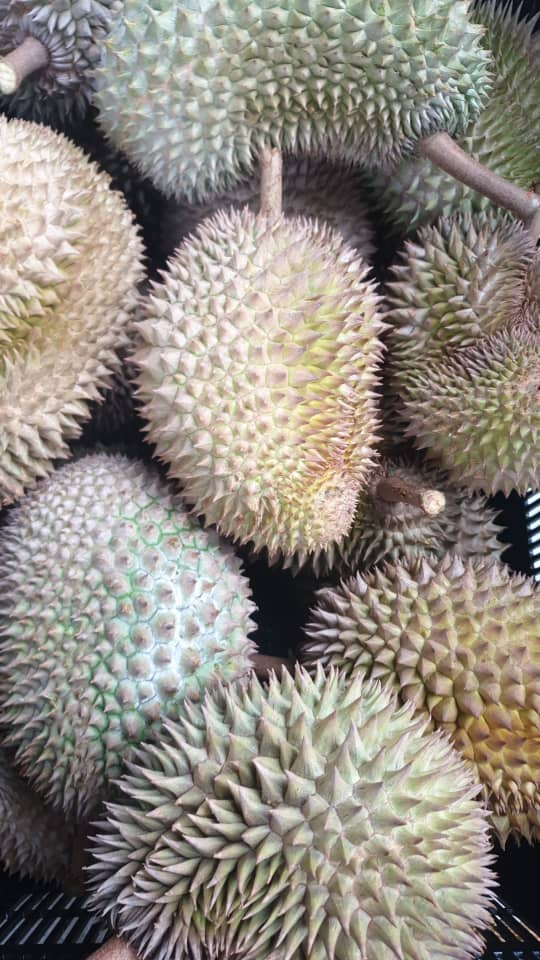
GEORGE TOWN – The King of Fruits is offering some much-welcomed comfort for its fans in Penang, amidst the disruption to their lives brought on by Covid-19, with some traders now willing to offer customers the leniency of eating now and paying later.
Notwithstanding are the usual discounts and some freebies for stocks which cannot be sold over a certain period.
A check with some traders operating along the streets of Tanjung Tokong revealed that they are offering incentives because sales have been stagnant due to the movement control order (MCO) lockdowns.
Covid-19 – a thorn in the durian industry
Among the obvious impacts of the pandemic is the fact that people’s fear of being infected has forced the majority of them to stay at home during lockdowns, while some opting to continue isolating themselves even when lockdowns have been lifted.
In turn, with people being discouraged from heading out due to the infectious spread, there is the obvious natural drop of confidence in overall consumer spending – including for the durian industry.
Hassan Ali, who helps at a stall here, told The Vibes that customers do not spend as much as before as they are worried about the country's economic outlook.
As a result, traders and their suppliers – the durian orchard planters – are also facing adverse consequences because they cannot export nor move shipments due to the inter-state and inter-district travel bans under the various phases of the MCO.
Resurrecting an old business custom for tough times
Partners Manjit Singh and Hoe Eng Kuang share their experiences selling durians at Fettes Park, in one of the suburbs in Tanjong Tokong, and how they revived an old business practice in Malaysia to encourage their customers to purchase more durians.
The practice, which was the norm up till the 1970s and 1980s, allowed a customer to purchase an item – usually from the local grocery stores and for food and beverages at the local restaurant or stall – with the promise of paying it at a later date, usually by the end of the month once the customer has received his or her salary.
Some, particularly rice farmers before the formation of Bernas, would make their payment in barter, using their produce as the commodity to square off their debts during each harvest season.
However, the practice back then was not as charitable as it sounds as many of the locally owned grocery stores would charge an interest rate on what was owed them and made a killing during harvest season.
In order to keep track of his or her account with the trader or the shop, the customer would keep their expense records at the business premise in a little square notebook that can fit in a shirt’s pocket with a ‘555’ as its emblem.
It was fondly known as the Buku Tiga Lima or Triple Five Notebook – and back then, this was the credit card/chequebook of the day, be it in some parts of major cities, smaller towns and especially in the rural hinterlands of a still developing Malaysia.
The system was effective at ensuring the survival of a household when the country was still largely an agrarian society and the average income was extremely low.
Only trusted customers can purchase with Buku Tiga Lima
Today, the pair have been compelled to give discounts or extend leeways because many buyers are reluctant to spend even though the cravings for durians have not dissipated despite the pandemic.
"People now look to food delights for respite as everything else is locked down,” said Manjit.
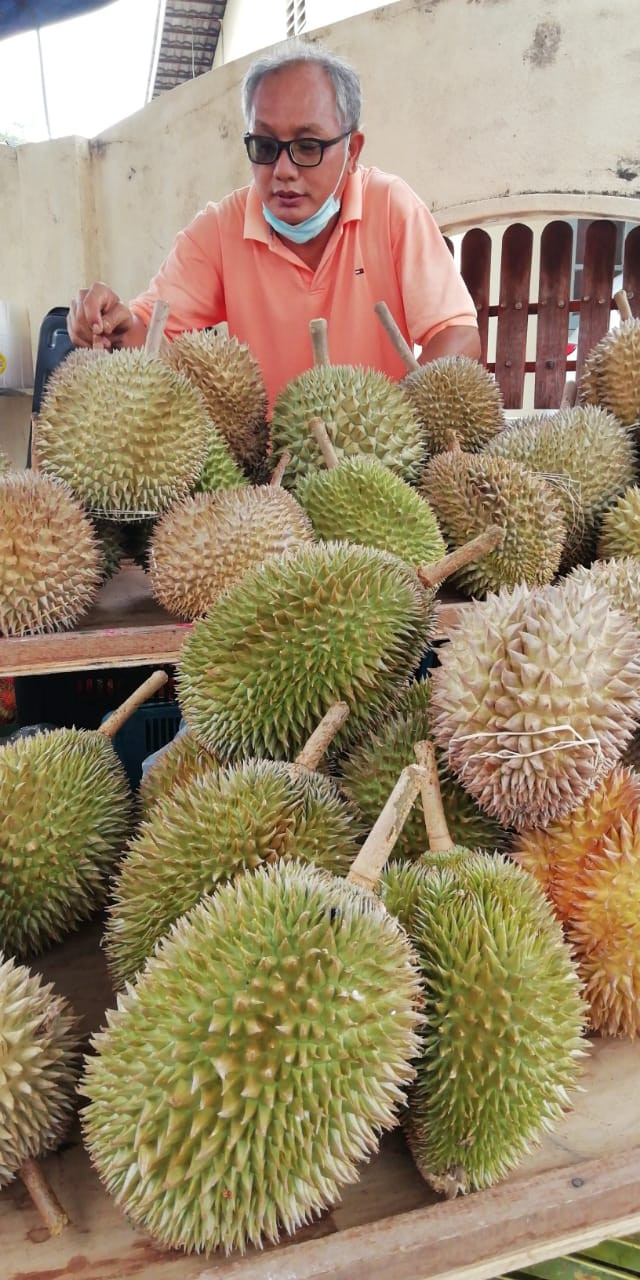
Operating for most part of the day, Manjit went into the fruit business to keep himself occupied since his mainstay business of tourism-related services were badly affected by the pandemic and the global hit on the industry.
"We are struggling but we carry on because we can no longer export our durian shipments nor move them to other parts of the country where demand is greater."
In view of his predicament, the entrepreneur decided to come up with an ‘eat first and pay later’ concept, saying that it is his small token to help alleviate and provide some small form of relief to the hardship that everybody is wrestling with.
However, the company’s policy is only applicable to those he knows as it is difficult to trust strangers here.
Currently, Manjit has a loyal and trusted customer base of around 30 regulars.
Individuals interested in purchasing his durians through the Buku Tiga Lima system must contact him and negotiate their deals separately as they need to earn his trust first.
An old boy of St Xavier's Institution – the country’s second oldest school – Manjit said that durians cut through the racial divide as everybody adores the fruit, so it is only fair that those selling it donate some of the proceeds to help those who now cannot afford it.
He also appealed to the Penang Island City Council to issue temporary licenses to streetside durian traders to ensure that such activities are well regulated.
Manjit says that the durian season is expected to last until September due to a bountiful harvest but lower demand.
A handful of traders have gone online to sell their produce, but Manjit prefers the traditional way as customers can handpick better ripe ones under his advice.
The prices of durians differ due to the various classification of its seed quality.
There are at least 12 types of durians sold here, with the best pick coming from the orchards of Balik Pulau. – The Vibes, July 28, 2021