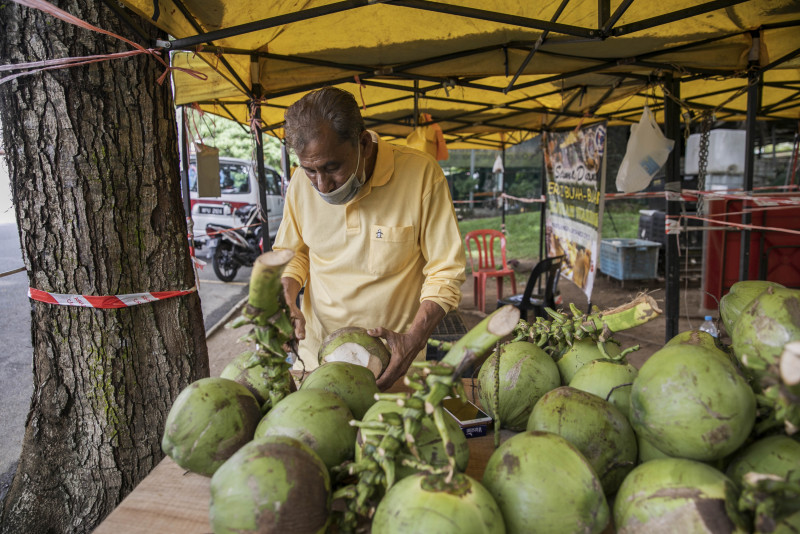

KUALA LUMPUR – Life has always been fulfilling for 66-year-old Ahmad Siron. He had served 19 years as a staff sergeant in the Malaysian Armed Forces (ATM) on his last posting in Bosnia and Herzegovina.
After retirement in 2000, he had bought a house using savings in his hometown of Melaka.
For two decades, Ahmad and his wife enjoyed doing everything together – making up for the times when he was devotedly serving his country.
However, his life abruptly changed in December 2020 when his dear wife passed away.
With his one child away working in Kota Kinabalu, Sabah, Ahmad found himself at a loss in the world.
In January 2021, Ahmad – who is affectionately known as Che Mat – decided to leave his house, hoping to start a new life.
He packed light and headed to Kuala Lumpur.
Upon arrival, Che Mat came up with the idea of running a car boot sale for only a couple of months.
“My first stop was at Port Klang where I bought several bundles of clothing to be sold.
“It was a compulsive idea, actually. I started selling these clothes around Kuala Lumpur and Selayang via car boot sale,” he told The Vibes.
After approximately three weeks, in late February, Che Mat was approached by the Kuala Lumpur City Hall (DBKL) enforcement officers.
“Several of us (traders) were asked to follow the enforcement officers to do a Covid-19 test, which we complied with,” he explained.
However, upon getting the negative results back, Che Mat was taken by the enforcement officers. He was labelled as “homeless” and sent to a transformation centre for the homeless in Kuala Lumpur known as ‘Anjung Kelana’.
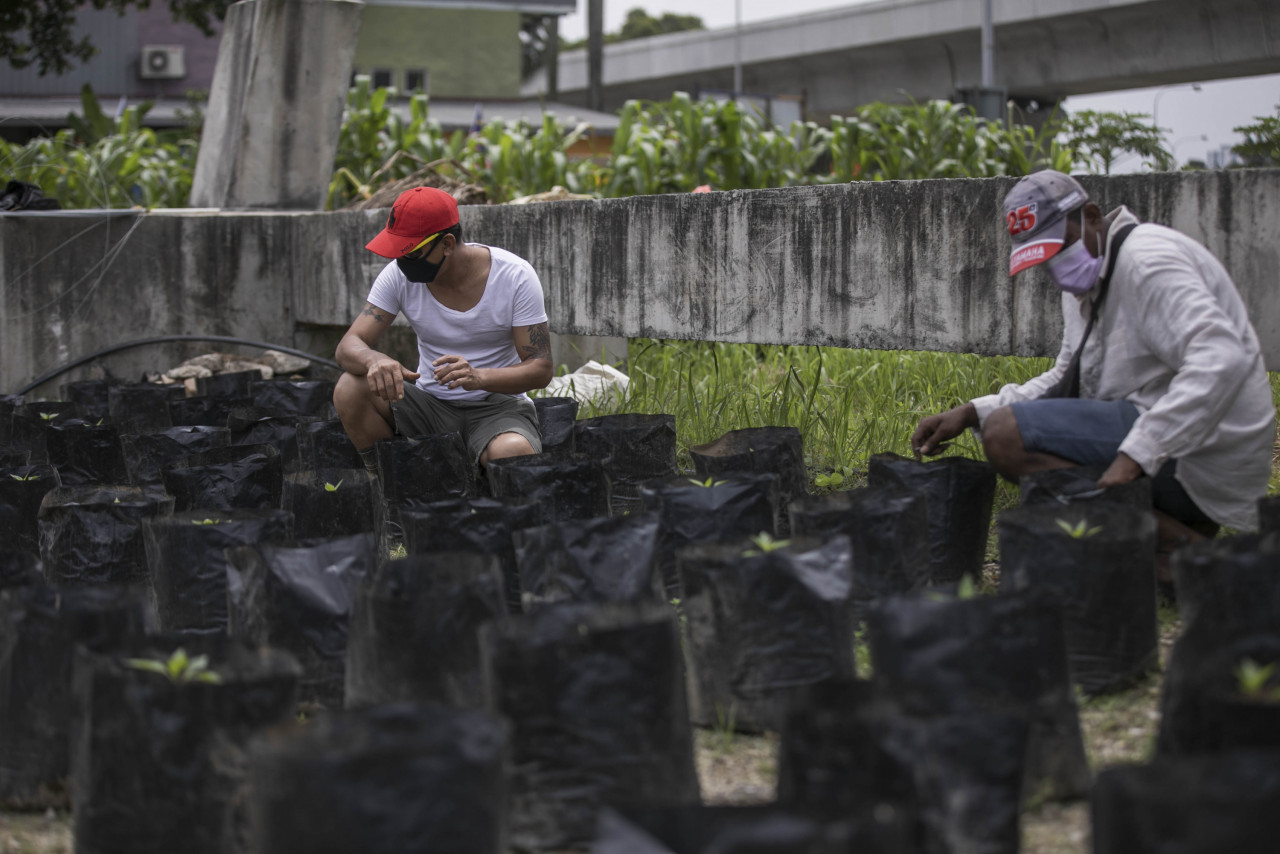
Anjung Kelana was initiated by former Federal Territories Minister Tan Sri Annuar Musa and is managed by Kuala Lumpur City Hall (DBKL) to house, rehabilitate, and train the homeless community in farming.
When he was taken to Anjung Kelana and was told that he would be an occupant, Che Mat was confused.
He then repeatedly explained to the enforcement officers that he was not a “homeless” person, but his words fell on deaf ears.
Even so, as days turned into weeks and then into months, Che Mat came to appreciate Anjung Kelana and its activities. He stayed on for six months to learn farming skills.
“Every day there are different programmes in Anjung Kelana; conducting classes on how to grow vegetables and herbs like spinach, water spinach, long beans, fried beans, okra, ‘pucuk pegaga’ (pennywort), ‘ulam raja’ (cosmos caudatus), ‘pucuk paku’ (fiddlehead fern) and to produce home-made roselle juices,” he added.
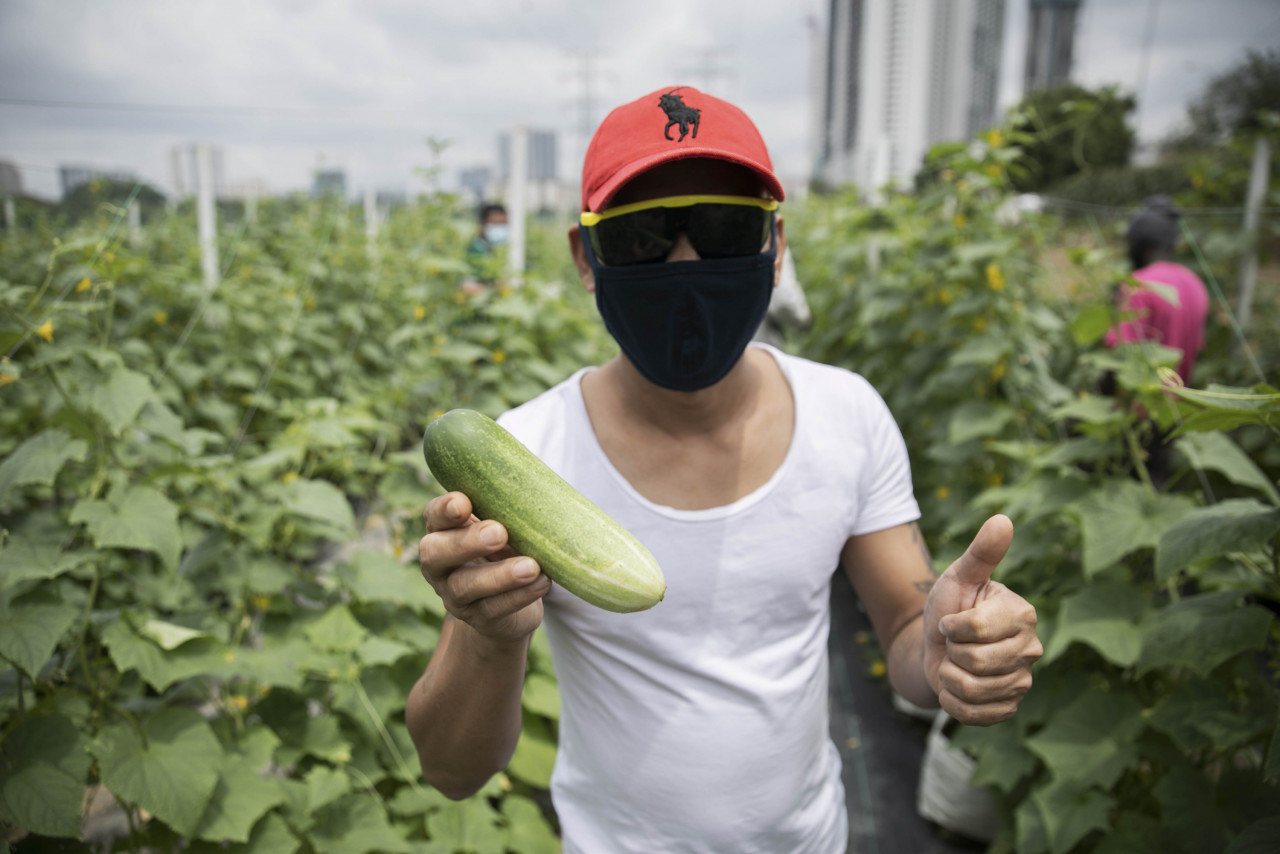
According to Che Mat, each intake of a six-month course is restricted to only 30 males.
He believes that the majority of the intakes share the same sentiments. That is, once the course is over, they feel emotional about leaving Anjung Kelana.
Some participants even voiced their intention to stay back to become trainers for new intakes.
Che Mat stated that the only hurdle he faced was not being able to inform his family of his whereabouts whilst in Anjung Kelana.
This was because he did not have his mobile phone with him, and at the same time, the Malaysian government movement control order (MCO) was in full force.
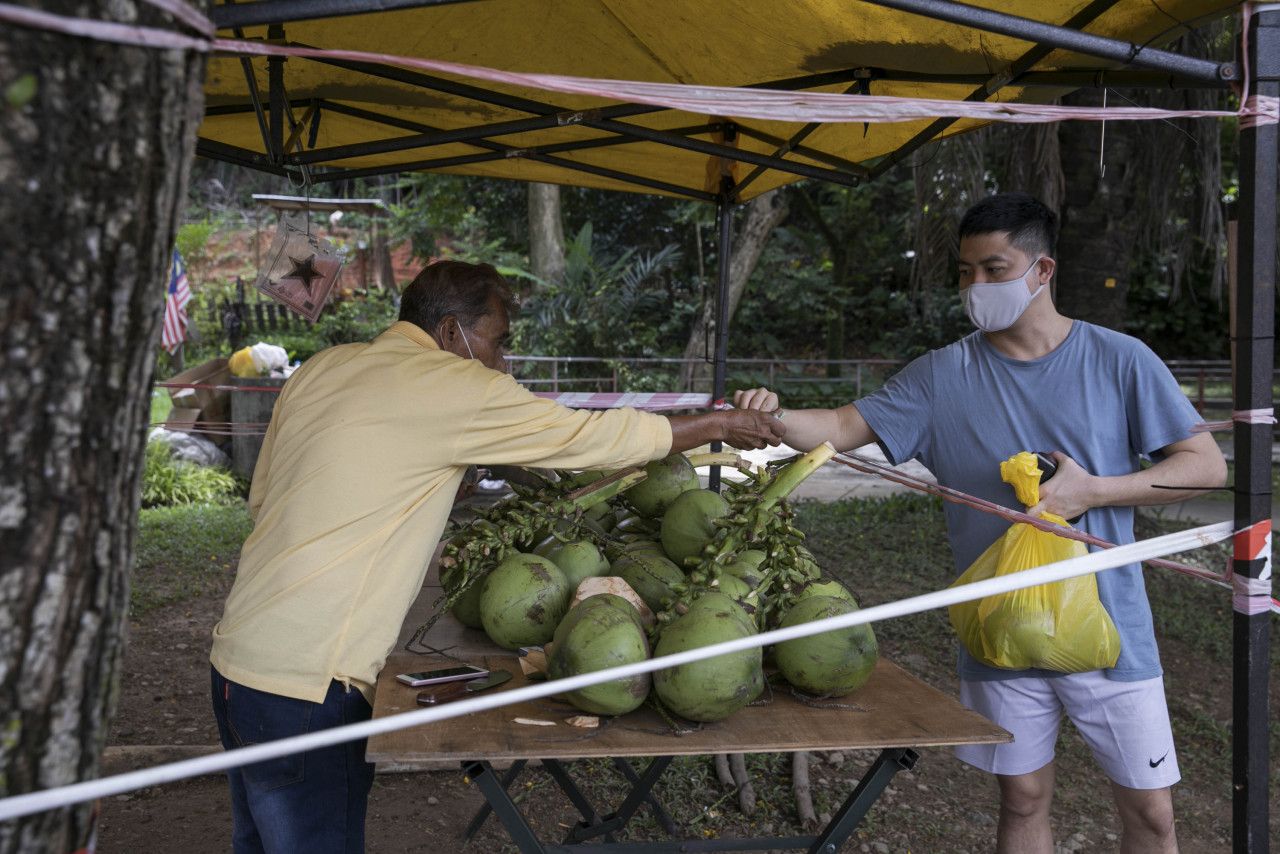
On what he thinks of Anjung Kelana, Che Mat said he fully appreciated Annuar and DBKL's noble idea.
He was also thankful to the many NGOs and consultants from all walks of life coming to Anjung Kelana to give the participants endless encouragement and advice.
“I am grateful to be given this kind of exposure, as (previously) in the military there was no exposure of this kind, right? In the army, there is only war.
“No one would foresee that when I was mistakenly picked up and brought to Anjung Kelana that I would be given a chance to master farming skills within months.
“It helped me become the diverse person I am today,” he said emotionally. – The Vibes, March 5, 2022
Additional reporting by Azim Rahman