WHAT if we told you that cucumbers and lettuce grow more easily on a city rooftop than in the countryside? This is the surprising conclusion of a vast study conducted in some 50 countries around the world.
On building rooftops, on a balcony, in schoolyards or in a shared garden... Agriculture in urban areas is developing at a rapid rate. And it could even represent a model for the future as part of an effective solution for ensuring part of our food security.
That's the suggestion of a vast meta-analysis recently published in the journal Earth’s Future.
The study looked at 100 research studies conducted in 147 cities in 53 countries over a period between 2014 and 2021. This research aimed to compare the yield rates from urban agriculture with those from more traditional crops, for instance in fields and in the countryside.
Europe and North America were most represented in terms of data, but all parts of the world were included in the study.
And the results are surprising, to say the least: yields of some foods grown in urban areas were on par with or greater than conventional agricultural yields.
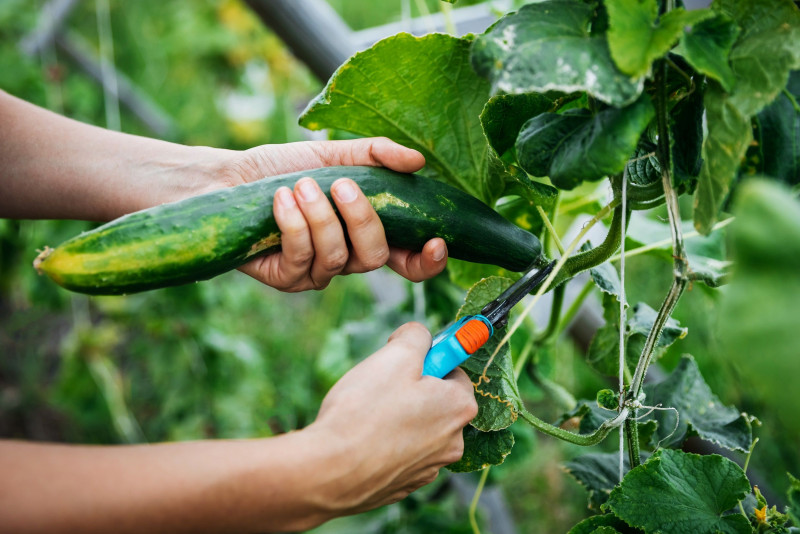
Cucumbers and gherkins, for example, are four times more likely to thrive in cities than in the countryside.
Tomatoes, fresh vegetables, chilies and peppers showed yields between 2.4 and 3.1 times higher than the same foods grown in rural areas. However, yields differed "significantly between certain urban spaces and growing systems where crops are grown, which shows varying crop suitability," the authors note.
The study took into account urban "grey spaces" (e.g., vegetable gardens grown on the roofs of buildings) and "urban green spaces," such as public parks or shared gardens.
While the research does not indicate "an overall trend regarding how food productivity varied based on where and how crops were grown," the researchers do note that some specific urban spaces and growing systems yielded higher yields than others.
This is particularly true of tomatoes grown in hydroponic greenhouses (growing food in water), which had yield rates three times higher than those grown in urban green spaces and outdoors.
There were similar findings for lettuce and chicory, which seem to thrive best in vertical vegetable gardens, hydroponics, or controlled environments with artificial light. In comparison, green spaces could accommodate far fewer cycles during the growing season for lettuce and chicory.
"Results from this study contribute to building a more robust evidence base for urban agriculture.
"They also provide valuable resources for more accurate scaling-up research seeking to estimate the agricultural productivity and self-sufficiency of cities and towns across the globe and for further life cycle assessments of urban agriculture, which could contribute to designing urban production systems that support a more sustainable future," the authors concluded. – ETX Daily Up, September 3, 2022