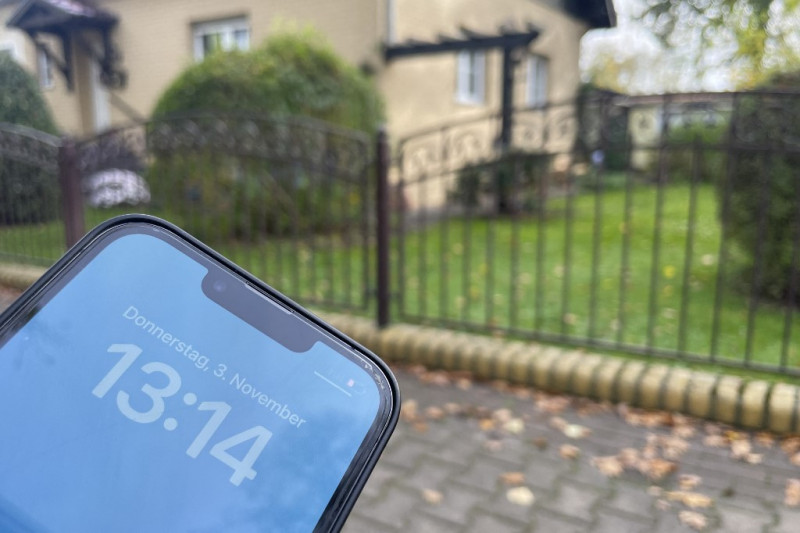
WUSTERHAUSEN – On a street in Wusterhausen, around an hour's drive north of Berlin, a man paces intently, holding his mobile phone in front of him.
"I'm looking for network, because here this area is not good," says Arek Karasinski, in town on a business trip from Poland.
Issues with phone signal are a source of constant frustration for the residents of Wusterhausen, which sits in one of Germany's many blackspots, out of reach of any mobile network.
"We're here in Germany, an industrial nation, and we have all of these dead zones," says Matthias Noa, head of waste management firm AWU.
Noa was so exasperated that when the local government asked if they could use his garbage trucks to do something about it, he quickly agreed.
Since the summer, the trucks have been fitted with a device that measures the signal quality on their routes across the district of Ostprignitz-Ruppin.
Because their work takes them everywhere across the area, they are the perfect vehicles for the job.
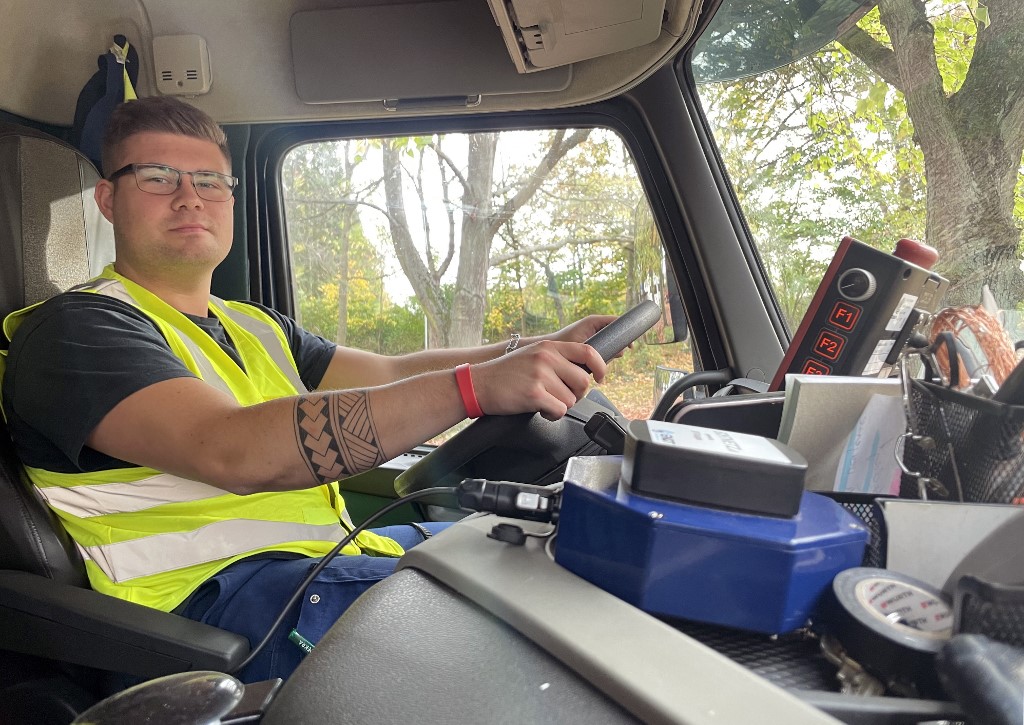
"We go out on the ground, into every nook," says Werner Nuese, the vice-president of the local council, who was not satisfied with the efforts made by public bodies or private groups to plot the signal problems.
Jonny Basner, a driver participating in the programme, knows the trouble well. "It would be great if I had enough signal to reach the depot from the villages (on the route)," he says.
Trackers have been handed out to hikers and cyclists to fill in the gaps left by the rubbish collectors.
On a map, Nuese points out the spots marked in red where the signal is at its worst.
"Even if this is a rural area in the northeast of Germany, we shouldn't be forgotten. That's our demand," he says.
‘On the terrace’
A short walk shows the issues people are facing.
"Outside on the terrace I can get signal, but in the house there is nothing, no one can reach me on the phone," says Dieter Mueller in the village of Bantikow.
About 10 kilometres (six miles) away in Wusterhausen itself, Marko Neuendorf says he has cancelled his phone contract "because there simply is no signal here".
The region would become more attractive to investors and tourists if the mobile network were better, local officials believe.
"Every cottage industry has gone digital, every single electrician uses a tablet to order spare parts. It's not just big companies that are more digital," says Noa.
Council official Nuese says medical spas in the area have been getting poor reviews "because the signal is very bad".
"It's a measurable economic disadvantage," he says.
The obsolescence of a lot of Germany's infrastructure and administration shot to the top of the political agenda with the exit of Chancellor Angela Merkel from office a year ago.
According to official data, standard LTE coverage, equivalent to 4G, is at 100%.
But in a survey by the price comparison site Verivox, published earlier this year, most people said they regularly experienced a lack of signal when using their phones.
In 2018, then economy minister Peter Altmaier said he was "very annoyed to have to call back three, four times because it cut off" when making calls from his car on official business.
By producing more detailed signal maps, the council hopes to encourage a response from mobile network operators and to lobby government for more support. – AFP, November 14, 2022