STROKE is a leading cause of death and serious long-term disability worldwide. A stroke, sometimes called a brain attack, happens in one of two ways: a blocked artery (ischemic stroke) or a ruptured artery (haemorrhagic stroke).
According to the National Stroke Association, stroke cases are on the rise among younger adults, with 15% of ischemic strokes occurring in young adults and adolescents. This highlights the importance of young adults taking proactive measures to safeguard their health and prevent strokes from occurring.
Dr Kok Chin Yong, consultant neurologist and internal medicine physician from Sunway Medical Centre Velocity (SMCV) shares that in 2016, 40% of the stroke cases that needed hospital admission were aged less than 60. Healthcare professionals also recognise an increasing trend of ischemic stroke in the younger working group. “However, the earlier the recognition of the stroke, the better, as there are more treatments available,” he adds.

What are the contributing factors of young stroke and how can it be prevented?
There are many risk factors for stroke, including smoking, physical inactivity, hypertension, and many more. Studies showed that young adults are more susceptible to these risk factors due to their sedentary lifestyle, unhealthy food habits, excessive screen time, and increased alcohol consumption and smoking.
“Vascular risk factors such as hypertension and diabetes, and environmental factors such as air pollution is one of the recognised risk factors as well. One frequently missed risk factor is obstructive sleep apnea (OSA) and of course illicit drug usage such as amphetamine and heroin that can cause blood vessels disturbances and lead to both type of strokes,” Dr Kok elaborates.
However, Dr Kok also shares that there are rare, acquired risk factors that occur in the younger population. These include Moyamoya syndrome (a rare progressive cerebrovascular disorder caused by blocked arteries), anti-phospholipid syndrome (leading to an abnormal blood clotting) as well as heart abnormalities. To address these risks, most importantly, young adults need to adopt healthy lifestyle habits like regular exercise and a well-balanced diet.
Dr Kok strongly discourages the use of recreational drugs in any way, shape or form, as misuse and overdosing may lead to severe constriction of blood vessels and then stroke. He adds that stress is very common nowadays and it can directly affect to an unhealthy behaviour.
“It is very important to learn to recognise these stressors and address them accordingly. For instance, if stress leads to poor sleep, then it is a concern and needs to be addressed. This is because poor sleep itself has an impact on the immune system and causes abnormality in blood and heart issues, which may potentially lead to stroke,” he says.
_(1).jpg)
How can one identify a stroke in a young person?
The most common signs and symptoms of stroke include facial drooping, arm weakness, and speech difficulties. Dr Kok addressed that the signs and symptoms of stroke are rather similar across the board. A key word that will be good to always remember in the back of our minds is BE FAST, which mean B for balance issue or dizziness, E for eye/visual problems, F for facial drooping, A for arm or leg weakness or numbness and S for speech disturbance.
For further assessment, the doctors will use a defined stroke scale like the National Institutes of Health Stroke Scale (NIHSS) to determine the severity of the stroke. The higher the score, the more serious the stroke.
When it comes to stroke treatment, time is of the essence – hence, when an individual notices that something is not right, they should not delay and visit their nearest hospital for timely assessment. This will not only give the doctors better insight into what is going on in our body, but also a higher chance of receiving and getting the best outcome from the treatment.
The process of recovery and rehabilitation
There is no denying that treatment and rehabilitation are the crucial aspects in the journey to recovery. But many factors will come into consideration before and during the stroke rehabilitation process. According to Dr Foong Chee Choong, consultant rehabilitation medicine specialist, rehabilitation is an important part of the recovery process, hence it is important to choose a location that is well equipped with the right expertise and tools to aid the process.
He also notes that the recovery process and types of treatment will vary, and no two patients will have the same progress. Bearing this in mind, doctors will have to assess the patient’s condition and propose a suitable and effective treatment plan tailored to their needs.
On top of that, age is an important factor in stroke recovery. "Younger stroke survivors have a better outcome, regaining mobility and recovering much faster. However, older stroke survivors will also benefit well from a proper stroke rehabilitation program," adds Dr Foong.
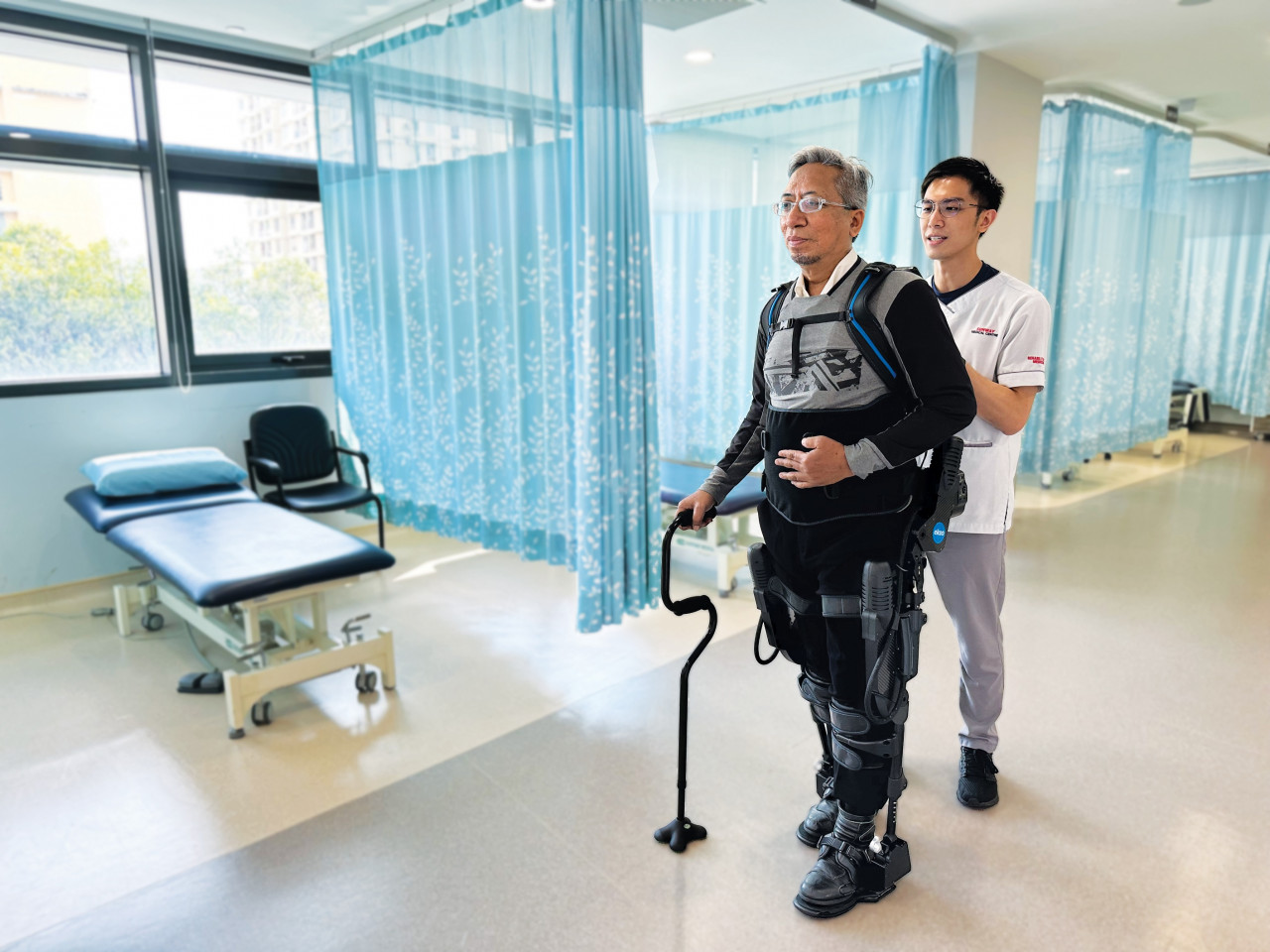
Dr Foong explains that the rehabilitation technology in Malaysia has improved and one of the widely investigated and adopted approaches for the past decade is the use of an exoskeleton gait trainer in improving the mobility of a stroke survivor.
The EksoNR device is very versatile and benefits not only stroke patients but other conditions such as spinal cord injury, paraplegia (paralysis of the lower half of the body), traumatic brain injury, joint replacement, osteoarthritis, parkinson's disease, and cerebral palsy among others.
The benefit of using robotics in stroke rehabilitation is that it provides intensive training with highly accurate feedback, which is vital to improve any movement and function. Additionally, the robotic device can provide various levels of assistance required so that different severities of survivors can benefit from this machine. With the help of robotic technology, it generally takes between 1 to 3 months to see any improvement in walking among stroke patients.
“It is important for the patient and their family to have a functional goal, be motivated and be patient, as any rehabilitation process takes time and effort and will result in recovery for them,” Dr Foong concludes.
On the whole, it is essential for young adults to prioritise their lifestyle habits and take proactive measures to safeguard their health. By identifying risks, recognising symptoms, and pursuing recovery, young adults can prevent stroke and improve their overall health and wellbeing. – The Vibes, May 12, 2023