
SARAWAK natives can put an end to unjust and oppressive land grabs if they unite under one umbrella, the Society for Rights of Indigenous Peoples of Sarawak (Scrips) said.
It said the natives make up constitute at least 60% of the state’s population of three million. Their numbers alone could compel the state government to amend the state Land Code, tt added.
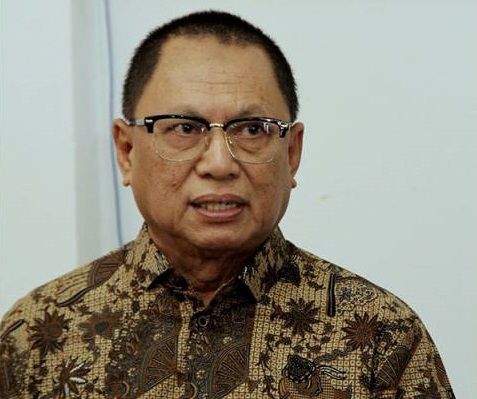
Scrips secretary-general Michael Jok told The Vibes that efforts are underway to unite the native communities.
“The problem of unjust land grabs suffered by us, native landowners in Sarawak, has persisted for more than 60 years," he said.
“The current laws under the state Land Code allow native land to be acquired en masse by the state government or state agencies. The Land Code offers little protection to natives whose land is being trespassed upon by private developers.
“For too long, we natives have been fighting against oppressive land-grabs by going to court as individuals or as clusters of villagers.
“If we can unite under one giant entity, we can literally force changes to oppressive land laws by our sheer numbers, as we natives form at least 60 percent of the total population of Sarawak.”
Recently, Scrips criticised the Sarawak state government for attempting to forcibly take custody of the native customary forests belonging to the minority Tering-Berawan communities by converting their forests into a national park without their consent.
Scrips, a land rights and human rights organisation, stated that what the state government is attempting to do to the Tering-Berawan near Mulu National Park in northern Sarawak is unethical and an act of injustice.
Jok stated that any move to use national park by-laws to gazette native customary land without the permission of the indigenous natives living in the forests is a blatant act of victimisation.
“The attempt by the state government to gazette the forests belonging to the Tering-Berawan as a new national park is nothing short of forcefully grabbing the ancestral land of these natives.
“This is tantamount to coercing these natives into handing over control of their land to the state authorities.
“The Tering-Berawan are among the original tribes not only of Sarawak but of Borneo Island.
“Their ancestors have lived in these forests for centuries, long before the British arrived and before any government was established in Sarawak.
“The Gabungan Parti Sarawak state government cannot treat the Tering-Berawan or any other indigenous people in Sarawak in this manner.
“We in Scrips will give our full support to the Tering-Berawan if they stage protests to defend their forests,” he said.
On 7th August, the Tering-Berawan publicly objected to the state government’s plan to create the new Tutoh Apoh National Park, claiming that this move would result in their ancestral land being taken over by the state authorities.
Tering-Berawan community leader Denis Along met with officers from the Sarawak Forestry Corporation in Miri to present an official letter of protest.
Along said his community learned that the proposed Tutoh Apoh National Park would be an extension of the existing Mulu National Park in interior northern Sarawak, a world heritage site that houses the largest cave systems in the world.
“The creation of Tutoh Apoh National Park will result in vast areas of forests next to Mulu National Park being taken over by the state government.
“Our ancestral graveyards are still there today,” he said.
Along also claimed that the land on which the five-star Mulu Marriott Resort is now situated was once the ancestral land of the Tering-Berawan.
The community is determined to maintain their rights over all their land and will not relinquish it to the state, he added.
Mulu is located some 200 km inland from Miri city and is home to the Sarawak Chamber, the world’s largest cave, which can accommodate 40 Boeing 737 aircraft side by side. – August 20, 2024.