WHEN former Dewan Rakyat Speaker Tan Sri Pandikar Amin Mulia recently suggested that Gabungan Rakyat Sabah (GRS) contest independently in the next Sabah elections, it did not sit well with national political parties.
His comments were perceived by leaders of national parties such as Umno and Bersatu as a critique of their presence in the state.
However, Pandikar’s remarks highlighted a deeper issue, Sabah’s ongoing struggle to restore its one-third parliamentary representation, a right originally enshrined in the Malaysia Agreement 1963 (MA63).
Pandikar, who is also Usno president, echoed the sentiments of Sabah Star president Datuk Seri Jeffrey Kitingan in reclaiming the state's rightful representation, which is currently hindered by the dominance of Peninsular-based parties in Sabah.
Pandikar’s call for GRS to contest independently has been misinterpreted as opposition to national parties.
He clarified that alliances could still be formed before and after elections.
“The aim is not to reject national parties outright, but to let Sabah’s voters decide. After that, we can still collaborate with national parties, as long as Sabah’s interests are prioritised,” he said.
Pandikar also noted that the recent discussions about political cooperation had put Gabungan Rakyat Sabah chairman Datuk Seri Hajiji Noor in a difficult position ahead of the state election.
He explained that Hajiji would now have to negotiate seat distribution with Pakatan Harapan, which is currently a partner in governing Sabah.
“It is better for all parties to contest independently and later form alliances after the election,” he said.
Pandikar’s words bring into focus the historical context of how Peninsular-based parties have increasingly exerted dominance over Sabah’s political landscape.
This shift began in the 1990s when Umno expanded into Sabah, altering the local political structure that had existed since the formation of Malaysia.
Before this, Sabah’s local parties such as Usno and PBS had a strong presence, allowing the state to maintain a degree of political autonomy.
The entry of national parties, including Umno and later Pakatan Harapan, has made it difficult for local leaders to push for the restoration of one-third representation in parliament.
This representation, designed to protect the interests of Sabah and Sarawak, has diminished over time, particularly after Singapore’s exit from the federation in 1965.
Today, Sabah and Sarawak hold only 56 of the 222 parliamentary seats, far short of the one-third threshold promised under MA63.
Unlike Sabah, Sarawak’s local parties have managed to achieve political dominance through Gabungan Parti Sarawak.
Sabah’s GRS, however, has had to form an alliance with Pakatan Harapan to maintain power.
Pandikar believes that the influence of national parties is a major obstacle to achieving this goal.
“A politician representing a national alliance is bound by the decisions of national leaders, which makes it harder to push for Sabah’s specific objectives, such as the one-third representation in Parliament,” he said.
Pandikar admitted that his own experience in national politics had shown him how Peninsular dominance has weakened Sabah’s political structure.
“I was once part of a national party, but I now realise that Sabah has lost its original political framework. We need to restore this to secure our future,” Pandikar said, adding that his intention is to leave a political legacy that secures Sabah’s autonomy.
The issue of Sabah and Sarawak’s one-third representation in Parliament dates back to the formation of Malaysia in 1963. Under MA63, it was agreed that Sabah, Sarawak, and Singapore would hold a significant share of parliamentary seats to balance power between Peninsular Malaysia and the two Borneo states.
This arrangement was meant to protect Sabah and Sarawak’s unique rights, particularly in areas such as religion, land rights, and immigration, which were granted special provisions in the Federal Constitution.
One of the key reasons for this arrangement was to ensure that the Borneo states had enough representation to block any constitutional amendments that could undermine their rights.
Amendments to the Federal Constitution require a two-thirds majority in parliament, and with one-third of the seats, Sabah and Sarawak would have had enough power to prevent changes that went against their interests.
However, over the years, this balance has shifted in favour of Peninsular Malaysia, leaving Sabah and Sarawak with less influence in federal decision-making. This decline in representation has also affected the distribution of economic resources, particularly oil and gas, which are abundant in Sabah and Sarawak.
A stronger presence in parliament would enable these states to negotiate better terms for the sharing of revenues from these resources, a point of contention that persists today.
Pandikar’s views are shared by many local leaders who believe that restoring Sabah’s political autonomy is crucial for its future.
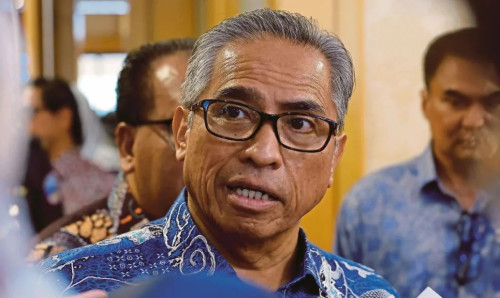
Sabah Progressive Party (SAPP) president Datuk Seri Yong Teck Lee has also voiced concerns over the political dominance of Peninsular-based parties, arguing that Sabah’s interests are often overlooked.
“This is an ongoing political struggle. It is only a matter of time before Sabah regains its rights under MA63.
“We Sabah folk must be persistent and fearless,” Yong said, stressing the importance of local parties winning more parliamentary seats.
He also pointed out that Sarawak has rarely included Sabah in its strategic positioning when dealing with the federal government, viewing Sabah as “unreliable” due to its own political structure.
With only 25 parliamentary seats, plus one in Labuan, Yong noted that winning sufficient seats to influence federal decisions has been a challenging process.
“Not enough Sabah folk realise the importance of having local parties win more seats,” he added. – September 9, 2024.