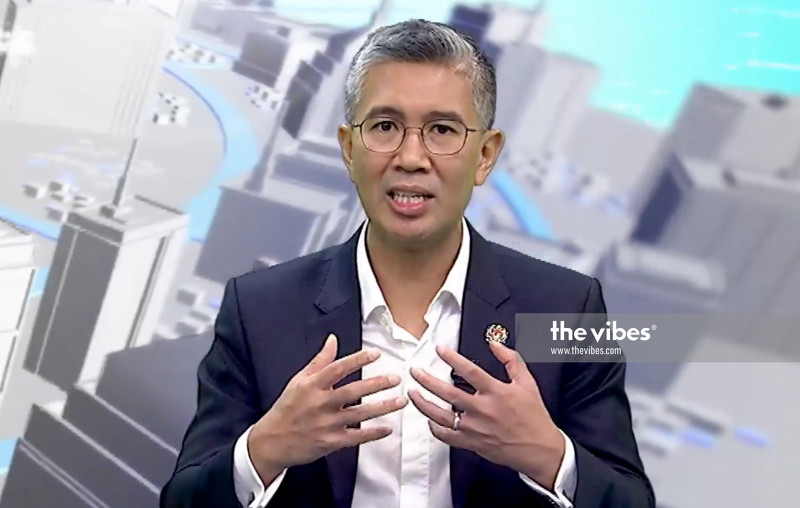
MALAYSIA’s import tariff on goods from the United States (US) is only 5.6 per cent, based on the Most Favoured Nation (MFN) principle under the World Trade Organisation (WTO), according to Minister of Investment, Trade and Industry, Tengku Datuk Seri Zafrul Tengku Abdul Aziz.
This statement came as a response to claims from the US that Malaysia's tariff on US exports was a substantial 47 per cent, which led the US to impose a retaliatory tariff of 24 per cent on Malaysian exports.
Tengku Zafrul firmly rejected these allegations, stressing that Malaysia’s tariff was significantly lower.
He added that the Ministry of Investment, Trade and Industry (MITI) had already outlined several strategic measures to address the impacts of the tariffs, including activating the National Geo-Economics Action Centre (NGCC) and forming a special task force to collect feedback from stakeholders.
“MITI is currently conducting an impact study on Malaysia’s key export sectors to the US, and the NGCC will take the findings into consideration during its next meeting,” Tengku Zafrul said. “We are engaging with industry bodies and export associations, and we will be consulting with relevant ministries and agencies such as the Ministry of Finance, Ministry of Economy, Bank Negara Malaysia, MIDA, MATRADE, and DOSM.”
He further assured that MITI would take a comprehensive approach in evaluating the available options. “Malaysia is fully committed to finding a solution that will ensure continued market access, attract sustained foreign investment, and support the wellbeing of Malaysian workers and businesses,” he added.
In response to recent comments from Prime Minister Datuk Seri Anwar Ibrahim, Tengku Zafrul reaffirmed that Malaysia would not engage in any retaliatory actions.
Looking ahead, Tengku Zafrul highlighted that ASEAN Economic Ministers would meet on 10 April to discuss the implications of the US tariffs on regional trade and investment flows, macroeconomic stability, and a coordinated response within ASEAN. Subsequently, ASEAN leaders will convene to address the direction the region should take to mitigate potential disruptions to regional trade, supply chains, and investment flows.
“The next step is to continue high-level strategic engagement with the US,” Tengku Zafrul said. He also noted that Malaysia would make full use of the Malaysia-US Trade and Investment Framework Agreement (TIFA) and explore the possibility of negotiating a technology protection agreement to safeguard Malaysia’s semiconductor and aerospace exports.
Additionally, Malaysia will consider excluding certain sectors from the tariffs and has already initiated discussions with the US Ambassador, Edgard D. Kagan, with further negotiations planned.
Tengku Zafrul also mentioned that Malaysia intends to deepen its involvement in Free Trade Agreements (FTAs), including the Comprehensive Economic Partnership Agreement (CEPA) with the United Arab Emirates. - April 7, 2025