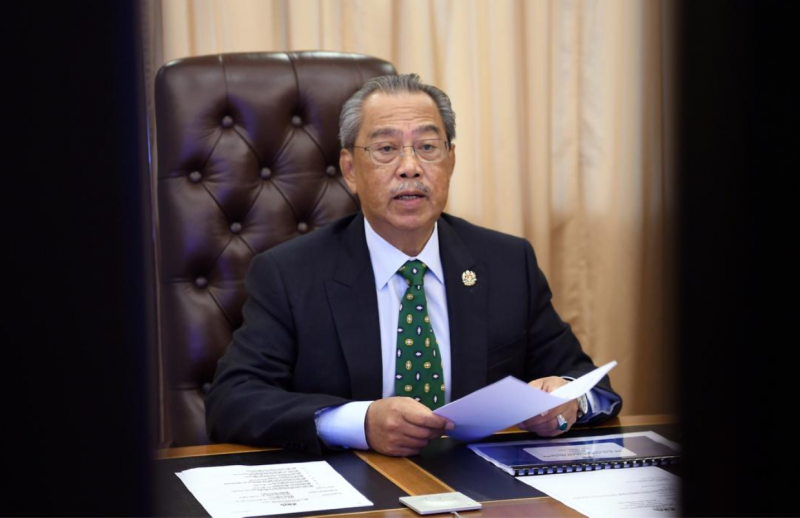
KUALA LUMPUR – The government will continue to cultivate an ecosystem that enables businesses to thrive and make Malaysia an attractive investment destination, said Prime Minister Tan Sri Muhyiddin Yassin.
Without using Covid-19 as an excuse for insularity and inward-looking policies, the government would also pursue policies that ensure favourable market conditions for Malaysian exports, he said.
“Truly, as a developing country with strong global linkages, Malaysia is a firm believer of free, fair and open trade and investment.
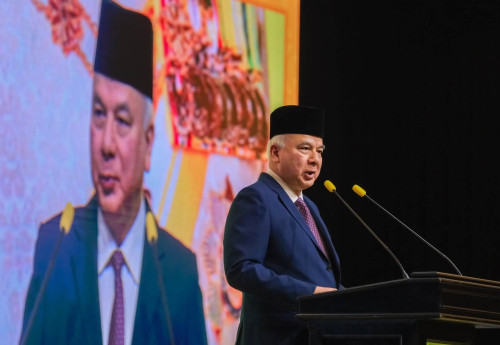
“As the prime minister, I wish to take this opportunity to offer my ardent assurance that Malaysia was, is, and will always be a country that is pro-business, pro-trade and pro-investment,” he said at the virtual World Chinese Economic Summit today.
The prime minister said that with the right policy tools, targeted intervention measures and novel public-private partnership ideas, Malaysia could successfully combat the pandemic and promptly weather the resulting economic crisis.
Muhyiddin said in the pursuit of this balance, it is of utmost importance that governments around the world continue to remain true to rules that govern international trade, which in turn provides certainty for businesses.
Protectionism and unilateralism must be resisted, he said, and unimpeded flows of cross-border goods and services must be allowed, ensuring minimal disruptions to regional and global supply chains.
Recognising China as a key proponent of the multilateral trading system, the prime minister said the country has been a voice of reason and moderation throughout the Covid-19 crisis; calling for other countries to ensure that emergency measures introduced to mitigate the risks associated with the pandemic would not disproportionately affect trade and investment flows.
Meanwhile, Muhyiddin noted that the Covid-19 crisis has become an unlikely ally for innovation, digitalisation and technology adoption.
He acknowledged the rising demand in e-marketplaces, as well as the flurry of activities in e-banking systems, e-wallets and end-to-end logistics services.
“Indeed, these are all reflective of the sweeping changes within the very DNA of our businesses.
“Their core models and traditional formats are steadily evolving, and governments must respond to these changes adequately, appropriately and astutely,” he added. – Bernama, December 21, 2020