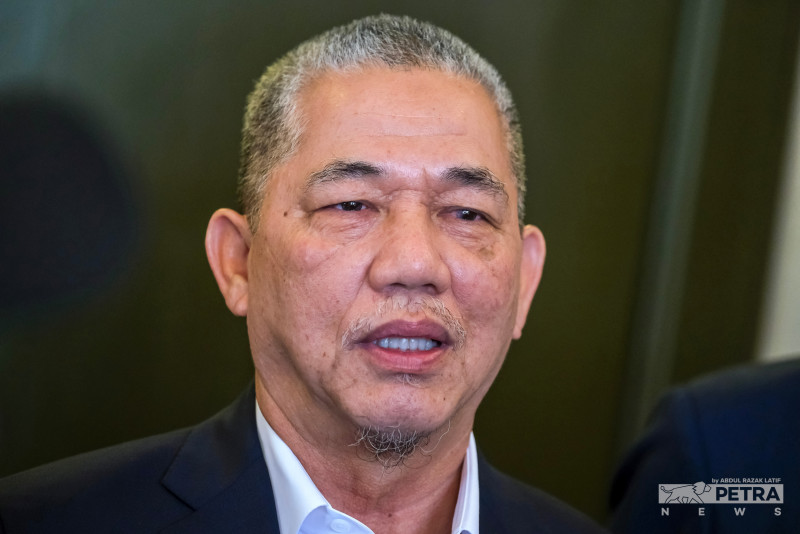
DEPUTY Prime Minister and Minister of Energy Transition and Water Transformation, Datuk Seri Fadillah Yusof, has called on governments, businesses, and civil society across the Asia Pacific to act decisively in the face of the climate crisis, declaring the energy transition “a once-in-a-generation opportunity to redefine our future.”
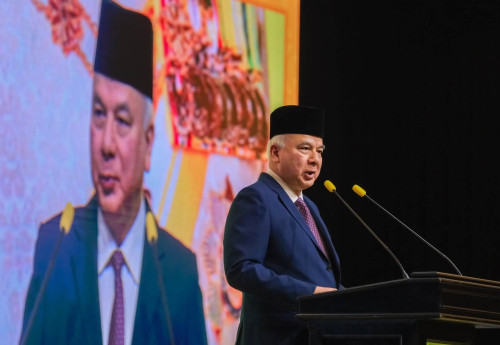
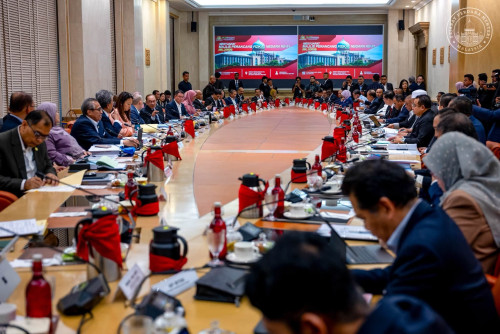
Delivering the keynote address at the Asia Pacific Business Forum (APBF) 2025 — a biennial event organised by the United Nations Economic and Social Commission for Asia and the Pacific (UNESCAP) — Fadillah underscored the urgency of coordinated regional action to accelerate the shift to net-zero carbon emissions.
“Our shared journey toward achieving net-zero emissions is not merely a necessity, but a pressing imperative,” he said.
“The global energy transition is now at a critical juncture, and our ability to navigate this transformation will depend on bold policy decisions, collective ambition, and international cooperation.”
Pointing to the mounting impact of climate change — including more frequent extreme weather events, rising sea levels, and biodiversity loss — Fadillah warned that achieving net-zero by 2050 was essential if the world was to avoid catastrophic warming.
Given that around 75% of global greenhouse gas emissions stem from energy production and consumption, Fadillah said decarbonising the energy sector must be prioritised.
“For Malaysia, the stakes are particularly high,” he noted, acknowledging the country’s long-standing dependence on fossil fuels.
However, he affirmed Malaysia’s determination to pivot toward a cleaner energy future. “Our commitment to raise the renewable energy share to 31% by 2025 and 40% by 2035 reflects a decisive shift in our energy strategy.”
He also highlighted policy frameworks such as the National Energy Policy 2022–2040 and the Hydrogen Economy and Technology Roadmap, which chart Malaysia’s ambitions to lead clean energy innovation in the region.
While progress has been made, the Deputy Prime Minister acknowledged that several critical challenges remain.
These include dependence on fossil fuels, especially in sectors tied to national growth and employment, the high cost of clean energy infrastructure, which demands innovative funding mechanisms and robust public-private partnerships, grid stability and energy storage, which are essential to managing the intermittent nature of renewable sources like solar and wind.
Additionally, workforce readiness, where reskilling is urgently needed to support new industries such as hydrogen energy, carbon capture, and sustainable transport.
“Reskilling and upskilling programmes must be at the heart of our strategy,” Fadillah said. “We need a workforce prepared for the demands of a green economy.”
Despite these challenges, Fadillah struck a confident tone, asserting that the energy transition offers vast opportunities for economic revitalisation, job creation, and regional leadership.
“Malaysia is well-positioned to become a solar powerhouse,” he said, noting successful pilot projects including floating solar farms and biomass initiatives. He also pointed to Malaysia’s growing investment in green hydrogen and carbon capture technologies as key pillars of future industrial growth.
“Green hydrogen can power transport and industrial processes, while carbon capture can help reduce emissions from legacy infrastructure,” he said.
He added that the transition is projected to create thousands of new green jobs, stimulate innovation, and attract sustainable investment.
Central to Fadillah’s vision is the Asia Pacific Green Deal, which he described as a transformative strategy for collective climate action.
“The Green Deal provides a roadmap to align economic development with climate responsibilities,” he said. “It emphasises clean energy investment, technology sharing, and the development of circular economies.”
With Malaysia assuming the ASEAN Chairmanship, Fadillah vowed to position the region as a global force in clean energy and climate diplomacy.
“Malaysia will lead ASEAN in forging stronger regional integration, cross-border energy cooperation, and strategic partnerships to drive a sustainable future,” he said.
A key priority under Malaysia’s leadership will be expanding the ASEAN Power Grid (APG) — a long-standing goal to interconnect member states' electricity networks.
“Through modernising our grids and harmonising regulatory frameworks, we can facilitate cross-border renewable energy trade, reduce our reliance on fossil fuels, and enhance energy security for the region,” Fadillah said.
Fadillah also unveiled Malaysia’s ambition to become ASEAN’s hub for clean energy technology and innovation. He outlined a series of national initiatives aimed at attracting global investment and expertise, including:
- Promoting green hydrogen development through international research partnerships;
- Scaling up solar power, energy storage, and carbon capture capabilities; and
- Advancing digital energy systems, incorporating AI and IoT to improve efficiency and reduce costs.
“With our strategic location and strong political will, Malaysia is well-placed to lead ASEAN into a new era of clean energy leadership,” he said.
As Chair, Malaysia will also intensify ASEAN’s international engagement, Fadillah added, pledging stronger collaboration with multilateral bodies such as ESCAP, the Asian Development Bank (ADB), and the International Renewable Energy Agency (IRENA).
He urged global stakeholders to support ASEAN’s transition through increased climate financing, capacity-building, and integration into carbon markets.
Fadillah called this “a defining moment” for ASEAN’s climate and economic future.
“Achieving net zero is not just about cutting emissions — it’s about building a more resilient, sustainable, and inclusive economy,” he said. “The energy transition gives us the chance to transform our region for the better. Let us act with urgency, seize this moment, and turn today’s challenges into lasting solutions for generations to come.” – April 10, 2025