THE government is targeting the elimination of all retaliatory tariffs imposed by the United States, with ongoing trade negotiations focused particularly on safeguarding key strategic sectors, according to Investment, Trade and Industry (MITI) Minister Tengku Datuk Seri Zafrul Abdul Aziz.
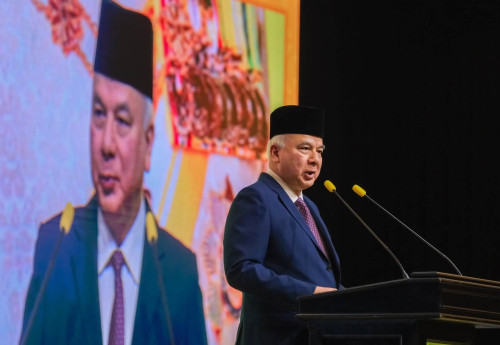
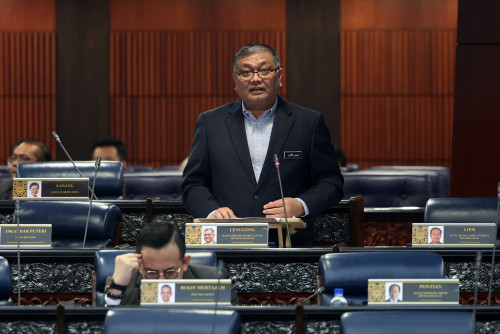
Speaking at a press conference following Monday’s special sitting of the Dewan Rakyat, Tengku Zafrul said the objective is to secure better trade terms and ensure Malaysia is not subjected to tariffs that could harm critical industries.
“We are continuing these negotiations to at least reduce tariffs, but the main goal is to ensure Malaysia is not subjected to any tariffs, especially in sectors that are important for the country,” he said.
He added that while no formal agreement with the US has yet been reached, early talks are aimed at identifying the scope and key issues to be negotiated.
“In any negotiation, there must be a win-win situation. There are things that must be given, and things that must be received in return,” he noted.
As part of preparations for the formal discussions, the Malaysian government has signed a Non-Disclosure Agreement (NDA) with the United States.
Tengku Zafrul confirmed that MITI Deputy Secretary-General (Trade), Mastura Ahmad Mustafa, will lead the talks and begin negotiations with the United States Trade Representative (USTR) on Tuesday morning.
He explained that the U.S. has outlined four main demands to Malaysia as part of ongoing negotiations over Washington’s recent imposition of tariffs, aimed at securing what both sides hope will be a mutually beneficial outcome.
“The U.S. is seeking Malaysia’s cooperation on addressing non-tariff barriers, reducing the trade deficit, protecting American technology, and increasing Malaysian investment in US industries.
He noted that the Malaysian government remains committed to ensuring any resolution balances national interest with global trade stability, as the country works to preserve investor confidence and economic resilience.
He reiterated that Malaysia has firmly rejected any abuse of the international trading system, particularly through the use of falsified or misleading Certificates of Origin intended to bypass tariffs, the Ministry of Investment, Trade and Industry (MITI) said on Monday.
The government was aware of recent media reports alleging that exporters from China were attempting to evade United States tariffs by routing products through third countries such as Malaysia.
“Starting tomorrow, we will no longer allow business chambers to issue Non-Preferential Certificates of Origin (NPCOs) due to numerous complaints from industry players about foreign goods entering our country,” Tengku Zafrul announced during the winding-up session of a special parliamentary meeting convened to address US tariffs.
NPCOs that were previously issued by business chambers will no longer be permitted, and all applications for NPCOs involving the US will now be centralised under MITI,” he added.
His remarks follow reports that some exporters have been involved in “origin laundering” — falsely declaring the country of origin of goods to avoid punitive import tariffs, particularly those imposed by the US on Chinese products.
Tengku Zafrul reiterated the MADANI government’s commitment to upholding the integrity of international trade and ensuring Malaysia is not used as a transshipment hub to facilitate such practices.
GDP Forecast Revision by Budget 2026
Earlier, the minister said Malaysia is set to revise its 2025 gross domestic product (GDP) forecast ahead of the next federal budget, following concerns that newly imposed United States tariffs on Malaysian exports will dampen the country’s economic performance.
“The government is unlikely to meet the initial 2025 growth projection of 4.5 to 5.5 per cent due to ongoing global trade volatility
“The current global economic landscape is highly dynamic, influenced by the uncertainty of the US tariff policies, which we know are continuously changing, as well as the outcomes of tariff negotiations with involved countries and the potential reactions from major trading partners,” he said during his winding-up speech at the Dewan Rakyat’s Special Sitting on Monday.
“It is very likely that we will not be able to achieve the 2025 Budget projection, as mentioned earlier by the Prime Minister,” he added.
Despite the expected revision, Zafrul assured that Malaysia’s policy responses would remain “targeted” and “data-driven,” with a focus on economic stability and protection for affected sectors and groups.
“We will maintain a targeted approach, driven by data, with close monitoring of macroeconomic indicators and developments in international trade policy,” he said.
Earlier in the day, Prime Minister and Finance Minister Datuk Seri Anwar Ibrahim also acknowledged the likelihood of a downward revision in the GDP forecast, saying the government would wait for greater clarity on the outcome of ongoing trade talks with Washington.
Anwar said the Finance Ministry and Bank Negara Malaysia (BNM) were currently assessing the impact of the US tariffs, especially in light of the tariff framework announced by US President Donald Trump on 2 April.
That announcement included a blanket 10 per cent tariff on all imports into the US, with higher rates for selected countries — including a 24 per cent tariff on Malaysian goods and a staggering 145 per cent on Chinese imports.
Among ASEAN nations, Malaysia was among those facing some of the higher rates, with Cambodia topping the list at 49 per cent, followed by Laos (48 per cent), Vietnam (46 per cent), and Myanmar (44 per cent). Singapore, by contrast, faced only the baseline 10 per cent tariff.
On 9 April, President Trump paused the tariffs for most countries for 90 days after market backlash but upheld the increased duties on China, further escalating tensions between the two superpowers.
Zafrul also revealed that the government is currently running three simulations to evaluate the impact of the US tariffs — focusing on investment, trade, and vulnerable sectors such as furniture and electrical and electronics manufacturing.
“We expect to gain clearer insight into the impact once the negotiations are concluded and the US makes its final decision,” he said, adding that Bank Negara Governor Datuk Seri Abdul Rasheed Ghaffour is also working to compile more comprehensive data for accurate forecasting. - May 5, 2025