NRES Minister urges collective action to address rising human-wildlife conflict after a juvenile elephant is struck and killed by a lorry along key wildlife corridor
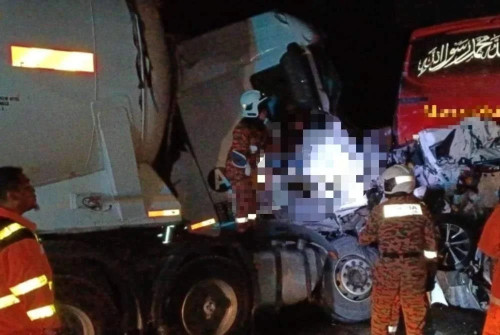
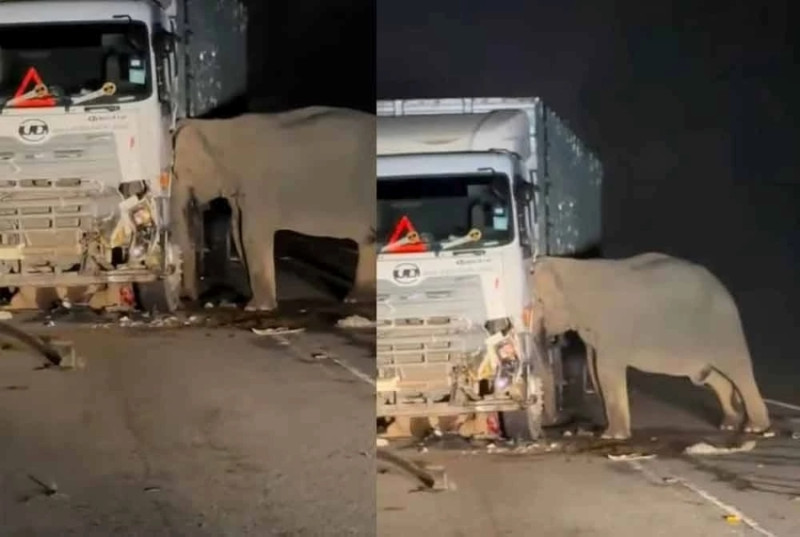
THE Ministry of Natural Resources and Environmental Sustainability (NRES) has expressed deep regret over the death of a baby elephant struck by a lorry on the East-West Highway near the Perak–Kelantan border in the early hours of 11 May 2025.
"We are deeply saddened and take this incident very seriously," said Minister Nik Nazmi Nik Ahmad in a media statement today.
The tragedy occurred at approximately 2.41 a.m. and involved a 10-tonne lorry transporting poultry. The calf was reportedly crossing the highway with its mother when it was hit.
"This is not merely a tragic accident, but a stark reminder of the growing challenges in human-wildlife coexistence, especially as we seek to preserve the survival of endangered species in increasingly fragmented habitats," the statement noted.
The East-West Highway (Jalan Raya Timur–Barat, JRTB) is a major route traversing critical elephant habitats in Perak and Kelantan. The area is considered a high-risk zone for wildlife-vehicle collisions, particularly involving elephants.
A 2016 study found that elephant roaming areas had declined by 68 per cent, mainly due to land use changes for agriculture, plantations, and infrastructure.
Between 2020 and 2024, the Department of Wildlife and National Parks (PERHILITAN) recorded 4,919 cases of human-elephant conflict, with damages amounting to an estimated RM39.4 million. In the past five years, eight elephants have been killed in road incidents across Peninsular Malaysia – three of them in 2025 alone.
In response, the ministry has implemented a series of mitigation measures, including regular patrols along over 100 kilometres of the winding and visually obstructed JRTB corridor, and the construction of three permanent Electric Elephant Fence Systems (SPEG) at Kg. Bukit Sapi - Kg. Batu Reng, RPS Air Banun, and Bersia.
Further initiatives include the enrichment of habitats through artificial salt licks beneath the Central Forest Spine (CFS) viaduct, the installation of 19 elephant crossing signs including LED monitors and billboards, street lighting at 16 identified high-risk locations, and expanded public awareness campaigns during festive seasons.
Other ongoing efforts encompass the development of wildlife crossings such as the 200-metre viaduct at kilometre 157 of the Gerik–Jeli route, completed in 2015 at a cost of RM26 million in collaboration with the Public Works Department.
"The long-term solution requires close cooperation between the Federal Government and state governments, as forest land falls under state jurisdiction under Article 74(2) of the Federal Constitution," the minister emphasised.
Proposed future actions include establishing ecological corridors, forming elephant corridors on private and plantation land, encouraging mini-corridor networks within palm oil estates, planting natural food sources to reduce elephant dependence on commercial crops, and creating a dedicated elephant sanctuary of at least 10,000 hectares.
The Federal Government has also allocated RM800 million under the Ecological Fiscal Transfer for Biodiversity Conservation (EFT) since 2019, including RM250 million for the current year, to support states in preserving protected areas and mitigating human-wildlife conflict.
To date, EFT initiatives have led to the gazettement of over 90,000 hectares of protected land, with more than 14,000 hectares added to Permanent Forest Reserves. Yet, the minister stressed that “financial and technical interventions alone are insufficient.”
"The government will continue to lead with comprehensive policy and implementation, but success hinges on the collective commitment of estate owners, project implementers, local communities, and road users," Nik Nazmi said. "Public awareness must be strengthened. Protecting elephants is not only about conservation, but about preserving our ecological balance and national heritage." - May 13, 2025