MALAYSIA, as ASEAN Chair for 2025, has urged member states to enhance regional cooperation in delivering a fair, secure and inclusive energy transition to meet climate commitments and rising energy needs across Southeast Asia.
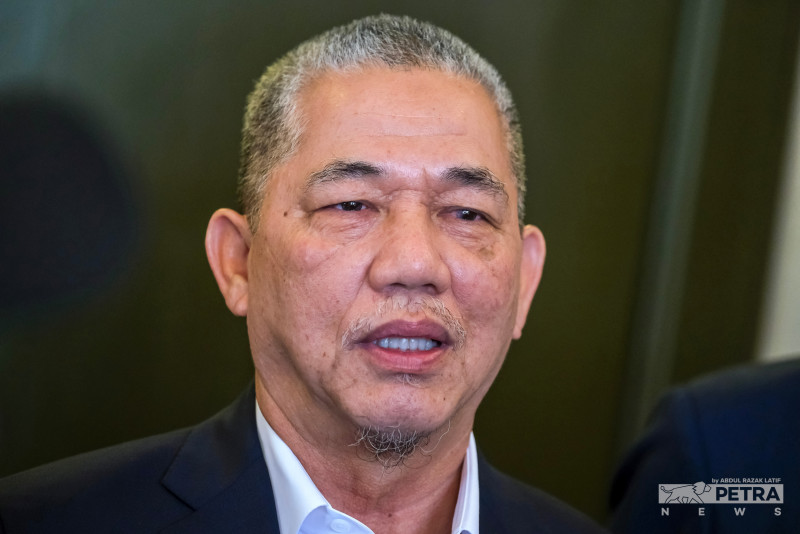
Deputy Prime Minister Datuk Seri Fadillah Yusof, who is also Minister of Energy Transition and Water Transformation, said the region’s energy future must be built on unity, practical frameworks and mutual benefit.
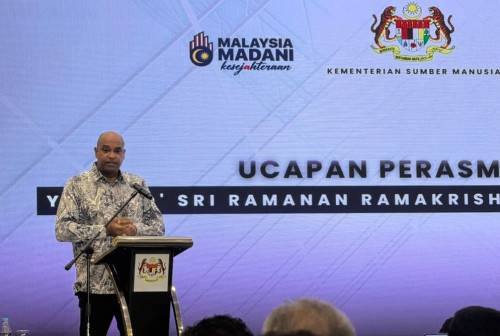
“As Chair of ASEAN in 2025, Malaysia is deeply committed to promoting dialogue, building consensus and advancing regional frameworks that will power a cleaner, more secure and more inclusive energy future,” he said in his keynote address at the ‘Energy Transition Meeting in ASEAN: Fostering Regional Cooperation’, hosted by MyDigital today.
Fadillah noted that ASEAN’s energy demand is increasing at a rate of three per cent annually—faster than the global average—and is expected to grow by more than 60 per cent by 2040.
“This growth, while reflective of our economic dynamism, presents us with a pressing dilemma: how do we continue powering our progress while safeguarding environmental sustainability and ensuring affordability for all?
“The answer lies in a managed, inclusive and well-coordinated energy transition, one that reflects the diversity of ASEAN while advancing a common vision,” he said.
He pointed to recent progress under the ASEAN Plan of Action for Energy Cooperation (APAEC) Phase II, noting that renewable energy now makes up 34 per cent of installed electricity capacity across the region, although its share in total primary energy supply remains at just 16 per cent.
Highlighting national efforts, he cited Vietnam’s rapid solar expansion of over 20GW since 2019, Indonesia’s USD20 billion Just Energy Transition Partnership, and Thailand’s Bio-Circular-Green Economy model as regional examples aligning sustainability with economic productivity.
Fadillah reaffirmed Malaysia’s own target of achieving 70 per cent renewable energy in its installed capacity by 2050 under the National Energy Transition Roadmap (NETR).
He underscored the importance of regional integration, especially through the ASEAN Power Grid (APG), which aims to facilitate cross-border electricity trade and optimise the region’s uneven distribution of renewable resources.
“The Laos-Thailand-Malaysia-Singapore Power Integration Project (LTMS-PIP) is a prime example of how multilateral electricity trade is possible, allowing countries to work together to deliver renewable electricity across borders.
“From a national perspective, Malaysia commenced its first cross-border green electricity trade with Singapore through ENEGEM (Energy Exchange Malaysia). In just 148 days, over 107 TWh of green electricity generated from solar and hydro has been successfully delivered across the Causeway,” he said.
Fadillah also called for greater alignment on green attributes, particularly Renewable Energy Certificates (RECs), to increase investor confidence and avoid double-counting.
“Malaysia strongly supports an ASEAN-wide framework for green attributes that aligns with international best practices,” he said, adding that this would be a key priority during Malaysia’s ASEAN Chairmanship.
He further emphasised the importance of working through existing ASEAN platforms as well as emerging partnerships, including the ASEAN-GCC and ASEAN-China dialogues. He noted that the Gulf states offer expertise in utility-scale renewables, while China brings technological capabilities and financial support.
“ASEAN must negotiate from a position of unity. A coordinated regional stance enhances our bargaining power, attracts large-scale investments and sends a strong signal that ASEAN is open for green business,” he added. - May 26, 2025