MINISTER of Investment, Trade and Industry, Tengku Zafrul Abdul Aziz, will lead a second round of negotiations in Washington on 18 June, as Putrajaya seeks to reduce steep US-imposed tariffs on Malaysian exports, particularly in sectors deemed strategically important to both countries.
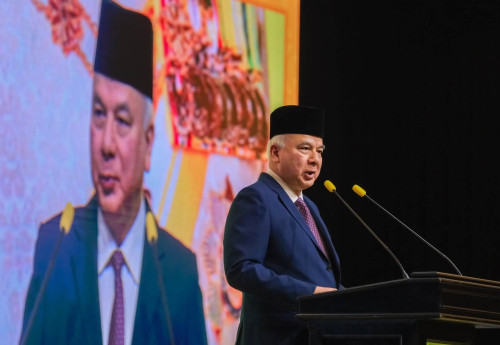
Speaking after launching the ASEAN Economic Community (AEC) Strategic Plan 2026–2030, Tengku Zafrul described the current US tariff regime as “unfair and non-negotiable in appearance”, but said Malaysia remained committed to “constructive engagement” with its American counterparts.
“As you know, there is a flaw — they say it looks non-negotiable, especially the 10% threshold. Malaysia has been imposed with a 24% tariff (by the US). Of course, our first target is to reduce that,” he said.
“Our second target is to identify sectors where tariffs should be reduced even further — below 10%. These include sectors important to Malaysian exporters, and also sectors of strategic interest to the US economy.”
While acknowledging the process will not be straightforward, Tengku Zafrul emphasised Malaysia’s strategic value as a trade and investment partner, not a competitor.
Furniture and palm oil have been identified as priority sectors for tariff relief, given their heightened exposure under the current US tariff framework.
Tengku Zafrul noted that the government has introduced a number of structural reforms, including tighter controls on certificates of origin and greater supply chain traceability, to ensure Malaysia is not used as a transshipment route to bypass US duties.
“We want to ensure that local exporters — especially those in sectors like furniture and palm oil — are taken into account during discussions,” he added.
The June visit follows Tengku Zafrul’s earlier mission to Washington on 24 April, where he met with US Secretary of Commerce Gina Raimondo and other senior officials.
At the time, Malaysia reaffirmed its commitment to addressing four critical areas: reducing the bilateral trade deficit, easing non-tariff barriers, enhancing technological security, and exploring the feasibility of a formal trade agreement.
The United States in April announced a new wave of tariff measures impacting over 60 countries, including Malaysia, which now faces duties of up to 24% on selected goods.
However, implementation has been paused for 90 days to allow room for negotiations — a window Malaysia now aims to use to secure more favourable terms. - June 12, 2025