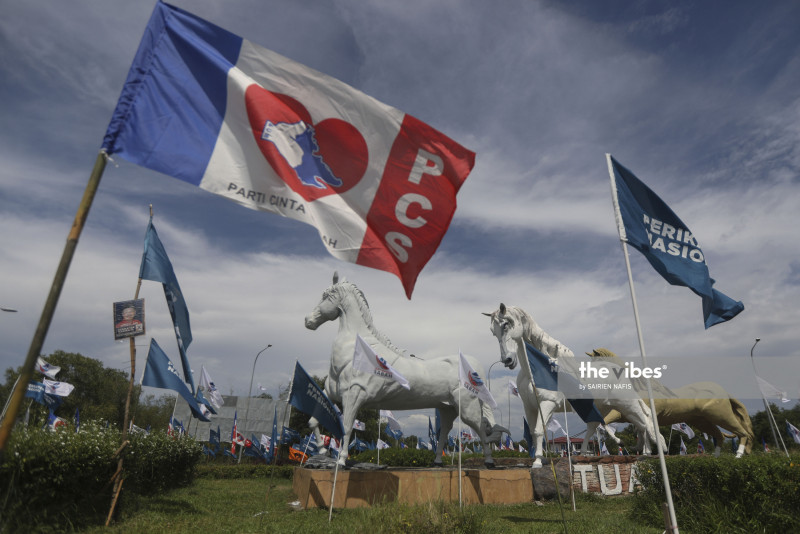

KUALA LUMPUR – Political analyst James Chin believes that Gabungan Parti Sarawak (GPS) will be closely watching the impending state polls in neighbouring Sabah.
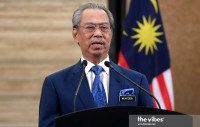
Chin, who is currently the professor of Asian Studies and the inaugural director of the Asia Institute at the University of Tasmania, said when Prime Minister Tan Sri Muhyiddin Yassin took charge of the government, GPS made it clear that the federal government has to resolve the Malaysia Agreement 1963 (MA63) issue.
“I'm not saying that the federal government is not interested in the issue, I'm saying that at the present moment because of the instability at the federal level, this is put on a back burner.
“Of course. they understand the unhappiness of Sabah and Sarawak, this will come back, and it has to come back as the key political issue because one of the items when Muhyiddin became the prime minister, he solicited support from GPS and they made it very clear Muhyiddin has to resolve the MA63 issue, whether he likes it or not.
“Muhyiddin now has bigger items to deal with, he knows it's important and he will come back to it probably after the results of the Sabah and Sarawak state elections,” Chin told The Vibes in an interview via Zoom.
On Malaysia Day, the prime minister announced the setting up of a special council to discuss issues related to Sabah and Sarawak under the Perikatan Nasional (PN) government.
Previously, during the Pakatan Harapan (PH) administration, a similar special cabinet committee on MA63 was established and a report was commissioned by the cabinet then.
Prior to the fall of the PH government, former de-facto law minister Datuk Liew View Keong proposed the setting up a special parliamentary select committee working in tandem with the cabinet committee on MA63.
However, the Deputy Minister in the Prime Minister’s Department (Sabah and Sarawak affairs), Datuk Hanifah Hajar Taib, told the Dewan Rakyat last month that the government shelved the proposal for the special parliamentary select committee, for it to be replaced by the cabinet council to review the MA63.
When asked about the impact of the upcoming Sabah state election on Sarawak, Chin thinks that GPS will be watching it closely because they want to see how the Sabah parties deal with the MA63 debate on the ground.
He added that one of the very unusual things about the debate over MA63 that is quite unique in Malaysian political history, is that it is an issue unique to Sabah and Sarawak.
“If you go to Sabah and Sarawak, all the politicians, it doesn't matter whether they are in the government or opposition, they all claim to be champions of MA63.
“It's very difficult for you to find a politician or senior politician in the mainstream who will say that they don't agree with it (MA63). Everybody agrees with it. All of them are making big promises that if they get in and they are going to give so much percentage of the oil (royalty) back to you (people in Sabah and Sarawak).
“All that sort of thing, throw big money in, a new federal-state accountability and for Sabah, the unique one, different from Sarawak, they are after the so-called 40% tax rebate,” Chin added.
He said the debate on MA63 is shaping up quite interestingly and believes that some of the key issues will reappear in the coming Sarawak state election, currently scheduled for when the term expires in July 2021.
Better deals for Sarawak under GPS with Muhyiddin?
This year’s national level Malaysia Day event was held in Sibu on September 16, the second time Sarawak has hosted the celebration. It was held in Kuching in 2019 and in Kota Kinabalu, Sabah in 2018.
For Chin, this year’s Malaysia Day was quite interesting because it was very clear the PN government is a very Malay-Muslim centric government in contrast with the multi-racial, multi-religious culture in East Malaysia.
For GPS, the tagline will be that under Muhyiddin, Sarawak will get a much better deal and evidence of that is the federal government having ordered Petronas to withdraw its court challenge and asking the national oil firm to pay up RM2 billion in a so-called sales tax to Sarawak.
On September 17, Petronas chairman Datuk Ahmad Nizam Salleh presented a cheque for RM2,956,671,407.36 to Sarawak Chief Minister Datuk Patinggi Abang Johari in Kuching.
“I was told that there will be some other deals dealing with Petronas in Sarawak, the state oil company and probably the federal government is looking to make the same deal with Sabah if the state falls back to Umno or Bersatu government.
“I think the important thing to understand is that we are actually talking about two different dynamics where it sorts into two separate circles.
“One is the domestic imperative circle in Sabah and Sarawak, the strong call for state nationalism or MA63 or historical grievances, and at the federal level is the consolidation and restructuring of the Malay politics.
“When that happens, the interests of Sabahans and Sarawakians are not taken into account, in other words, it will be purely a Malay elite fight among the Malay elite politicians, Sabah and Sarawak don't count,” Chin said.
He believes these two different sets of dynamics would collide because it is a coalition government at the federal level and Muhyiddin-PN needed the support of the MPs from Sabah and Sarawak.
He said there is no contradiction in having these two separate political circles. In terms of Sabah and Sarawak, he said the people want a “cocoon” where the two states have a sense of control over their own internal issues.
“These two cocoons sit within the wider Federation of Malaysia. There is no conflict. GPS has been playing the cards that as long as they are in charge, Sarawak will be Sarawak, they will limit the so-called toxic Malayan politics in Sarawak.
“Sabah, however, it is much harder to make the argument that they can keep everybody out because Umno has quite a presence in Sabah but having said that, we know that in 2018, Warisan came out of nowhere, captured half the seats in the Sabah election.
“That also shows that the people in Sabah, at least based on the voting trends and also that one little bubble, which is Sabah for Sabahans versus Malaya,” Chin said.
These historical grievances date back to the formation of the Federation of Malaysia and will be there for many years to come, until the time when the federal government agrees that there must be some sort of restructuring of the federal-state relationship, specifically between the Peninsular and Sabah, Sarawak. – The Vibes, September 24, 2020