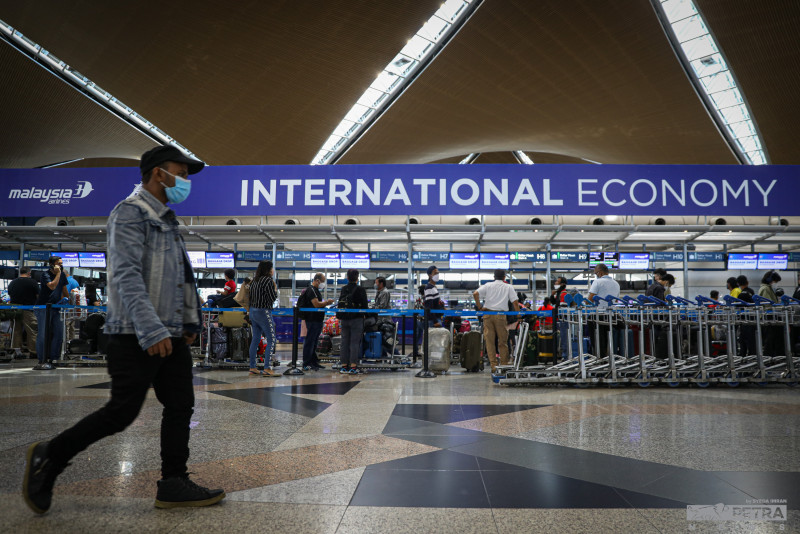
THE recent arrest of an enforcement officer stationed at the KLIA Terminal 1 entry checkpoint has once again spotlighted worrying cracks in Malaysia’s border security system. The officer was detained at 9.20am last Thursday after his suspicious conduct was flagged through closed-circuit television (CCTV) footage monitored by the Surveillance Unit and Integrity Unit of the Malaysian Border Control Agency (AKPS).
The officer was found in possession of over RM8,000 in cash, three communication devices, and several handwritten notes listing the last four digits of various passport numbers—believed to be linked to the illegal smuggling of individuals through official entry channels.
The practice, referred to as ‘counter setting’, involves manipulating border controls to facilitate the unlawful entry or exit of individuals, particularly foreign nationals who would otherwise not qualify to cross Malaysian borders.
Although an internal probe is currently under way prior to the suspect’s transfer to the Malaysian Anti-Corruption Commission (MACC) in Selangor, the incident has reignited pressing concerns: how many other officers might still be complicit yet undetected?
“This is far from an isolated case,” a source familiar with border enforcement said. “Over 50 enforcement personnel, including immigration officers and syndicate agents, were apprehended in similar cases since last year—yet the method remains the same, and the incidents continue.”
What sets this latest case apart is the alleged involvement of someone formally embedded within the system—an officer trained, empowered, and entrusted to safeguard the nation’s front lines, yet seemingly operating as a traitor from within.
“If individuals within the system are still willing to act as inside men at our border counters, how confident can we be about protecting ourselves from illegal immigration, trafficking, smuggling, and other cross-border crimes?” asked a security analyst who spoke on condition of anonymity.
AKPS, in a statement, reaffirmed its commitment to bolstering cross-agency cooperation and strengthening surveillance. However, the officer’s boldness in bringing passport details and cash directly to his post underscores a glaring lapse in oversight.
More troubling is the implication that the suspect may not have been working alone. “If only one officer has been detained, where did he obtain that list of passport numbers? Was he truly operating solo, or are others still at large within the system?” questioned a source close to the investigation.
The case underscores the critical need for proactive, rather than reactive, internal monitoring systems. Surveillance tools such as CCTV and integrity units must not only respond after violations occur but must be actively employed to pre-empt breaches.
As long as enforcement remains focused on aftermath rather than prevention, syndicates will continue to exploit those systemic blind spots. And for officers lacking integrity, the lure of hefty payouts ensures the border gates remain dangerously ajar—opened from the inside. - July 27, 2025