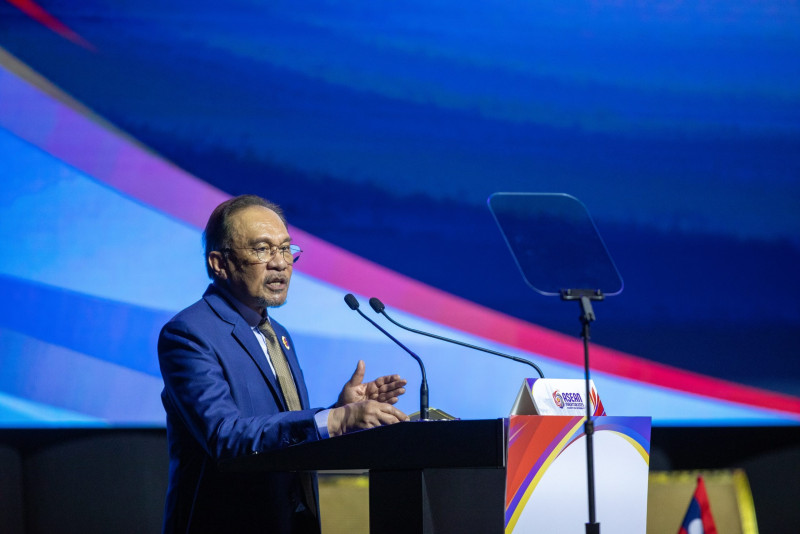
PRIME MINISTER Datuk Seri Anwar Ibrahim has called on ASEAN member states to redouble their efforts to realise a fully interconnected regional power grid, underscoring the urgency of energy transition across Southeast Asia
Speaking at the opening of the 43rd ASEAN Ministers on Energy Meeting and the 25th ASEAN Energy Business Forum, Anwar emphasised that the global energy landscape is rapidly evolving due to pressures from carbon reduction, supply security, and cost considerations — challenges that the region is not immune to.
“With a population of 680 million and among the fastest-growing economies, ASEAN must manage this transformation responsibly and collectively,” he said.
Under Malaysia’s chairmanship this year, the region has made significant strides including the implementation of Phase One of the ASEAN Plan of Action for Energy Cooperation (APAEC) and the endorsement of the Enhanced Memorandum of Understanding on the ASEAN Power Grid (APG).
“These decisions represent major progress in regional integration and the energy transition. The APAEC will serve as ASEAN’s policy compass for the next decade, setting clear pathways to expand renewable energy, improve efficiency and strengthen regional interconnection,” Anwar explained.
He stressed that equity remains central to this transition, ensuring that member states progress at their own pace toward a low-carbon, sustainable, and integrated energy future.
Highlighting the APG as a cornerstone of ASEAN’s energy vision, the Prime Minister described it as an embodiment of the region’s aspiration to connect power systems, share resources, and enhance resilience through interdependence.
“This will enable us to harness renewable energy potential, reduce reliance on fossil fuels, and deliver reliable, affordable electricity across borders,” he said.
Malaysia has long been a proponent of the APG and participates in key projects such as the Laos-Thailand-Malaysia-Singapore Power Integration Project, facilitating multilateral power trade.
Preparations are also underway for interconnections involving Vietnam and further initiatives under the Brunei-Indonesia-Malaysia-Philippines framework.
“A well-connected grid strengthens regional integration, attracts green investment, creates quality jobs, and positions ASEAN as a hub for clean-energy industries and technologies,” Anwar said.
However, he acknowledged challenges in harmonising regulations, financing infrastructure, and ensuring effective governance but maintained these obstacles are surmountable with trust, commitment, and political will.
He urged ASEAN member states to intensify efforts in accelerating interconnection projects, aligning regulatory frameworks, and deepening public–private collaboration to realise the region’s clean energy ambitions. - October 16, 2025