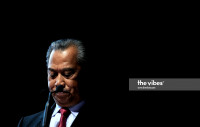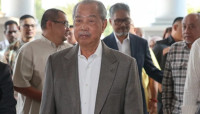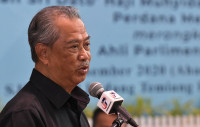
THE loose coalition led by Muhyiddin Yassin appears to lack a clear direction, raising questions about its strategy and cohesion moving forward - observers told The Vibes.
They explained that many questions remain unanswered following the recent meeting of leaders from 12 different parties with diverse political backgrounds.
Last week, the loose coalition formed by several parties outside the government bloc has named itself Ikatan Prihatin Rakyat (IPR).
The coalition made the decision at a roundtable meeting this evening, the second since its first on Aug 18.
It would also hold a national congress early next year to emphasise its stance on “saving Malaysia”.
Prof Dr Azizuddin Sani of Universiti Utara Malaysia (USM) opined that the leaders have yet to state a clear direction in its efforts to replace the current unity government in the upcoming general election.
Azizuddin stressed that the coalition has many internal “enemies” and it would be difficult for the coalition to reach a consensus due to internal rivalry.
“The objective is to challenge the unity government but the individuals in the loose coalition were “enemies” against each other before. P. Ramasamy for instance was vocal against PAS, PAS was vocal against Waytamoorthy and the list goes on and on.”
“There is no clear direction from the coalition and the public is not convinced that they can come together forming an understanding prior to the GE. How will they discuss seat allocation between them?
“What is the policy they are going to present to the people and what is the alternative they can offer. It is only a marriage of convenience,” he said.
Muhyiddin in a statement said that the IPR secretariat was established to look at the concepts and aspects of community life that would be discussed during the congress.
The statement was co-signed by leaders from PAS, Gerakan, the Malaysian Indian People’s Party (MIPP), Berjasa, Pejuang, Putra, Muda, the Malaysian Advancement Party (MAP), the National Indian Muslim Alliance Party (Iman) and Urimai.
On Aug 18, he said the loose coalition was formed to hold the current administration accountable and highlight issues affecting the people, including reform pledges they claimed Prime Minister Datuk Seri Anwar Ibrahim had failed to deliver.
Muhyiddin said as the loose coalition is not a formally registered political bloc, it allowed members to bring together party leaders, even those outside Perikatan Nasional, to discuss key issues and propose solutions to help the people.
“There are no fixed agendas. We can use this platform to discuss and make joint decisions on whatever issues we feel are of shared importance – whether it involves politics, economy, social matters or education,” the former prime minister said.
Azizuddin added that the real main objective of the coalition was to take over power from the government.
“It was all about power. There is no clear objective, and they will have tough time to reach an agreement due to clear differences. I don’t see how they will be able to work together in the next election,” he said.
Mirroring Azizuddin’s sentiment is independent political observer Sayuti Omar who described the cooperation as a political gimmick.
The author of several political books explained that Muhyiddin himself was not convinced that Perikatan Nasional (PN) is able to challenge PH-BN partnership.
“My first reaction is that Muhyiddin is not convinced that PN can overthrow unity government that is why he has to get others to come in and form this loose coalition.”
“There is nothing new that can be said. The faces are the same and the things that they want to change are also the same things. There is nothing to say about them.”
“It was a gimmick with no added value. There is nothing for the government to be worried about. It was a waste of time,” he bluntly said.
Previously, AMK Information Chief Danish Hairudin, branded the formation of IPR as yet another political rhetoric.
He said it was merely aimed at diverting public attention from the internal turmoil within Bersatu and the tensions within Perikatan Nasional (PN).
According to Danish, the move reflects the leadership pressure Muhyiddin is facing within his own party as well as the loss of trust among PN’s coalition partners.
“This new coalition is not a sign of strength but an attempt to cover up the widening cracks within PN,” he said. – October 22, 2025