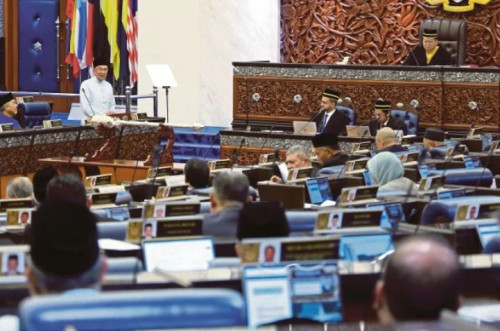
ENFORCEMENT against the influx of foreign workers managing paddy fields in Malaysia faces significant hurdles, largely due to the lack of official records for land leases, the Dewan Rakyat was informed today.
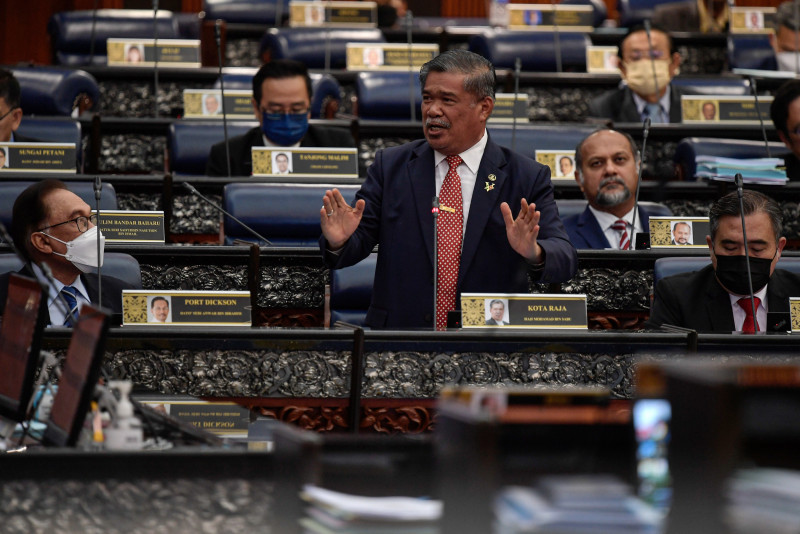
Minister of Agriculture and Food Security Datuk Seri Mohamad Sabu said the problem stems from landowners themselves hiring or allowing foreign nationals to carry out various agricultural activities, including planting, spraying, ploughing, and cultivating cash crops.
“The influx of foreign workers in this context requires careful governance and cross-ministerial cooperation,” he said during the Ministerial Question Time session.
“Weak documentation means that relevant agencies cannot verify lease agreements or demonstrate violations of land-use conditions.”
Mohamad Sabu was responding to a question from Kapt (B) Datuk Dr Zulkafperi Hanapi (Tanjong Karang) regarding the low paddy yields that have prompted foreign nationals to lease land and manage paddy fields or cash crops in several areas.
The minister also addressed plans to review the Plant Varieties Protection Act 2004 and the government’s consideration of joining the 1991 International Union for the Protection of New Varieties of Plants (UPOV 1991).
He emphasised that no measures will be finalised without broad consultation, including with local farmers concerned about potential impacts on seed-saving and sharing practices.
“At present, engagement is ongoing to implement the act. These consultations are crucial to reach consensus, and any implementation must benefit the farmers,” he said.
In response to a supplementary question from Datuk Seri Takiyuddin Hassan (PN-Kota Bharu) about the UPOV 1991, Mohamad highlighted the government’s careful review of concerns raised by non-governmental organisations and paddy farmers, particularly in Kedah, who still practise saving and reusing paddy seeds each season.
He noted that seed quality can be inconsistent when supplied individually, whereas higher yields are achieved through institutional sources such as the Malaysian Agricultural Research and Development Institute (MARDI).
“If seeds are provided individually, results can vary. Institutions like MARDI have proven to deliver consistently higher yields,” he said. - November 25, 2025