MIDDLE-INCOME earners and smaller businesses will receive tax cuts under Budget 2027, while individuals with taxable income exceeding RM1 million will face the 30% top marginal rate at a lower threshold, marking a shift in how the government distributes tax relief and raises revenue.
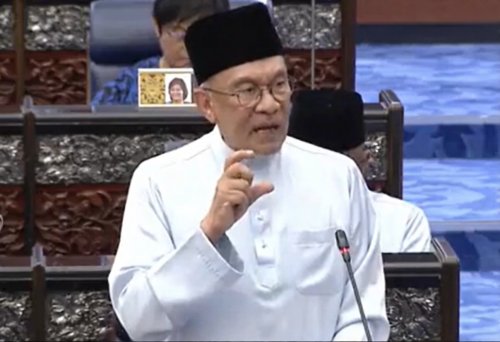
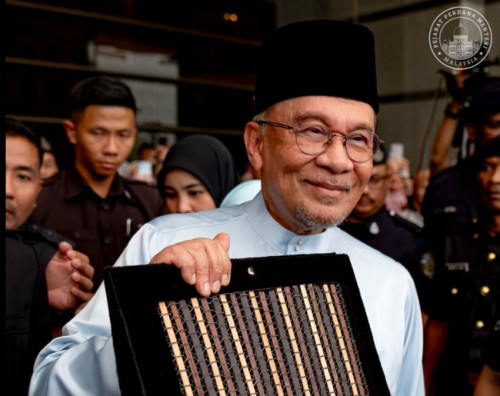
The budget, tabled by Prime Minister Datuk Seri Anwar Ibrahim on Friday, raises basic individual tax relief to RM12,000 from RM9,000, the first revision since 2010, while reducing tax rates by one percentage point for taxable income bands of RM70,000 to RM100,000 and RM100,000 to RM150,000.
The changes offer relief to selected middle-income taxpayers, while the reduction in the threshold for the top marginal rate means more high-income earners could be subject to the 30% rate on the portion of their taxable income above RM1 million.
For micro, small and medium enterprises (MSMEs), the corporate tax rate on the first RM150,000 of chargeable income will fall to 14% from 15%, while the rate on income above RM150,000 up to RM600,000 will be reduced to 16% from 17%.
KPMG Malaysia head of tax Soh Lian Seng described the budget as “inclusive”, saying it contained measures to ease household financial pressures, support businesses and improve earning capacity.
He said stronger tax compliance reflected the government’s effort to balance relief and incentives with sustainable revenue collection.
“Importantly, Budget 2027 reflects a shift towards raising incomes rather than relying solely on direct assistance,” Soh said, pointing to the minimum wage increase, enhanced support for gig workers and measures to strengthen workforce participation.
PricewaterhouseCoopers Malaysia tax leader Steve Chia said the RM510 billion budget, up from RM470 billion this year, remained expansionary even as the fiscal deficit was projected to narrow from 3.6% in 2026 to 3.3% in 2027.
He said savings from targeted subsidies and stronger revenue collection were being channelled back to households and businesses while maintaining fiscal discipline.
Chia said MSMEs, which contribute about 40% of the economy and employ roughly half the workforce, stood to benefit from the lower corporate tax rates. The changes could generate annual tax savings of up to RM6,000 for eligible businesses, benefiting about 300,000 SMEs, he added.
Other measures include expanded stamp duty relief for eligible first-time homebuyers and full stamp duty exemptions for parties involved in rescuing abandoned housing projects.
Ernst & Young Tax Consultants tax managing partner Farah Rosley said the budget continued fiscal consolidation while placing greater emphasis on implementing reforms and delivering measurable outcomes.
She highlighted proposed governance and procurement reforms, saying stronger accountability, policy certainty and consistent implementation would be important for investor confidence and Malaysia’s competitiveness.
The impact of the tax changes will depend on how much households and businesses save, and whether the government can sustain revenue collection while pursuing fiscal consolidation. - October 10, 2026