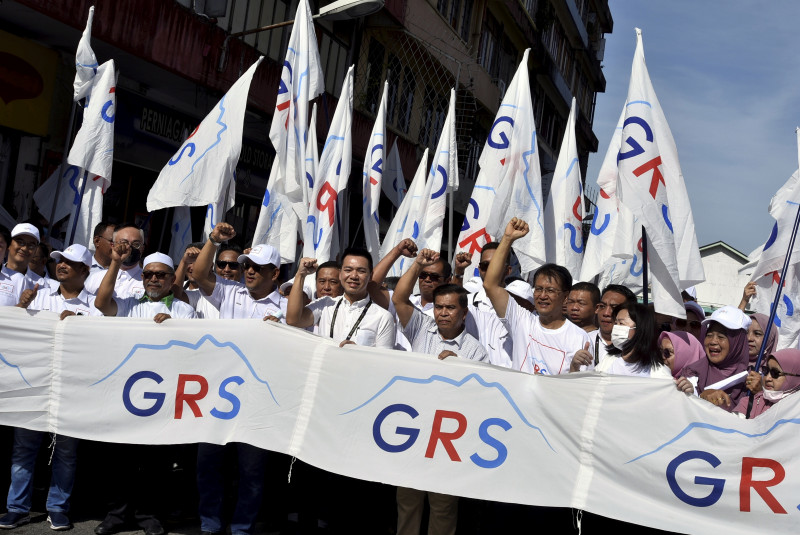
GABUNGAN Rakyat Sabah (GRS) has entered the final stretch of the state election campaign championing its record on physical and human-capital development, with its leaders insisting the coalition has both a comprehensive long-term plan and a consistent commitment to Sabah’s constitutional rights.
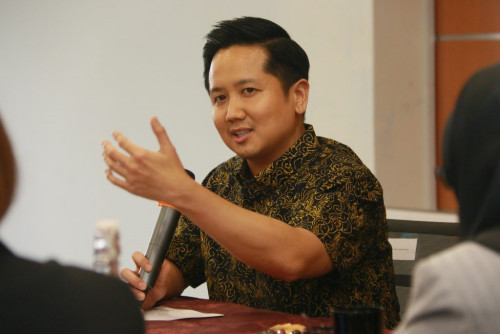
Dr Bonaventure Boniface, the GRS candidate for the Tamparuli state seat, said the coalition’s five years in government under caretaker Chief Minister Datuk Seri Hajiji Noor had been marked by a clear development direction driven by the Sabah Maju Jaya (SMJ) plan.
“If we look at physical development, we see SMJ homes, roads and buildings being constructed. For human capital, GRS provides various forms of assistance to young people,” he said during an appearance on Buletin TV3’s Podcast Utama.
He cited programmes such as the one-off BUDI tertiary registration cash aid and the BAKTI special examination assistance as examples of support aimed at widening opportunities for the state’s youth.
“In my view, the development carried out by GRS this time is inclusive. It is not only physical but also human capital,” he said.
Bonaventure, a former senior university lecturer, faces 12 challengers in Tamparuli.
He said long-standing issues often referred to as the “three-in-one problem” — unreliable electricity, water shortages and damaged roads — were inherited from previous administrations but are being actively addressed.
“For water, we have many concessions with private companies. Perhaps it is time to privatise water supply in Sabah. For electricity, we rely heavily on independent power producers.
“It may be time to collaborate with Sarawak, which has the Bakun Dam, so Sabah can receive more stable and consistent power from Sarawak,” he said.
He added that GRS was seeking solutions rather than allowing these problems to persist.
He also defended the coalition’s manifesto, saying its four pillars were backed by detailed strategies rather than broad promises.
“That is why our manifesto is different. Each pillar has its strategic plan and the outcomes we aim to achieve. Usually, manifestos outline general statements without a strategic plan, but GRS has planning and implementation,” he said.
On the coalition’s push for a blue economy under its Sabah Forward pillar, Bonaventure said the approach was aimed at improving community livelihoods using modern methods.
“The blue economy helps especially those involved in fisheries. For example, with tuna fishing, the old methods may be difficult or time-consuming. Using new hook-and-line techniques can help them achieve better yields,” he said.
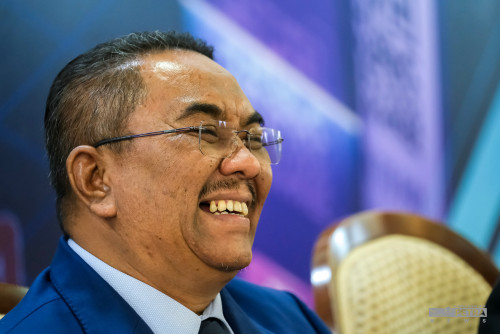
Meanwhile, Domestic Trade and Cost of Living Minister Datuk Armizan Mohd Ali warned that the Malaysia Agreement 1963 (MA63) should not be reduced to a campaign weapon.
He said Sabahans must stand together in asserting rights already agreed under the treaty. Armizan, who previously oversaw federal affairs on Sabah and Sarawak and led the MA63 task force secretariat, said some political actors were falsely styling themselves as uncompromising defenders of state rights while denying the efforts of others.
He pointed to Parti Warisan’s reaction to the Kota Kinabalu High Court’s ruling in favour of the Sabah Law Society (SLS) on Sabah’s 40 per cent revenue entitlement.
“In reality, they did not bring the case to court when they governed Sabah from 2018 to 2020. The state government’s official position in the 7 August 2019 assembly sitting was not to take the Federal Government to court because it was deemed not a good step,” he said in a video posted to Facebook.
Armizan, who is also GRS’s Deputy Secretary-General, said the SLS itself had recently recognised the role of the GRS-led government in consistently upholding Sabah’s constitutional rights.
He urged voters to shield the state from “the inconsistency of certain parties” and to choose a coalition committed to protecting Sabah’s interests.
Sabahans head to the polls on Saturday in the state’s 17th election, with 73 seats up for contest - November 27, 2025