WHAT began as a casual enquiry about a loan advertised on Facebook has plunged a young Malaysian couple into a cycle of fear, violence and spiralling extortion.
A person who only wanted to be known as O, 30, had contacted a purported lender on 7 November, providing routine personal details but ultimately choosing not to proceed with the loan.
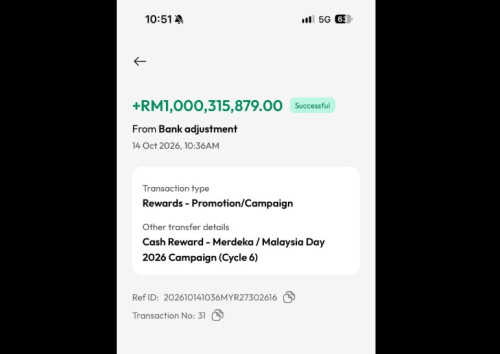
Days later, unbeknown to him or his wife Teh, S$300 (RM955) appeared in his bank account. On 10 November, the couple were confronted with a threatening call demanding S$3,500 (RM11,139) in return.
The caller warned that failure to pay would result in O’s father’s home in Kluang, Johor, being set ablaze.
Unaware that any money had been transferred, the couple dismissed the demand. Five days later, on 15 November, O’s father’s home was torched.
One week on, the same syndicate issued another threat—this time targeting Teh’s father in Perak. Terrified, the couple transferred S$7,000 (RM22,279).
The intimidation continued, with the group then insisting on a further S$5,000 (RM15,913) as supposed payment for a “worker’s fee to burn the house”.
Their ordeal reflects a growing wave of harassment cases linked to identity theft and fraudulent lenders.
Meanwhile, in Petaling Jaya, a 57-year-old housewife returned home to find her property chained, splashed with red paint and plastered with warning notices.
She had never sought a loan. Instead, someone had taken out RM300 using a falsified identity card bearing her address. The notices, dated 26 June, were made out to “Cheng Ann Keat”.
After filing a police report, she learnt that “Cheng” had given scammers a forged IC listing her home as his address.
Despite clear evidence of mistaken identity, the group demanded RM5,000 to remove her home from their “blacklist”. She refused. Her home was locked again on 7 July and vandalised a second time with red paint on 30 October.
“If anyone knows this Cheng person, please let us know. We don’t know what else to do. I don’t want to live in fear over the actions of someone I don’t even know,” she said at a press conference at Wisma MCA.
A similar nightmare befell IT consultant Cheah, 55, who discovered his Subang Jaya apartment plastered with loan-shark notices addressed to his deceased former tenant.
Cheah had rented the flat to Woon, 65, who had been struggling financially and had fallen behind on payments. She died on 6 November, yet Cheah’s property was targeted on 12 and 25 November with threats meant for her.
“I have never even contacted a loan shark before, but now my property is facing constant harassment although my tenant is no longer there,” he said.
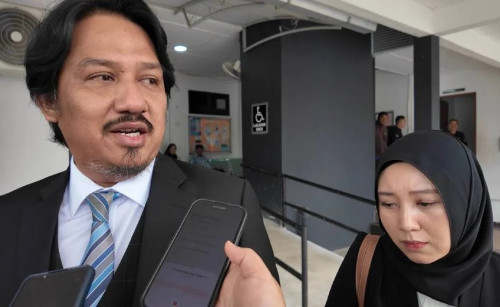
Datuk Seri Michael Chong, head of MCA’s Public Services and Complaints Department, said the pattern points strongly to scammers, not genuine loan sharks.
“I believe these are scammers who have happened on the information as loan sharks do not simply give out loans without properly verifying if an IC is real or not,” he said. “If anyone has been forced to overpay their loan shark loan and is still being told to pay more, I advise you to lodge a police report. This is considered extortion.”
Authorities urge anyone facing similar threats to report them immediately, warning that digital loan scams are becoming increasingly brazen—and dangerous. - December 4, 2025


.jpeg)