THE High Court conviction of former prime minister Najib Razak over the 1Malaysia Development Berhad scandal has reignited demands for far-reaching institutional and structural reforms, with civil society organisations warning that justice remains incomplete unless systemic weaknesses exposed by the case are comprehensively addressed.
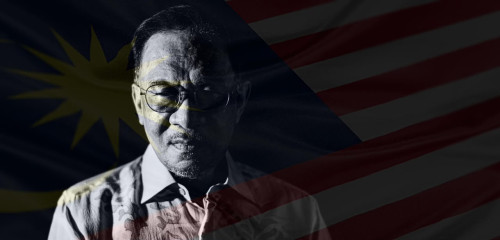
In separate statements, the Center to Combat Corruption and Cronyism (C4 Center) and former SUARAM director Kua Kia Soong welcomed the verdict as a landmark affirmation of the rule of law, while cautioning against treating Najib’s conviction as the final chapter in Malaysia’s reckoning with one of the largest financial scandals in its history.
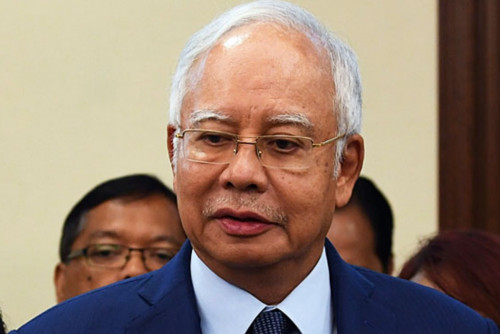
Najib, who served as prime minister from 2009 to 2018, was yesterday found guilty on all 21 counts of money laundering linked to 1MDB.
The High Court in Putrajaya ruled that the prosecution had proven its case beyond reasonable doubt, delivering a historic judgment against a former head of government.
The court found that Najib had received US$681 million, or approximately RM2.08 billion, from a 1MDB subsidiary, and that he issued cheques and transferred funds that were ultimately diverted for personal and political purposes.
C4 Center described the ruling as a powerful reminder that no individual is above the law. However, it stressed that many of the political, bureaucratic and regulatory structures that enabled the 1MDB scandal remain largely intact, even seven years after Najib’s removal from office.
In his judgment, High Court judge Datuk Collin Lawrence Sequerah rejected Najib’s long-standing defence that the funds were a “Saudi donation”, ruling that the claim was unsupported and based on forged documents.
The court also dismissed assertions that 1MDB officers had conspired against Najib or that he was unaware of wrongdoing under his administration.
According to C4 Center, the judgment itself highlighted deep flaws within Malaysia’s governance framework.
The group noted that the court found 1MDB officials had acted on instructions from fugitive businessman Low Taek Jho, or Jho Low, because they believed he was operating with Najib’s authority, despite holding no official position in the company.
C4 questioned whether sufficient reforms have since been implemented to prevent similar abuses in government-linked companies, pointing out that current policies still allow politicians to hold leadership roles, creating inherent conflicts of interest.
The organisation reiterated its call for Jho Low to be brought back to Malaysia to face justice, describing his close working relationship with Najib as central to the scheme that defrauded the nation.
It also demanded accountability for those who helped legitimise the now-discredited “Arab donation” narrative, including enforcement officials who investigated and publicly endorsed the claim.
The judgment revealed that a Malaysian Anti-Corruption Commission team sent to Riyadh to verify the alleged donation operated under the supervision of the current MACC Chief Commissioner, Tan Sri Azam Baki. Judge Sequerah described the trip as “pre-planned” and an attempt to “complete the story” surrounding the donation.
“These findings raise serious questions about credibility and called for accountability for all parties involved in the cover-up,” C4 said.
Separately, Kua Kia Soong turned the spotlight on the role of financial regulators during the 1MDB saga, particularly Bank Negara Malaysia and its former governor, Tan Sri Zeti Akhtar Aziz.
He argued that the scandal represented not only a political failure but also a regulatory one, involving massive cross-border financial flows that should have triggered decisive intervention by the central bank.
“Bank Negara is mandated to monitor suspicious transactions and politically exposed persons,” Kua said, adding that the scale and nature of 1MDB’s transactions should have raised immediate red flags.
Kua pointed to civil forfeiture filings by the United States Department of Justice, which detailed alleged money trails from accounts linked to Najib into investments and companies associated with individuals close to him, including entities linked to Datuk Seri Tawfiq Ayman, the former governor’s husband.
While no criminal charges ensued and Malaysian authorities reportedly examined the matter, Kua criticised the absence of a detailed public explanation on the scope, findings and closure of the investigation.
“Silence is not exoneration,” he said, arguing that unresolved questions surrounding conflicts of interest at the highest levels of financial oversight continue to undermine institutional credibility.
Both C4 Center and Kua criticised what they described as selective accountability throughout the 1MDB saga. While politicians, bankers and intermediaries were charged and convicted, questions surrounding regulatory bodies, enforcement leadership and systemic vulnerabilities remain unanswered.
C4 warned that the excessive concentration of power in the Prime Minister’s Office remains a persistent risk.
During Najib’s tenure, the attorney general, the MACC chief and senior enforcement officials were removed while investigations into 1MDB were ongoing, illustrating what the group described as the fragility of institutional independence.
Kua echoed the call for broader accountability, arguing that further investigations, whether by the MACC or through a parliamentary inquiry, should be seen not as attacks on institutions but as necessary steps to restore public trust.
“Institutions are not strengthened by reverence or silence,” he said. “They are strengthened when scrutiny is universal.” - December 27, 2025
1MDB, Najib Razak, corruption, civil society, C4 Center, SUARAM, institutional reform, governance, accountability