MALAYSIA’S working visit to Turkiye forms part of a broader strategy to review and strengthen the implementation of existing free trade agreements, as countries around the world increasingly prioritise domestic interests over open markets, Investment, Trade and Industry Minister Datuk Seri Johari Abdul Ghani said.
He said the visit reflects a global shift towards protectionism that is reshaping trade and investment decisions, requiring Malaysia to be more proactive in ensuring its trade agreements deliver tangible benefits.
“Countries around the world are now increasingly ‘inward looking’, with protectionism becoming the key word,” he said.
Malaysia has signed 17 free trade agreements to date, comprising nine multilateral and regional agreements and eight bilateral pacts, including one with Turkiye. Johari said Malaysia could no longer rely on the existence of these agreements alone without actively evaluating and maximising their outcomes.
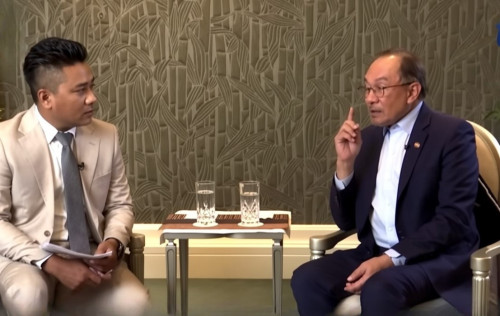
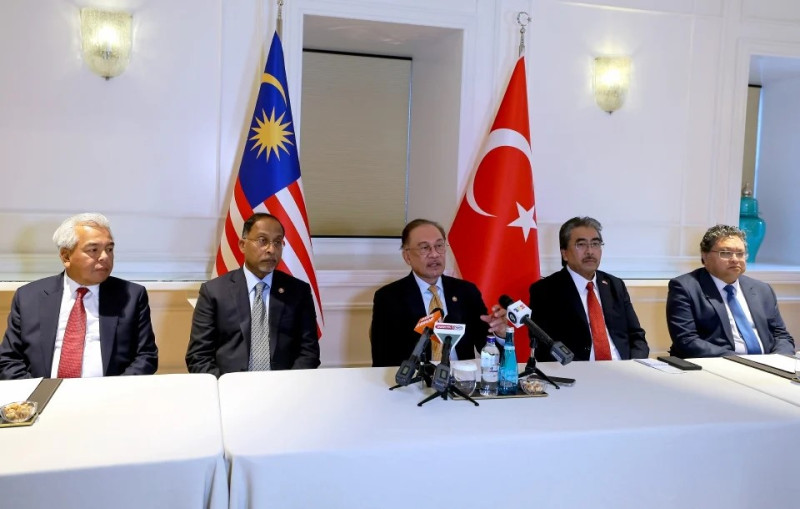
“We need to visit countries that have signed FTAs with Malaysia to evaluate what benefits they have gained from us and vice versa. My objective is to intensify this cooperation because all countries are now prioritising their domestic interests,” he said in an interview with Buletin TV3 in Istanbul, held alongside Prime Minister Datuk Seri Anwar Ibrahim’s official visit.
Johari said the Turkiye visit marked the first step in assessing why bilateral trade and investment flows have yet to reach their full potential despite the FTA being in place.
“We have signed an FTA, but why have we not seen balanced investment or trade flows? Why does our trade flow more towards them but not the other way around? There may be constraints in terms of capacity or capability, and that is where opportunities lie,” he said.
He stressed the importance of direct engagement with business communities to understand real challenges on the ground and to build trust between trading partners, which he said is essential for deeper economic cooperation.
Johari also underscored that strengthening FTA implementation must include small and medium enterprises, which he described as the backbone of Malaysia’s economy.
“We do need large companies in certain industries such as new technologies and artificial intelligence (AI), but our real strength lies in how we develop SMEs and enable them to penetrate markets in FTA partner countries,” he said.
While acknowledging the role played by the Malaysia External Trade Development Corporation in bringing SMEs to international markets each year, Johari said their overall contribution to the economy remains below potential.
“At present, SMEs contribute only about 39 per cent to gross domestic product, an increase of just two percentage points from 37 per cent a decade ago, even though the country’s GDP has grown by nearly 68 per cent over the same period to RM1.9 trillion. This is something we need to pay serious attention to,” he said.
Johari said Turkiye is the first country in a series of planned FTA reviews, with Malaysia set to examine other partner nations to ensure each agreement contributes meaningfully to inclusive and sustainable economic growth.
Separately, Prime Minister Anwar addressed public criticism surrounding his participation in a wreath-laying ceremony at the mausoleum of Turkiye’s founder, Mustafa Kemal Ataturk, clarifying that the act was part of mandatory diplomatic protocol rather than a political endorsement.
Speaking at a press conference on the final day of his official visit, Anwar said confusion and criticism among some Malaysians stemmed from a lack of understanding of diplomatic norms and historical context.
“I think not many people truly understand this matter. The reality is that all heads of state or government who undertake official visits to Turkiye are required to observe this ceremony,” he said.
Anwar said Ataturk must be assessed within the historical realities of the early 20th century, particularly following the collapse of the Ottoman Empire after the First World War.
He explained that allied powers such as Greece, Britain and France sought to dismantle Ottoman territories through agreements concluded in 1920 and 1923.
“These efforts were intended to weaken and erase the empire. In that situation, Mustafa Kemal led a military movement that successfully repelled invasions and defeated several colonial powers,” he said.
As a result, Anwar said the Turkish people regard Ataturk as a leader who defended their homeland from becoming a European colony, a perception that continues to underpin the high level of respect accorded to him today.
However, Anwar stressed that he personally disagrees with several of Ataturk’s decisions and policies related to Islam, including changes to the call to prayer, script and certain aspects of governance.
“There are policies and decisions of his that I do not agree with and that are not aligned with my views, but his contribution in saving the country from colonisation cannot be erased,” he said.
Commenting on the criticism directed at him in Malaysia, Anwar said it was largely driven by hasty judgments and an inadequate understanding of history. - January 9, 2025