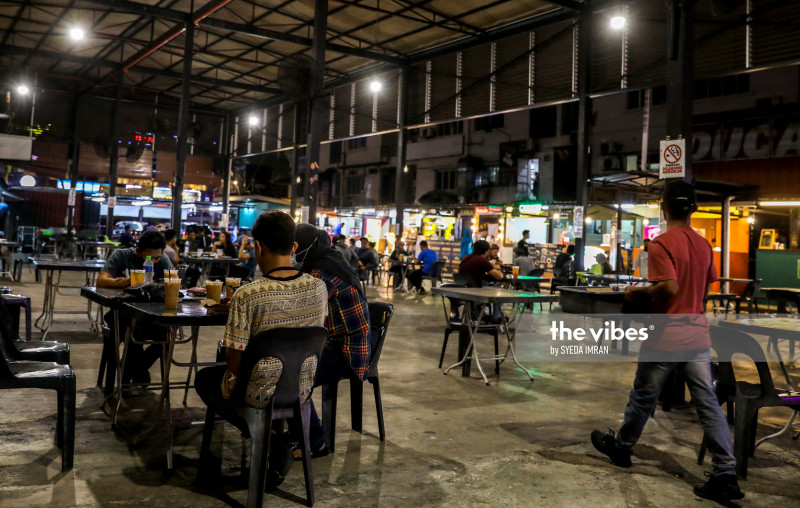
HAWKERS in George Town are split over whether to raise prices during the Chinese New Year period, as higher ingredient costs and strong demand test the balance between profitability and customer loyalty.
While some traders say temporary increases are unavoidable due to supply shortages and rising expenses, others have chosen to hold their prices steady, relying instead on higher sales volumes during the festive week.
For customers such as Allen Lim, 52, a modest seasonal increase is neither surprising nor unreasonable. Speaking over a plate of char koay teow at a coffee shop in George Town, the photographer said price adjustments ahead of Chinese New Year had become almost customary.
“It usually lasts for a week or two after the celebration before prices come down again,”The Star reported Lim saying when met yesterday.
He attributed the seasonal hikes to broader cost-of-living pressures and higher operating expenses, noting that many hawkers continue working while others are on holiday.
“They are working during the festive period as well, catering to our needs while many of us are off from work. I think it is acceptable to charge a little more,” he said.
However, he stressed that any increase should be reasonable.
“It is excusable as long as a meal, including a drink, costs less than RM15,” he said, adding that what mattered most to him was that the portions remained unchanged.
For hawker Ng Mee Poh, 40, who sells char koay teow, the decision to increase prices during the festive season is driven by supply constraints rather than opportunism.
“I increase my prices by RM2 for about 15 days during the festive period because it is difficult to secure supplies such as prawns, fish cake, cockles and even bean sprouts,” she told The Star.
She explained that demand for these ingredients rises sharply as families prepare reunion dinners and festive gatherings, pushing up wholesale prices.
Ng, who normally charges RM6 for a small plate and RM7 for a large one, has temporarily raised them to RM7 and RM9 respectively. Despite the adjustment, she said business remains strong.
“There are only a few shops open during this period, and customers do not seem to mind the extra charges. No one has complained,” she said, adding that she sells an additional 15 to 20 plates daily during the festive season.
Yet not all hawkers see a need for higher prices.
Ken Teh, 50, who runs a chicken rice stall, has decided to maintain his usual rates, saying he does not wish to burden his customers during the celebrations.
“I know that many hawkers raise their prices, citing the increased cost of ingredients and their decision to work during the festive season, but I feel bad.
“I stick to my regular charge of RM6 for a basic plate of chicken rice. I am lucky that we have plenty of customers daily,” he said.
He acknowledged that he could easily charge more, particularly as many of his patrons are tourists or visitors from out of town who may not know the standard price, but he has chosen not to.
“I find working during the Chinese New Year week brings in more customers, and that is extra money for me.
“I am selling 10 more plates a day, which is good business.
“My ingredients do not go up in price, so I do not worry about the extra expenses during this period.
“My strategy is to remain open and make money, as many others are closed for the week,” he said.
The differing approaches reflect the calculations small traders must make during festive peaks, weighing higher costs and demand against goodwill and long-term customer trust. - February 20, 2026



.jpeg)