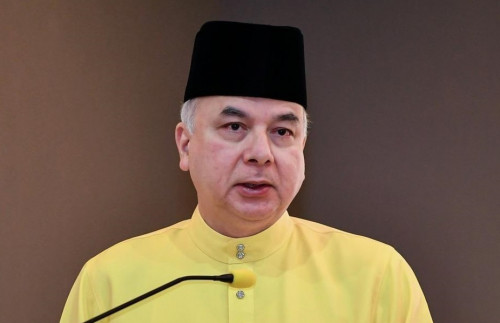
DISRUPTIONS to shipping through the Strait of Hormuz are exerting direct pressure on Southeast Asian economies, with His Majesty Sultan Nazrin Shah warning that the fallout from the Middle East conflict could have prolonged and far-reaching consequences for the region.
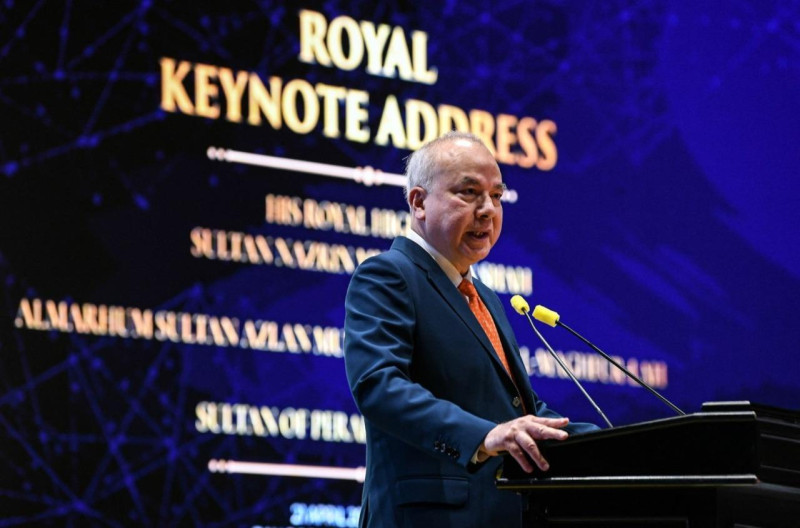
Delivering a keynote address at the Putrajaya Forum, held alongside the Defence Services Asia 2026 and National Security Asia 2026 today, the Perak ruler said rising global energy and logistics costs were already feeding into inflationary pressures across ASEAN economies.
“Energy, fertiliser and transport prices have surged sharply, causing food prices to rise, increasing production and distribution costs and fuelling inflation.
“Countries with low energy reserves will be the most affected.
“With the economic crisis becoming more worrying, people’s livelihoods will continue to be affected for months even if the Strait of Hormuz is reopened in the near future.
“Therefore, negotiations to end the West Asian conflict must be expedited and successfully concluded,” he said.
Sultan Nazrin cautioned that the economic strain would persist even under a best-case scenario of near-term reopening of the strategic maritime route, underscoring the vulnerability of import-dependent economies in the region.
He also stressed that environmental security must remain central to policymaking despite mounting economic challenges, warning against postponing sustainability efforts.
“The protection of the environment is not an agenda that can be postponed until economic conditions improve. It is fundamental to every aspect of security for the planet and humanity.
“No matter how advanced military technology may be, a region that cannot ensure its own food and water supply or protect its coastlines from submersion will not be able to achieve true security.
“In this regard, I urge this forum to make planetary health a core objective of ASEAN’s comprehensive security framework, not merely as a sign of environmental concern, but as recognition of strategic reality,” he said.
Highlighting the increasingly complex nature of regional security risks, including maritime and territorial disputes, the ruler said technology presents both solutions and dangers depending on how it is deployed.
“Each of these challenges can be addressed through the wise and equitable use of technology. However, if used carelessly or for narrow interests, these technologies can worsen the situation.
“Technology will undoubtedly shape our future. The question is whether we are able to shape technology to uphold peace, stability and human dignity.
“We must nurture a generation that is not only technologically skilled, but also guided by strong moral responsibility — a generation with both strength of character and intellectual clarity.
“As ASEAN stands at this threshold, we must recognise that competition drives innovation, but cooperation gives it meaning. True security lies in collective effort, not in isolation,” he said. - April 21, 2026