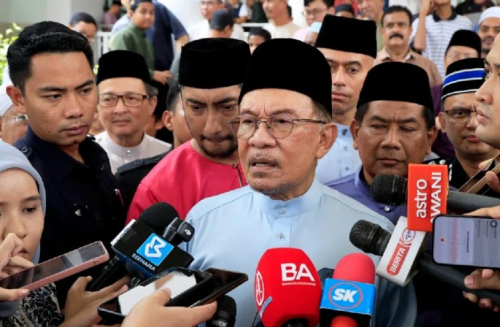
THE government will soon announce additional support measures for individuals affected by the global supply crisis, including unemployed graduates and diploma holders, Prime Minister Datuk Seri Anwar Ibrahim said today.
He said the forthcoming initiatives are aimed at ensuring that skills among jobseekers are not wasted amid ongoing economic disruptions linked to global supply constraints and geopolitical tensions.
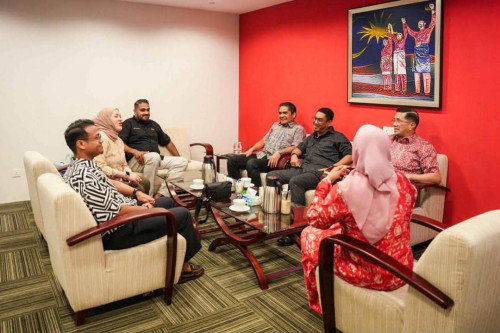
“I will announce additional measures soon to assist those who were out of work, including unemployed graduates and diploma holders,” he told reporters after chairing a roundtable session with representatives from financial institutions in Kuala Lumpur.
Anwar said the government had already introduced a range of measures to mitigate the impact of the global supply crisis, including maintaining petrol prices under the BUDI MADANI RON95 (BUDI95) programme and retaining diesel subsidies in Sabah and Sarawak.
He said additional interventions included increased monthly assistance under Agri-Commodity and BUDI Diesel schemes for individual diesel vehicle owners, farmers and smallholders, higher incentives for padi cultivation, and financing guarantees of up to RM5 billion to support micro, small and medium enterprises.
Malaysia’s unemployment rate stood at 2.9 per cent in February 2026, with 506,800 individuals recorded as unemployed.
Meanwhile, Anwar added that the strength of Malaysia’s financial institutions remains a key foundation of the country’s economic resilience, particularly as it navigates uncertainty stemming from the West Asia crisis.
He expressed appreciation for the cooperation of Bank Negara Malaysia and domestic financial institutions in supporting government efforts to strengthen economic management and improve service delivery to the public.
“I express my gratitude because the banks have fully cooperated. We are aware of the issues raised by micro, small and medium enterprises (MSMEs) about loan access. As we know, the record is commendable; the majority, about 80 per cent, of MSMEs have been identified as receiving assistance,” he said.
Anwar said the government remains alert to evolving risks and is prepared to introduce further measures to safeguard economic stability and growth.
He stressed that any assistance or subsidies must be carefully targeted rather than broadly distributed, drawing lessons from past crises.
“I have learnt from the 1990s crisis and COVID-19 that assistance must be more targeted and precise, not blanket. The aid should only help the groups affected by this crisis, and we should also avoid spending beyond our means.
“Our main challenge (as a government) is to ensure essentials, including fuel, gas, and fertiliser, are sufficient so that growth does not go off course,” he said.
The Prime Minister added that Malaysia’s macroeconomic indicators remain strong, with Bank Negara Malaysia projecting growth of between four and five per cent despite external pressures linked to the West Asia crisis.
“This (achievement) is commendable compared to other countries,” he said.
Anwar also highlighted the ringgit’s strong performance, noting that it has been one of Asia’s best-performing currencies for two consecutive years.
He said the overall resilience of Malaysia’s financial system, supported by prudent fiscal management and strong banking institutions, has helped strengthen investor confidence in the country’s economic outlook.
Also present at the session were Bank Negara Malaysia Governor Datuk Seri Abdul Rasheed Ghaffour and Treasury Secretary-General Datuk Johan Mahmood Merican. - April 21, 2026






.jpg)